
The author Jordi Casamitjana compiles the vegan journeys of several prominent vegans he has interviewed in the last few years.
It’s a classic question.
When we, vegans, socialise with a group of other vegans and meet some for the first time, one of the most common ice-breaking questions we ask is “How long have you been vegan?” That’s a question most of us are happy to answer, and those who have already crossed the 10-year milestone tend to answer it with pride. However, this is not the question we really want to ask. That one is not entirely suitable for small talk with a stranger. That one needs a bit more trust, as well as more time to allow for an elaborate answer. That question is, “How did you become a vegan?”
The reason we are more interested in this question is because that can tell us much more not only about how similar or different our vegan journeys have been — which goes a long way to establish rapport — but also about which type of vegan you are. If you entered veganism via the gateways of animal rights, health, the environment, spirituality, or social justice, this will tell us a lot about how you approach this philosophy (even if, like me, with time you have ended up embracing all these five dimensions of veganism).
If you want to know more about these gateways, I wrote an article titled Welcome to the Vegan Mansion in which, through an allegorical story, I explain what these five gateways are all about. If you don’t have the time — as it’s quite a long piece — let me surmise the main jist of the concept: Despite veganism being a well-defined philosophy (the official definition has not changed since the 1980s) based on excluding all forms of animal exploitation (not just for food), how people end up holding this philosophy can vary. However, at the same time, their journey is likely to follow certain patterns that may fall into five main distinctive “reasons” to become vegan. These reasons, or gateways, are just the way people join the philosophy (and manifest its associated lifestyle) in the first place, but once they are in, they often end up embracing all the others, as we are talking about the same philosophy with five dimensions, not five separate philosophies. It’s all quite interesting when you analyse it in detail.
You see, if you ask how a person became gay, Christian, or feminist, not only the answer may be less interesting, but often the person would prefer not to answer because they may say that they did not “become” any of such identities as they were born carrying them. However, for some reason, we, vegans, seem to have this answer quite ready and built up in a narrative that makes it more like a story than an explanation. This may be because the process happened relatively recently, or because it was marked by a very specific event, but whatever the reason is, every time I asked the question, I got a satisfactory complete answer.
The question of the “vegan journey” is one of the most asked questions by the media to vegans, so when I began writing articles about interviews I was privileged to do with prominent vegans, I did not hesitate to ask the question at the start. This journalistic ice-breaker has served me well, and now I have been accumulating answers from the over 25 interviewees I wrote about in the last two years. I thought I could compile a selection of their answers so my readers could also learn what I have learnt from them.
Jonathan Balcombe, the Vegan Ethologist Who Cares About the Little Guys

Jonathan Balcombe is an ethical vegan and ethologist (animal behaviour zoologist). Although he was born in the UK, he grew up in New Zealand, lived in the US for a while and now lives near Toronto, Canada. He is the author of several bestselling books, such as Pleasurable Kingdom, What a Fish Knows: The Inner Lives of Our Underwater Cousins, and Super Fly: The Unexpected Lives of the World’s Most Successful Insects. He used the animal rights gateway to enter veganism, and this is his account of his vegan journey:
“I’ve always been completely smitten and enamoured by all animals, with no exceptions. Even mosquitoes and flies that want to bite me. Even parasites. It’s not to say that I like being bitten by a mosquito. I have a level of respect, and I have a high level of fascination for them. Nothing is surprising about me being vegan. The only surprising thing to me is how long it took me to make that step.
I was 25 when I decided to stop eating meat, and I became a vegetarian. It took me another five years to make the connection. How the animals we drink their milk or eat their eggs still go to a slaughterhouse as well. Plus, they have the added stress of being kept in often horrible conditions. The reason for me not eating meat was ethical because I didn’t want animals to be harmed for my benefit. Then I realised I had to expand this to include animals who are also harmed and killed for their by-products. Being vegan was a very natural decision for me, ethically.
But such are the vagaries of life, and the society we live in, that often it takes a long time to get to that point, and even if I had the ethical belief system to support that, it took a while — 25 years, a quarter of a century — before I came to that realisation. And that was in the 1980s when the animal rights literature and the whole movement were gaining momentum. That helped me a lot. I read an article by Tom Regan — ‘The Moral Basis of Vegetarianism,’ I think it was — and what he wrote made so much sense to me. I couldn’t live with myself eating animals and their products once I had that level of moral growth.”
Dr Sailesh Rao, The Vegan Engineer Healing the Breaking World

Dr Sailesh Rao is a systems engineer from India who, after emigrating to the US and becoming part of the Intel team, worked on the internet communications infrastructure for twenty years. During this period, he led the transformation of early analogue internet connections to more robust digital connections that also ran ten times faster. However, one day, he left the expanding internet system to work on another system, one that seemed to be struggling. He decided to work on the Earth system. He created the organisation Climate Healers which advocates for the vegan world to save the planet and everyone on it. He used the environmental gateway (and perhaps the spiritual gateway as well) to veganism, and this is his account of his vegan journey:
“My family followed the Hindu religion and I was Lacto-vegetarian from birth. We drank milk but we didn’t eat eggs or any other animal products. It’s basically an ethical stance. The story we tell ourselves is that we don’t hurt the cow when we milk the cow. And I bought into that story. I also bought into the scientific literature that was saying that consuming dairy is only a little bit worse than going vegan.
As an engineer, I like to implement and try things out. To address climate change, biodiversity loss, and ecosystem collapse, which are the three major environmental problems that the UN had identified in 1992, I went to Rajasthan, which is on the edge of the Thar desert in India, because there you can actually study all three problems at once. The forest is dying, so the animals are disappearing, and you see desertification happening around you. You see biodiversity loss happening around you. And then climate change, of course, happens everywhere.
I went to that village, and the villagers actually taught me, instead of me teaching anyone anything. I asked them about climate change and they said ‘Of course, we know it’s happening.’ I said, ‘Why do you cut the forest?’ and they said, ‘What choice do we have? Because the people in the cities want milk so we have to raise cows to supply the milk.’ That’s the only source of income for them. I could see deforestation happening because of cattle grazing.
Then I saw this fence, and to the right of the fence it was lush green forest, and to the left, it was barren land. You could see all these cows walking around eating the grass. I instantly realised that it was my consumption of dairy that was causing that forest to die because they were milking the cow and selling the milk, as that was their source of income. They didn’t want to kill the cows so they let the cows roam around for the rest of their lives eating whatever they could, so the forest was literally dying because of that. If the forest dies, the deer dies; if the deer dies, the tiger dies. It’s a cascade of events that I was causing by consuming dairy. And people in the cities are consuming the dairy, not the people in the villages. I realised that dairy consumption is actually the worst, and I had this huge sense of shame when I realised it. I went vegan on the spot. It was 2008.
I finally had this huge sense of guilt lifted off my shoulders because I had been carrying that guilt since the age of seven or eight. As children we were always sent to our grandparents’ home for summer vacation — my grandparents lived on the west coast of India, in Mangalore, and we lived in Chennai, on the east coast of India. One time, when I was seven, we had just come to my grandparents’ home and I overheard my grandmother telling my grandfather that ‘this particular calf is drinking too much. He is not leaving enough milk for the children.’ And my grandfather told my grandmother ‘Don’t let him drink to his fill; pull him away after 10 minutes.’ As a child, I realised that there was something wrong going on, but I put it away in the back of my mind because I was being bombarded with the idea that milk is essential, and you have to drink it. Every time I was drinking milk I had that subconscious guilt that was building up.
I consider myself a Salesman of ahimsa. I am a devotee of veganism. To me, ahimsa is living in harmony with Nature, without consciously hurting anything, respecting every other living being as having space of their own, and minimising harm. To me, veganism, and healthy vegan food — not just vegan food but eating whole plant foods — is about healing ourselves first before we go out and heal the planet, heal the climate.”
Christopher Sebastian, an Eloquent Vegan Voice Blossoming from an Identity Well

Christopher Sebastian is an American writer, journalist, scholar, and educator. He is the director of social media for Peace Advocacy Network, sat on the Advisory Council for Encompass, is a senior fellow at Sentient Media, and lectures at Columbia University in the Department of Social Work for the graduate course POP: Power, Oppression, and Privilege. His creative and academic work often focuses on how human relationships with other animals shape our attitudes about racial, sexual, and political identity. He used the social justice gateway to enter veganism, and this is what he had to say about his vegan journey:
“I had gone vegan in 2004, somewhere thereabouts. I wish that I had the wherewithal to remember my vegan anniversary, as so many people do. I don’t, because I didn’t really put much thought into it. It was simply ‘Oh my God, this is terrible! I don’t want to do that. So, I guess, well, I’m vegan now!’ And I just went on with my life, without actually thinking about what all of that would mean in the larger context. And certainly not having any idea where that would go years later.
My introduction to being vegan was from what I thought was a diet book because I read the book “Skinny Bitch” which was popular — it was on the New York Times bestseller list that year. And I said, ‘Oh, this sounds fantastic!’ Keeping with the early 2000s and our understanding of feminism and queerness at that time, calling a book “Skinny Bitch”, having that as a title, was just really attention-getting. And there was like a pivot in the first couple of chapters away from diet and food, and just a hard stop right into animal agriculture and animal exploitation. That was so much more emotionally arresting, and, of course, unexpected for me, that it was just an immediate shift as soon as I put the book down. And then, retroactively, I started thinking about, or becoming educated on, all of the many reasons why perhaps that was not the most feminist introduction to veganism, and I started picking up other readings.
I did read Sistah Vegan by Dr Breeze Harper, and also The Sexual Politics of Meat — which I think had the biggest influence on me — by Carol Adams. That was one of the things that had initiated in me an interrogation into ‘if this is what animal exploitation is to feminism, and the influences of patriarchal domination are on our relationships with other animals, then what are the racial implications as well?’ So, around 2013, I started learning more about what that overlap is; the ways in which these two issues of animal liberation and black liberation had to do with one another.
Much later I started going into the scholarship of overall identity, and how the symbolic use of animals plays into various aspects of our identity, as people of colour — as black people, in particular — as queer people, as straight people, as men, as Americans, or as people of certain economic classes. Really gaining that understanding has shifted my perspective, in ways that were completely unanticipated. Being able to share that, and how politics and media discourse influence our relationships with other animals and our understanding of other animals, really became my focus. That allowed me to really use what my background is in a way that I thought was a little different. That was engaging for people who otherwise wouldn’t really think about these topics.”
LoriKim Alexander, a Vegan Black Femme Biologist Healing the World

LoriKim Alexander is a biologist, anthropologist, activist, educator, and healer, who has been working in the community for the people (and for “people” she means those with feathers, scales, skin, fur, etc.) who are oppressed by systemic realities that don’t afford them full rights — as she puts it. She is originally from Jamaica, but she now lives in the US. She used the animal-rights gateway to veganism, and this is her vegan journey:
“In Jamaica, as I was an only child, I spent a lot of time by myself. And I spent a lot of time outside. I feel I’m lucky, because we only had one TV station, and it was on only at certain times of day; it didn’t come on until late afternoon. So, I was outside playing literally with sticks, stones, and leaves and watching ants; playing in trees and watching birds. I used to sit for hours in the grass watching grasshoppers — I was fascinated by them. There are several photos of me as a two-year-old just crouching. And I did that throughout my childhood.
My favourite place in the world was my grandmother’s mango tree, and in that mango tree, I developed a lot of friendships. One of them was with a lizard. An adult lizard doesn’t hang around humans, but we used to spend so much time together, just resting. And no one could see either of us up in the tree, so we found sanctuary together.
I should say that when I was growing up, we did not value the animals that lived with us. Dogs and cats didn’t hang out in the house, the dogs were there for protection, and the cats were just there living in the streets or around the yard. For me, though, these were my friends, and so at every household, I would stop, and I would visit with the dogs and the cats first, oftentimes before the humans. There was always this serious connection because we got each other. There was no artifice in that conversation. There were no requirements. The only requirement was that we didn’t come at each other from a space of harm.
When I came to the United States at 13, I was faced with a lot of cultural differences. When I was 14, we moved to New York City, and I started to become aware of all these different realities and movements around. I was able to learn about Animal Liberation movements. And I was like, ‘Wait, what? other people think the way I do?’ I was so excited. My mind was completely blown, and it took me a little while to develop a sense of who I could be in that space. By 15 I was vegetarian much to my mother’s dismay and disapproval — she thought I was going to die because I didn’t eat much anyway, I was a very picky child.
In that space is where I really started to understand what was happening in factory farm systems, like the industrialisation of our foodways. I didn’t have any idea of that but because I came from a mostly agrarian culture, very artisanal. I was a vegetarian for a few years, but I was already feeling a little hypocritical because I was in this movement and in love with cheese —I didn’t drink milk, though. I’d finally given up eggs, but the dairy was hard for me. Then I read this article about the dairy industry and what happens to dairy cows, and also from the perspective of a worker. Hearing that, understanding that, knowing Farm Workers’ Rights growing up, and having that instilled in my blood, it didn’t sit well, so that day I decided to go vegan. That was 29 years ago.”
Nivi Jaswal, the Entrepreneur Who Travelled Far in Her Vegan Journey

Nivi Jaswal defines herself as an intersectional vegan activist, a social entrepreneur, and an educator, with a corporate background. She has travelled a lot, through geographies, cultures, and worlds. Originally from South Asia, she has lived in many countries. Countries quite far apart from each other in many aspects (India, Singapore, Russia, and now the US). But one of the most distant journeys she has made is between two very different worlds. She travelled from deep in the underbellies of the carnist corporate world, to the world of vegans capable of changing “the system”. She used the health gateway to enter veganism, and this is what she told me:
“I went whole food plant-based oil-free due to health reasons in April 2018. And prior to that, for about four years, I was dabbling in a ketogenic lifestyle with the express goal of preventing chronic illness because I was told, clinically, that it was my genetic destiny to get type 2 diabetes and several other chronic illnesses — given that they run in my family. I lost four of my grandparents by the time I turned 18. My father, who passed away during COVID-19 in 2020, was diagnosed with type 2 diabetes as early as 1992, and I was around 11 at the time. I was told that if I didn’t watch my carb intake, I was going to go down the same path. So, I was doing keto under clinical supervision.
After four years of doing it, I realised that it actually brought me to a very dark place. In 2015 I was diagnosed with pre-diabetes. I was borderline diabetic, my cholesterol levels were very high, and I had a very high body fat percentage, even though I was not outwardly obese. I have since learned that, with my genetics and my ethnic background, that is something that tends to happen, where on the outside of it you don’t really see it. But a lot was going on on the inside with chronic illness. I would eat meat, beef, and pork. I actually loved eating meat at the time, and I felt that ketogenic sort of was good news for my bad habits. So, when I fell ill and was diagnosed with polycystic ovarian syndrome, I had severe oedema, I had very frequent migraine attacks, and I was chronically like an insomniac. I wasn’t able to sleep for longer than three and a half to four hours a day. And my resting heart rate was anywhere between 146 and 266 beats per minute, so it was a really bad situation. And at the age of 34.
I was based in Singapore in 2015, and I travelled to Hong Kong. I had just finished a workshop. I went back to my hotel room, and 30 minutes later, I woke up. I regained consciousness on the floor of my hotel room, and there were no signs of somebody breaking in or anything. In that flash of a moment, I was very scared, and I thought, ‘Maybe I had a cardiac event,’ but thankfully it wasn’t a cardiac event. The following morning, I took a flight back to Singapore, I checked myself into a hospital, and I walked out with all these diagnoses that I shared with you. The big switch for me was that I was going to the gym, I was doing keto, I was in a really high-profile executive regional position, I was looking after multiple markets for a very large organisation, and I did not identify with the label of a patient. I identified myself as someone healthy.
I spent the next year sort of wrapping up my job with the corporate world asking for a sabbatical, thinking that if I de-stressed myself, things would be okay, and I would be rejuvenated enough to be able to get back to work. Six months turned into six to seven years running. At this point in time, I haven’t gone back but I ended up spending about a month in New Zealand climbing glaciers and hoping that it will de-stress me. I would get some answers, I would meditate, and so on.
In 2016, I stumbled upon the China Study. I read the book and watched a few documentaries. It took me two years to actually unlearn everything that I had known about diet, wellness, and how my body works. And to let go of that fear that if I were to pick up a piece of bread and eat it, that somehow I was going to die because that’s carbs and that’s poisonous.
I remember, in April 2018, picking up this book by Dr Esselstyn: “How to prevent and reverse heart disease”. The back of the book, 50% of the book, is filled with recipes written by his wife. So, that’s how I learned, because I didn’t know how to cook, even though I have South Asian ancestry and I grew up watching my grandmother’s and my mother cooking from scratch vegetables, lentils, dal, and all those things. I kind of had that knowledge but it was latent. And it was hidden in my brain somewhere. And, thank goodness for it, I picked it up pretty quickly once I had to, and I made the switch to plant-based. I went wholefood plant-based in April 2018.
Within six months I had a clean check by the doctors. They called it a miracle. My ovaries didn’t have any scarring anymore, I was super excellent, and I was healthy. I dropped down several dress sizes. From a body image standpoint that was really awesome.”
Light, the Gentle Vegan-World Maker

Light and Sun were an American husband and wife who were pioneers of veganism in the United States, and although she left us in 2019, he is, at 87, still a young vegan activist at heart who has been promoting the idea of the vegan world for over five decades — and who has even built a small functional version of it in the form of a vegan community called Gentle World in Florida and New Zealand. He used the animal rights gateway to enter veganism, and he told me this about his vegan journey:
“I was a teacher, and I attended law school. At that time, I thought vegetarians were crazy. I was eating a steak and they were eating greens or something. I thought they were nuts — the propaganda back then was that the few vegetarians in the world were considered nuts. People, including my wife and I, didn’t know there was the word ‘vegan’.
In 1969 we went to a movie, and we saw the horror of four big men hitting a bull over the head with sledgehammers. We came out of that theatre, and we said, ‘Whoa, is that how they get meat?’ I was already about 29, and I had no idea. I didn’t even think about it. And at that time, like everybody else, I was actually a big meat eater. We said, ‘We can’t go on doing that’ and that was the beginning of our vegan journey.
We decided to stop eating meat. We didn’t even think about dairy, feathers, and leather. At that time, we didn’t think about that. It took us about a year before we became vegan. We were living in Woodstock in upstate New York — which is not where they actually held the festival, they held it in a town called Bethel. We were drinking the milk and eating the ice creams, thinking it was delicious, and we said, ‘Let’s go see how they do this.’ We visited a dairy farm located near us. They wanted us to go around the front, but we decided to leave the group and go behind the scenes, and we heard this cow scream, crying. Terrible. I kind of thought she was giving birth. That’s the kind of scream. And the woman who owned the place said, ‘Oh, no, don’t worry about that. We took her baby away and she’ll only do that for about two or three weeks, you’ll get used to it.’ And we said, ‘We don’t want to get used to it; we want to end it.’ And that’s been our life’s goal, really, for the last 50-odd years.
We didn’t know there was a name. We kind of thought we invented it because we never heard of it. We decided to stop all dairy and we said goodbye to milk and ice cream. We thought we’d never have it again, but it didn’t matter. The animals were more important than if we never had ice cream again.
Somebody came to visit us — I don’t even know how we met him — and he mentioned to us that what we were doing was being done by a couple called Freya and Jay Dinshah. They were in New Jersey a couple of hours away from us, and we went to visit them. They were the first vegans we ever knew. We even didn’t know what the word vegan meant, but they had already been vegan for years and years.”
George G. Hayek, the Lebanese Vegan-Maker Who Created the First Vegan Hospital
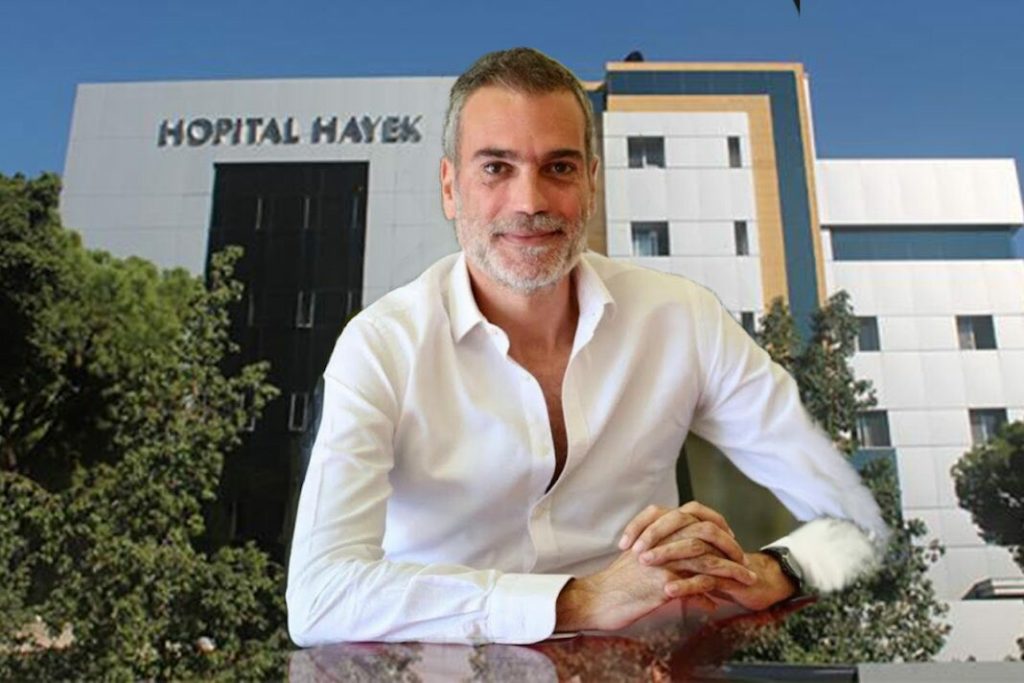
George G. Hayek runs a hospital in Beirut, Lebanon, which has belonged to his family for generations. Through classical vegan outreach via social media, he eventually became an ethical vegan, and a few years later completely transformed the hospital he still runs. He changed it in a way never seen before. He made it the first fully vegan hospital — not just plant-based, but vegan — as vegan as it could possibly be in the early 21st century — considering there are no vegan alternatives to many medicines yet. He entered veganism through the animal rights gateway:
“I was born in Beirut, Lebanon, back on January 5th 1980, so today I’m 42 years old. My background is in business management. I conducted my university studies at the Lebanese American University in Byblos, and then I continued with my Master’s Degree at the same University, but at the Beirut campus. I had a Master’s in Business Administration and then I specialised in hospital management. I’m not a doctor. I didn’t go through the medical side of things, but I run a family hospital. My cousin is a doctor, so he’s handling the medical part, and I am handling the managerial part.
Back in 2012 or 2013, I was browsing my Facebook internet page and I stumbled upon a friend of mine — who I used to consider an “annoying” vegan extremist — who shared footage of a cow in an abattoir being slaughtered. I couldn’t turn a blind eye to the video. I watched it fully. I felt really disturbed and deranged.
I went back to my home, where I have four dogs whom I love very much. Once I opened the door, I saw how they were welcoming me, and they were showing me unconditional love. And then I started looking at their eyes and I realised that there is someone inside of those sentient beings. I realised that there was no difference between the cow I saw being slaughtered earlier that day on the internet and these dogs I love so very much. Both of them will struggle if they have a sharp enough knife slitting their throat. They will behave in the same way, dying in agony.
First, I was annoyed at my friend. Why would he want to annoy me and post such horrors on my page? But then I understood that it was his responsibility and I was really grateful to that person. And this led me to do my research and dig more.
Being the animal lover that I am, and most of all, being the non-violent person that I claim to be — I think of myself as being a nonviolent person and against Injustice in general, against any oppressor that oppresses the weak — I dug deeper into the subject of veganism. I started acknowledging the horrors that are being done, as we speak, behind slaughterhouses’ walls.
At first, I started being a vegetarian. I immediately cut meat, and a couple of months later, I searched more into the dairy industry, I saw its horrors, and I stopped that as well. That’s when I turned vegan.”
Carissa Kranz, a Life-long Vegan Sorting Out the Vegan Label Problem

Carissa Kranz is an American ballerina-turned-lawyer, entrepreneur, TV host, philanthropist, author, and CEO of the BeVeg Vegan certification. She is a vegan from birth, so her vegan journey is quite different from those of most vegans. This is what she said in her interview:
“My mom had a Vegan pregnancy with me. Actually, she was raised vegetarian, and she decided that dairy didn’t make her feel good, so she went Vegan during her pregnancy. I was born and mostly just breastfed. And then, when my parents got divorced, when I was about five years old, my mom wanted to continue to raise me Vegan. And my dad did not want to raise me Vegan. They had different views on that, so when I had to spend half the week with my dad, my mom basically told me at a young age, ‘You’re going to go to your dad and he’s going to try to feed you chicken, and fish, and McDonald’s, and a happy meal, and I can’t control what you’re going to do when you’re with your dad, but this is what it is.’ She explained to me that a hamburger is a cow and that a hot dog is a pig. I then made the connection that I loved animals and I didn’t want to eat any animal.
At about five years old I actually became a conscious Vegan and made that choice at that age. When I‘d go play at friends’ houses and they would make tuna fish sandwiches or hot dogs and milk, I was very conscious and aware to say ‘Is that soymilk?’ or ‘Is that what I was used to eating at home? And I had the resolve to not eat it. I was empathetic and compassionate towards the animals.
When I was still living in Miami, I remember writing Skittles a letter when I found out that they had gelatine in them. And I remember saying ‘I’m a Vegan’. And I was six or seven years old.
My mom was a Vegan for health reasons, it wasn’t because of the animals for her. For me, I chose to stay Vegan because of the animals, and it just so happens to be a healthier lifestyle. But back then, it wasn’t necessarily a healthier lifestyle in terms of what the public perceived Veganism to be. My dad was very concerned that I would be deficient and that I needed milk for my bones and animal meat for my ability to function in this world, but I‘ve never broken a bone in my body and I did ballet professionally — so certainly I haven’t had a deficiency due to a Vegan lifestyle.”
Although all of these different vegan journeys I have been learning about are unique, I am glad that they have one thing in common. Either a book, an article, a documentary, or a video, became an important part of the journey, as either the triggers, the catalyst, or the dealmakers of the process of adopting the philosophy of veganism and manifesting it with the vegan lifestyle. I am glad that is the case in this internationally diverse group because all these communication platforms that helped to veganise these influential vegans are the ones that I am using at the moment to channel my vegan activism. I am aware that all the books, articles, and videos I produce have the potential to help others become vegan because these types of creations last a long time, reach a lot of people, and make long-term vegans — as this is what all these testimonials are telling us.
I also noticed that many of these prominent vegans had backgrounds that made them particularly suitable to become vegan later in life. Either because of character idiosyncrasies leaning toward affinity to non-human animals, cultural frameworks more likely to produce pre-vegans or because belonging to groups often victims of discrimination or oppression, it is clear to me that the seed that will grow into becoming a vegan can be planted very early in life (in my case, I often say that growing up as a Catalan oppressed by Spanish fascists in the 1960s must have had a strong influence in my veganisation process).
Another common pattern we see is how long it took for these prominent vegans to become vegan, and how often the process involves a transition from meat-eater to vegetarian, from vegetarian to plant-based, and from plant-based to ethical vegan. Although I have never been a vegetarian and I jumped from carnist to vegan over 20 years ago, I too experienced a transitional phase, in particular, regarding getting rid of all clothes containing animal products. It does appear that often there is a temporal gap between the instant of holding the philosophy as a conviction that defines our identity and the full manifestation of such philosophy in our lifestyles. It is precisely because of this time stretch that the term “journey” is often used to describe the process of veganisation.
For the vegans I interviewed, their vegan journey began when the stories of their answers started, but they have not ended yet. Their veganisation continues (as mine has been doing too) because we can always get better at avoiding animal exploitation (even indirectly), spreading the vegan message efficiently, veganising the world around us, and at helping other sentient beings in need.
Veganism is a process, not a state, and any vegan, famous or anonymous, experienced or rooky, goes through it in slightly different ways, but still follows relatively predictable paths in terms of the motivating reasons (the five gateways I often talk about) and still being influenced by similar triggers (like key books, articles, documentaries, and videos) which become memorable milestones of their journey.
Asking how vegans became vegan is always an interesting question because the answer will leave you with a comforting sense of familiarity, regardless of how unique people’s stories may be. It reinforces our sense of community because, despite our diversity, despite which gateway we used, in the end, we were all driven by a profound need to not harm anyone (the ancient Sanskrit word “ahimsa”, or “do no harm”) and be kind to whoever we encounter (be that our own bodies, other humans, other sentient beings, the planet, or the very fabric of reality).
In the end, once we enter the vegan mansion, from whatever gate, we realise that it is the same welcoming home for all of us, and with time we all can explore its rooms at our leisure and learn all the other dimensions of this amazing philosophy.
We all became vegans by letting ahimsa guide us.