
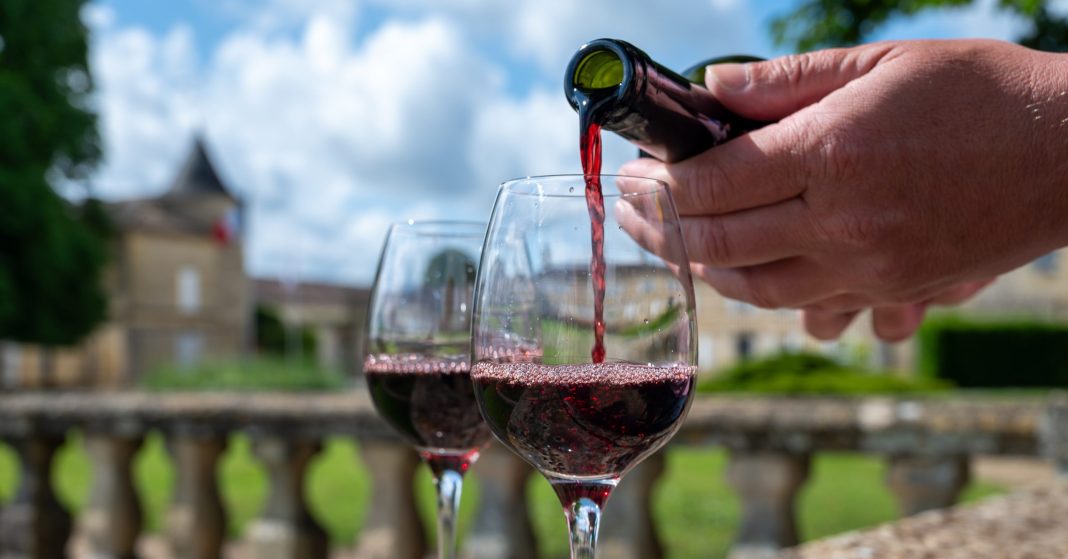
Not all wines are suitable for vegans because many wine manufacturers use traditional methods of production that include the use of animals — or animal products from cows, fishes, crustaceans, or chickens.
Most people do not know that not all wines are suitable for vegans. They know that wines come from fermented grapes, so how is it possible that they may not be vegan if grapes are plants, and the fermentation is done with yeast? Are there any other ingredients in wine other than grapes and yeast?
Yes, there are. In addition to water and the derived products from grape fermentation (including the alcohol), wines that people drink may also contain sulphur dioxide (used as a preservative and antioxidant to prevent spoilage and maintain freshness); Tartaric acid, malic acid, or citric acid (added to balance the wine’s acidity); sugar or concentrated grape must (added in sparkling wine production or to adjust sweetness), tannins (naturally present in grape skins, seeds, and stems, but additional tannins may be added from oak barrels during aging), oak extracts or chips (sometimes used to impart oak flavours without barrel aging).
However, all of these are still plant-based or inorganic, so why are there wines that are not suitable for vegans? Because some animals, or animal products, may have been used in the manufacturing process (even if they do not remain in the final products people drink).
Many traditional winemaking methods involve the use of products from animals at various stages of production, making some wines unsuitable for vegans — in the same way some towels are not suitable for vegans because animal fats were used to soften them, or coconuts from some companies in Thailand are not suitable either because monkeys were exploited to pick them. This article explores how animals and animal products are used in the wine industry, despite the fact that they can easily be avoided.
Animal-Derived Products in Winemaking
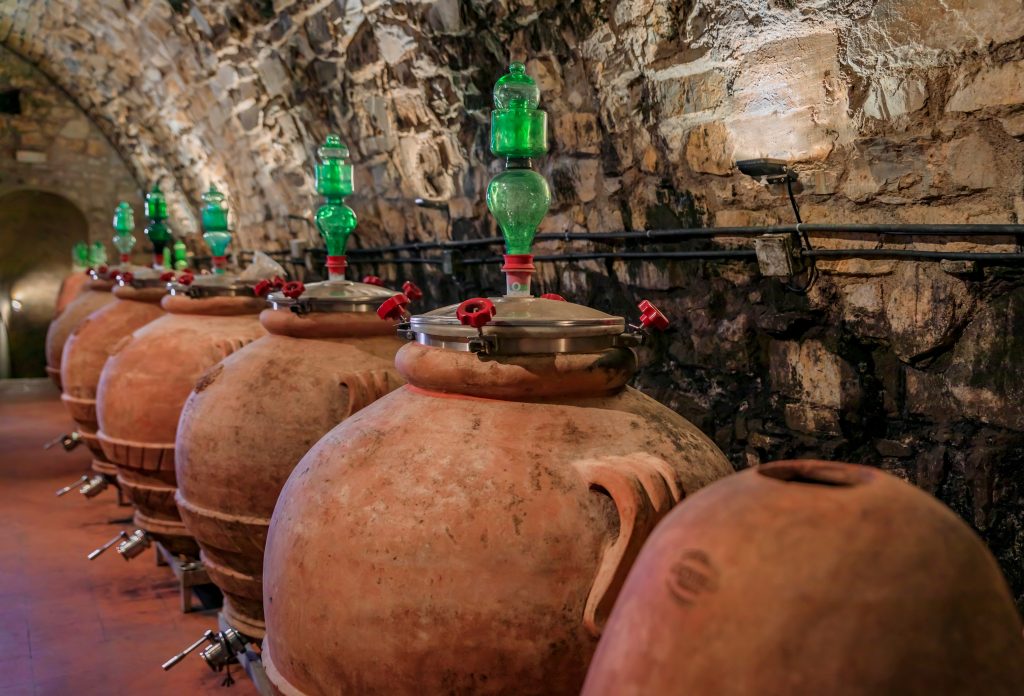
One of the key processes in winemaking that often involves animal products is “fining”, which is used to clarify wine by removing unwanted particles such as proteins, yeast, and tannins that can cause cloudiness or affect flavour.
There are three main purposes of the fining process: clarification (removes particles that cause cloudiness or haziness), stabilisation (prevents spoilage by removing compounds that might lead to chemical reactions over time, such as excess tannins or proteins), and flavour and texture adjustment (smooths the wine by reducing astringency or bitterness from tannins).
To achieve this, during manufacturing some substances (fining agents) are added to the wine that bind to the unwanted particles, forming larger clumps that settle at the bottom of the wine vessel or are filtered out mechanically. Once the fining agent has been added, it is gently stirred into the wine in the fermentation tank or barrel. The wine is then allowed to rest for a period, usually a few days to several weeks, so the clumps (known as “lees”) settle at the bottom of the container. Finally, the racking or filtration phase occurs, when the clarified wine is carefully separated by racking (siphoning the wine off the sediment) or by filtration.
Several fining agents can be used for this process, but winemakers have traditionally used fining agents derived from animals. Here are the most commonly used:
- Isinglass: an animal product that comes from collagen extracted from the dried swim bladders of fishes. These bladders are organs that help fishes regulate their buoyancy. Isinglass is composed primarily of collagen, a protein that has a high affinity for binding with particles in wine. It is typically sold in powdered or liquid form, which winemakers prepare by dissolving it in water or wine before adding it to the batch. It is favourited for its ability to clarify wine, especially white and sparkling wines.
- Albumen: a protein from egg whites. If fresh eggs are used, the whites are separated from the yolks, beaten lightly (to prevent clumping), and diluted with water or wine before being added. Commercial powdered or liquid albumen products are pre-dissolved and ready to use, providing consistent results. The albumen solution is poured into the wine in a tank or barrel and then stirred gently to ensure even distribution. It is especially popular for red wines, where it helps reduce astringency and bitterness by binding to excess tannins. Albumen is often associated with European traditions, particularly in Bordeaux and other regions producing tannic red wines. The method is especially valued for maturing wines destined for long ageing.
- Casein: a phosphoprotein found in milk and dairy products. It is the primary protein in milk and is responsible for its white colour. In winemaking, it is used particularly to clarify and stabilise wine, as it is highly effective in removing unwanted phenolic compounds, reducing oxidative browning, and softening harsh flavours. Casein is most used in white and rosé wines, although it can also be used in red wines when necessary. Casein is insoluble in water, so it is typically dissolved in a mild alkaline solution (like potassium carbonate) to make it soluble and effective as a fining agent.
- Gelatine: a water-soluble protein made by hydrolysing collagen from animal by-products (such as bones and connective tissues, typically from pigs or cows). It is a commonly used fining agent in winemaking, particularly red wines. Gelatine is highly effective at removing excess tannins, reducing astringency, and improving the overall balance and mouthfeel of the wine. Gelatine carries a positive charge, which allows it to bind with negatively charged particles, including tannins and phenolic compounds. Gelatine is dissolved in warm water or wine to create a solution, which is then allowed to cool before being added to the wine.
- Chitin: a natural polymer made of N-acetylglucosamine units, commonly found in the outer shells of crustaceans and insects, and in fungal cell walls. In winemaking, its derivative, chitosan, is used as a fining agent to clarify and stabilise wine. Chitosan is highly effective in removing unwanted compounds such as proteins, tannins, and microbial contaminants, and it also plays a role in improving wine’s clarity, flavour, and shelf stability. It is particularly valued for its antimicrobial properties, helping to inhibit spoilage organisms like Brettanomyces. Chitosan is usually supplied in powder or liquid form, and it is then dissolved in water or wine to create a suspension. Some commercial chitosan may be sourced from fungi (making it suitable for vegans).
In recent years, demand for vegan wines has grown, prompting many producers to adopt alternative non-animal-based fining agents, such as Bentonite Clay (a natural mineral-based agent), plant-based proteins (derived from peas or wheat) or activated charcoal (used for filtration without animal involvement). Some winemakers also skip the fining process altogether, allowing particles to settle naturally over time. This approach not only avoids animal products but also aligns with organic and biodynamic practices.
Other Animal Exploitation by the Wine Industry
Beyond the use of animal products in the filtration of wine, animals have been exploited by the wine industry in other ways. For instance, during vineyard management. Many wineries incorporate animals into their farming practices, either as “pest controllers” or as a source of manure.
In the UK, wine producer Nyetimber takes sheeps from neighbouring farms in January for their West Sussex and Hampshire vineyard sites to control weeds and fertilise the soil naturally. After February they return them to their farms for the lambing season and ultimate slaughter. Geese have been used in the same way in the UK, California, and Chile.
Yealands Wines in New Zealand has been experimenting with different animals, such as Kunekune pigs for weeding, as they eat vegetation without excessively digging up the ground, like other breeds.
Gallo Family Vineyards and Cakebread are among the wineries using falcons or hawks to ward off starling birds — who would eat the grapes.
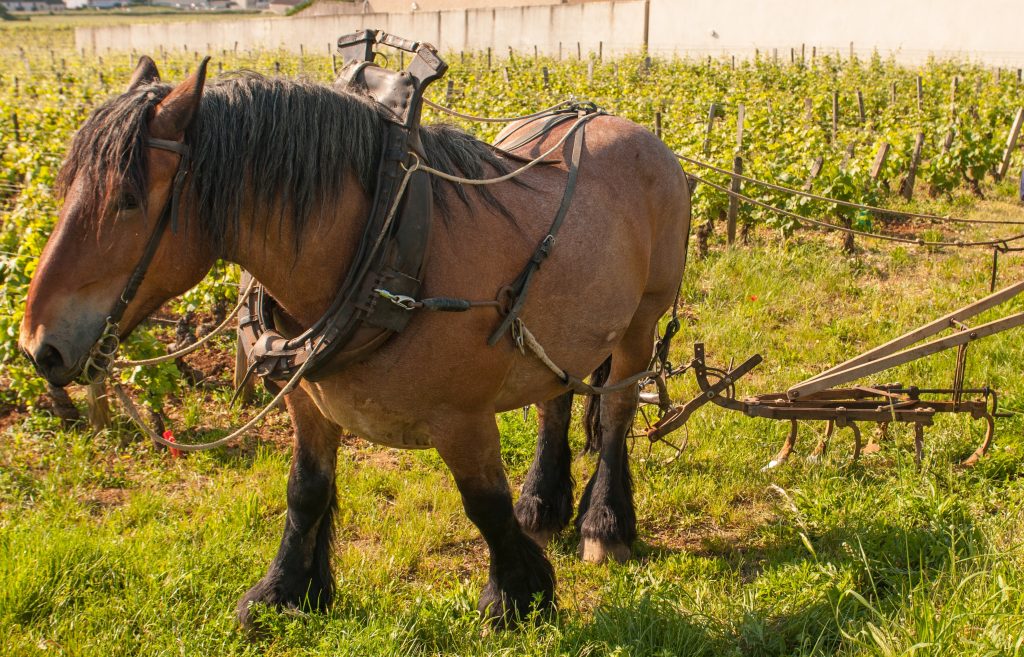
Horses have been used to replace tractors for ploughing. Christophe Baron founded Cayuse Vineyards on the Oregon side of Walla Walla Valley, where much of the vineyard work is done with teams of Percheron and Belgian draft horses. After harvest, the horses are forced to pull the cultivators, and in the spring, to power the ploughs. Domaine de la Romanée-Conti in France recently reintroduced horses at its vineyards.
Chickens have also been used to help control insects and provide natural compost through their manure. At Quivira Wine, the chicken manure is used in the compost soil, as part of their organic farming.
At Terra Noble Wines in Chile, llamas are used to eat weeds in the vineyards. Armadillos are also used in Bodega Chacra’s vineyards in Patagonia so they can eat insects and worms.
These forms of animal exploitation are particularly common in organic and biodynamic vineyards, where minimising chemical inputs is a priority, so vegans should not simply trust that an organic wine would be suitable for them. Identifying vegan wines can be challenging since winemakers are not always required to disclose finning agents on labels, or whether they used animals in their vineyards, but there are vegan certifications that may help.
Choose vegan for the animals in 2025 with Veganuary! https://bit.ly/Veganuary25