
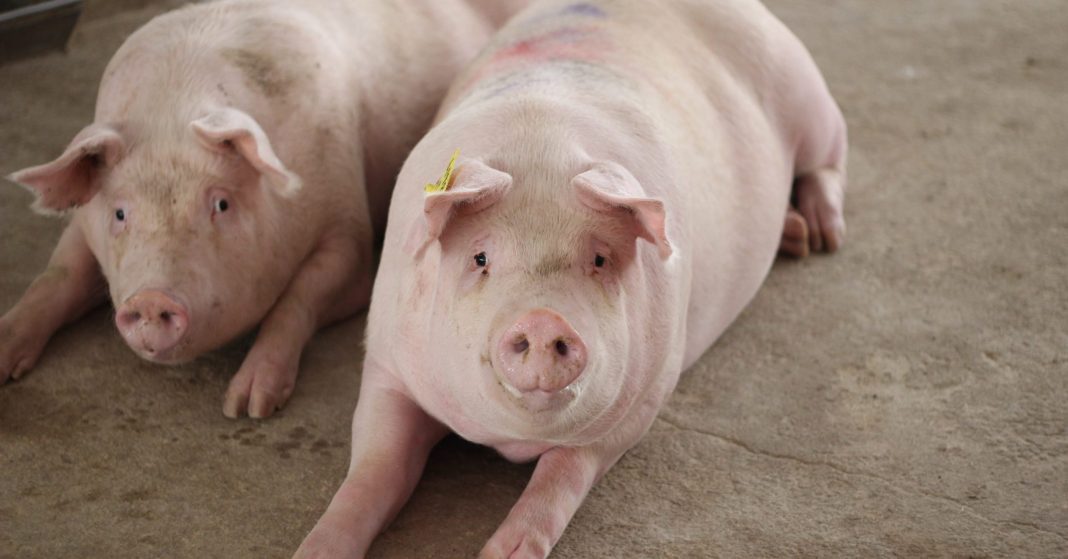
The meat industry is forcing millions of pigs to become fatter and fatter very quickly through genetic manipulation and overfeeding of unnatural foods.
The meat industry’s relentless drive for profit has given rise to industrialised animal agriculture practices, with the fattening of pigs standing as one of the archetypal forms of farmed animal abuse. In this process, millions of sentient beings endure lives of suffering to meet the ever-growing demand for their flesh — euphemistically called “pork”.
Pigs are intelligent, social animals capable of experiencing the whole range of emotions we experience (including discomfort, pain, and fear), but in the meat industry, they are reduced to mere commodities. Globally, over 1.5 billion pigs are slaughtered annually for meat. The US is the world’s second-largest producer of pig meat (after China, which produces 55 million tonnes of pigs’ flesh), where approximately 121 million pigs are slaughtered for meat each year. In 2023, the UK alone produced 927,400 tonnes of pig meat, with over 10 million pigs slaughtered. Most of these pigs are raised on factory farms, where they are confined to crowded, filthy spaces, often with no access to sunlight or fresh air. The fattening phase, known as the “finishing period,” is a particularly grim chapter in their lives (as it will end with their deaths), and leads to pigs that reach 110 to 125 kg within six months.
During this phase, pigs are fed calorie-dense diets designed to maximise weight gain in the shortest possible time. Genetic manipulation (making pigs bigger and bigger through artificial selection) and growth-promoting drugs exacerbate their plight, often causing them to become so large that they can barely move. Many pigs suffer from joint pain, respiratory issues, and heart problems due to their rapid weight gain. The result is that unnaturally fat pigs are typically slaughtered at just six months old, a fraction of their natural lifespan of 12-15 years when they are only seen by the industry as walking lumps of fat and flesh that must be killed before they consume too much food, water, and electricity — hence forcing them to balloon up as fast as possible, to save cash.
The pigs’ confinement helps the fattening process because the less the pigs can move, the less energy they will exert on their natural behaviours, so a higher percentage of what they eat will end up being stored as fat and flesh. They are often kept on concrete floors, with slatted crevices allowing faeces and urine to pass through, which do not allow pigs to spend energy digging —which is what they like to do. Pigs in European factory farms spend most of their lives in a space that is one square metre or less. Even the so-called “free range” open pig farms restrict the behavioural movement by not providing the pigs with the ability to perform their natural behaviours, and by keeping them confined and preventing them from exploring. In organic pig farms in Europe, pigs are only allowed 1.3 m² of indoor space and an additional 1 m² outdoors, which is usually a concrete floor sparsely covered with straw.
The industrial fattening of pigs not only harms the animals but also wreaks havoc on the environment. Producing pigs’ flesh on such a massive scale requires vast amounts of resources, including water, land, and feed crops. To fatten one pig, an estimated 6 kilograms of feed are needed to produce just 1 kilogram of commercial pig flesh. This inefficiency contributes to deforestation, soil degradation, and the depletion of freshwater resources.
Unnatural Feed
Pigs are domesticated versions of Eurasian wild boar (Sus scrofa), so to find out what the natural diets are that pigs should be eating, we just need to see what these wild boars eat as they still exist in the wild. They mainly eat rhizomes, roots, tubers and bulbs, all of which are dug up throughout the year in the animal’s whole range, followed by nuts, berries and seeds, which are consumed when ripened and are dug up from the snow when necessary, as well as small amounts of leaves, bark, twigs shoots, earthworms, insects, molluscs, rodents, bird eggs, lizards, snakes, frogs and carrion. In temperate zones, acorns and beechnuts are some of their most important food items. A 50 kg (110 lb) boar needs around 4,000–4,500 calories of food per day.
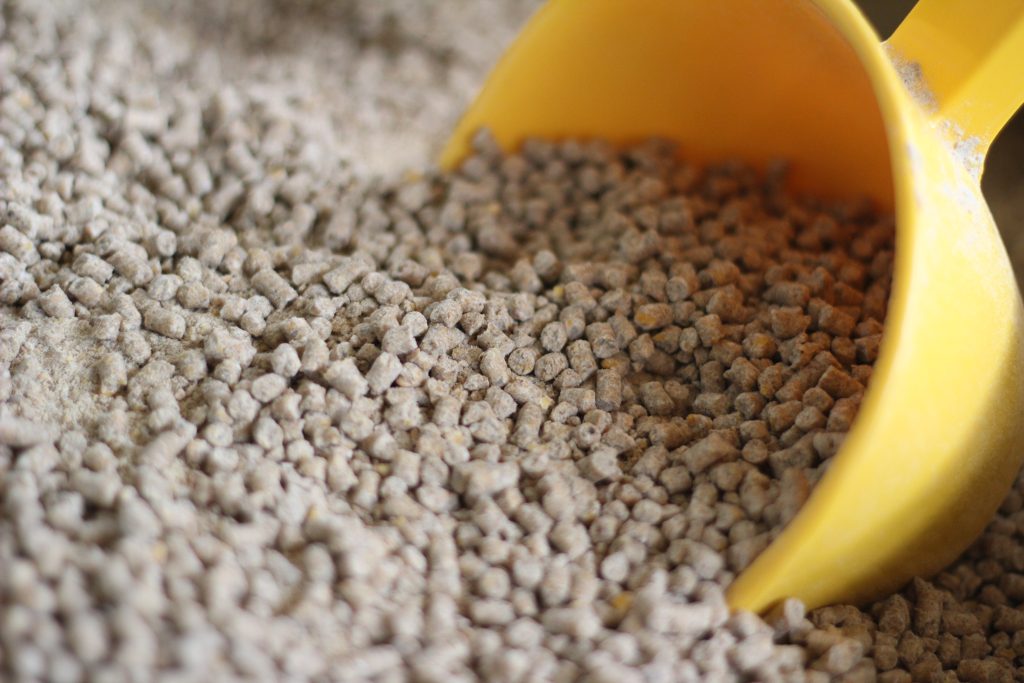
However, captive domestic pigs are fed a completely different diet. To maximise profits, pigs are fed high-energy, low-fibre diets that cause them to gain weight rapidly. This unnatural growth rate can lead to several health problems, including heart disease, joint problems, and respiratory difficulties. Pigs are fed a diet of highly processed grains and soy, often supplemented with antibiotics and growth hormones. This unnatural diet can lead to digestive issues and a weakened immune system.
Soya (soybean) is the primary component of pig feed in industrial farming. Approximately 75% of the global soybean harvest is used for animal feed. This high-protein feed is sourced mainly from the US, Brazil, and Argentina.
In the US, the unnatural diet fed to pigs typically includes corn and soybean meal with some additives. Antibiotics are often added to the feed to prevent disease outbreaks in crowded conditions and to increase growth. In Europe, EU regulations place some restrictions on feed additives, but the diet still primarily consists of soybean meal and other grains. The European Food Safety Authority (EFSA) has set guidelines for pig nutrition, including protein, energy, and mineral requirements. China has adopted Western-style feeding practices. The diet is heavily reliant on imported soybeans, with China importing close to 70% of the international soybean trade, primarily for pig feed.
Pigs are fed different amounts of food depending on their age. Pigs are classed as Piglets from 0 to 3-4 weeks old (and they weigh 2-3 pounds at birth), Weaners (separated from their mothers and no longer nursing) from 3 to 8 weeks of age, Nursery Pigs from 6 to 8 weeks (during this time, they grow from about 13-15 pounds to 50-60 pounds), Growers when they are in early stages of the fattening process growing/finishing phase (typically from about 50-125 pounds), Finishers from about 125 pounds to market weight, and Market Pigs, who have reached the weight the farmer wants for them to be slaughtered, typically around 280 pounds at about 6 months of age.
Creep Feed is the term used for the food given to the younger pigs. An average Creep Feed (for pigs of 3-4 weeks to 10-11 weeks of age) would consist of 20g per piglet per day of the following:
- Protein content: 20-24%
- Ingredients:
- Corn
- Soybean meal
- Barley
- Wheat bran
- Milk by-products
- Vegetable protein
- Oilseed extracts
- Fatty acids
- Feed phosphate
- Vitamins and minerals
The average Weaner Diet (for pigs weighing 6-13 kg / 13-29 lbs) would have 10.0-10.7 MJ/kg of energy with 19-22% of crude protein. The average Grower Diet (for pigs weighing 40-125 lbs / 18-57 kg) would have a protein content of 16%, with an average daily feed intake of 4.25 lbs leading to an expected daily gain of 1.50 lbs. The average Finisher Diet (for pigs weighing 125-240 lbs / 57-109 kg) would have a protein content of 13-14%, an average daily feed intake of 7.00 lbs, and an expected daily gain of 1.80 lbs.
All of this unnatural feeding is just another of the many wrong things pigs have to endure during their short life (including tail docking), which would inevitably end in death in the slaughterhouse or the farm.
The fattening of pigs for the meat industry is a cruel and exploitative practice that causes immense suffering to these intelligent animals.
Join millions choosing vegan in 2025 with Veganuary! https://bit.ly/Veganuary25