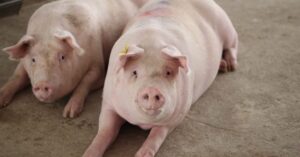

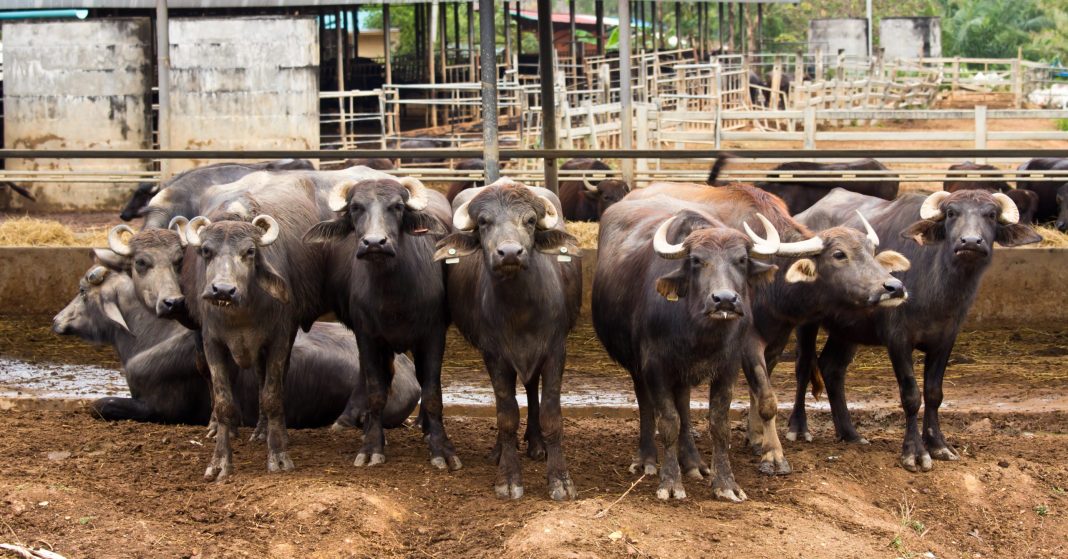
Zoologist Jordi Casamitjana looks at the reality of farming Bisons, Buffaloes and Yaks, the other Bovids people exploit for meat, milk, and fibre.
There are more cows and bulls than you think.
When we use these terms, we normally think about two subspecies of the species Bos taurus (sometimes collectively referred to as “cattle”) that many cultures have exploited to produce meat and milk. These are domesticated bovids (a family of cloven-hoofed quadrupedal big ruminant mammals) created by humans via selective breeding from an ancestral wild bovid, the wild ox, who is now extinct. All typical bulls and cows we think about when we hear these terms today are descended from as few as 80 animals who were domesticated from wild oxes in the Near East some 10,500 years ago. Since then, three sub-species were created, first the aurochs (Bos taurus primigenius) closer to the original wild ox and no longer in existence today, and from this one the taurine bulls and dairy cows (Bos tuarus taurus) and the Zebu or Indian cows (Bos taurus indicus) which form all the breeds of all domestic “cattle” alive today. Taurine bovids are now common in Eurasia and America, while Zebus are common in Africa and Asia.
However, these are not the only Bovids farmed by humans. Other species have traditionally been farmed too, and they are still farmed today, and the females and males of such species are also referred to as cows and bulls, respectively. These are the Bisons, Yaks, and Buffaloes, and we will be discussing them here as they are often forgotten by animal protectionists who campaign against the meat and dairy industry.
Some bisons, buffaloes, and yaks have also been domesticated and exploited for several purposes. They are all members of the Bovini tribe, with bisons and yaks — part of the genus Bos, like cattle — being more closely related to each other than to buffaloes. This close relationship has allowed for the creation of hybrid species such as beefalo (bison-cattle) in North America and żubroń in Poland.
Who Are the Bisons?
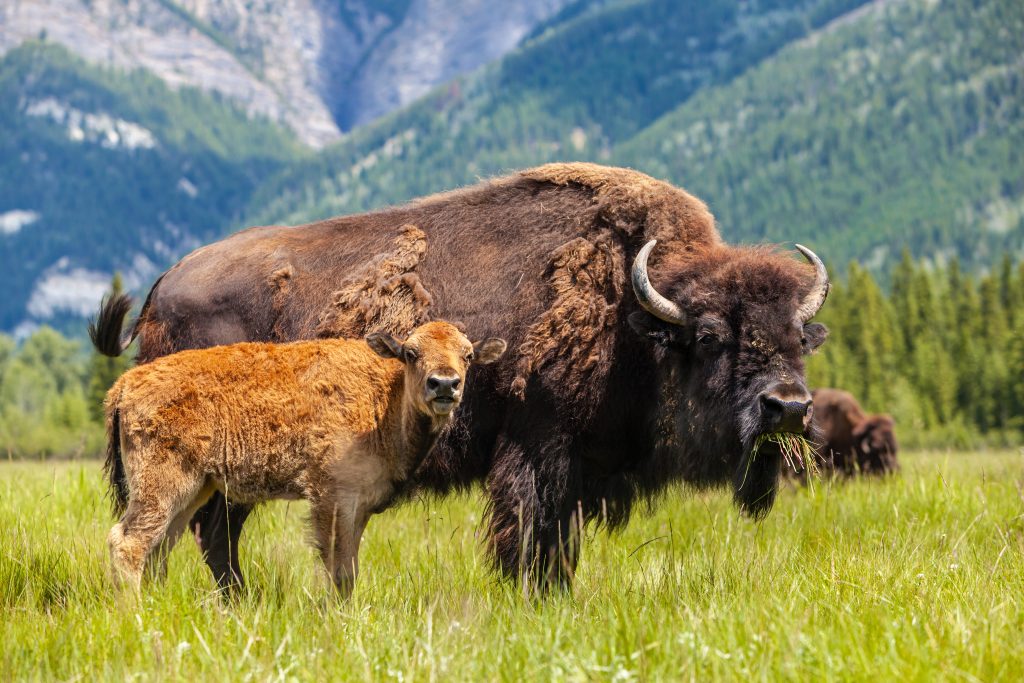
The bison is one of the most iconic mammals of the North American grasslands, often mistakenly referred to as a buffalo (which is an African and Asian animal). Its closest relatives are the European bison (Bison bonasus), found in forested areas of Europe, and the extinct Steppe bison (Bison priscus), which once roamed the vast ice-age tundra. American bison (Bison bison) inhabit the plains and woodlands of North America, where they have shaped the lands they graze.
Bisons are very large. Adult males (also called bulls) can weigh up to 2,200 pounds, while females are slightly smaller, up to 1,200 pounds. Their defining features include a prominent hump over their shoulders supported by strong muscles, a thick vertebral column, and a massive head. Their shaggy, dark brown coats provide insulation during freezing winters, but these are shed in the warmer months.
Historically, bisons were hunted by Native American tribes, who revered them as a source of food, tools, and clothing. The arrival of European settlers led to devastating population declines in the 19th century, with millions slaughtered for sport and trade. Thanks to conservation efforts, American bison populations have rebounded, though most live on protected reserves or private ranches. However, today, bisons are farmed in parts of North America for their lean meat and hides, but wild herds still roam Yellowstone National Park and other conservation areas.
Bison are nomadic grazers who travel in herds. Bulls usually leave the female herds (with the calves) at two or three years of age to join smaller male herds. Compared to cattle, bison wander more, are less likely to graze a site again during a single growing season and will use steeper terrain. They can also consume a wider variety of plant species. During the mating season, bulls engage in fierce head-to-head clashes to establish dominance. Bisons are highly protective of their friends and families and can charge at speeds of up to 35 miles per hour when provoked. American bisons differ slightly from their European counterparts as they are heavier on average, with shorter legs and a more heavily built body. They also have hairier bodies but less hair on their tails compared to European bisons.
Female bisons, also called cows, typically begin reproducing at three years of age and can continue beyond 19 years, usually producing one calf annually, with reproduction dependent on the cow’s mass and age.
Bisons were once widespread across North America and parts of Europe. Today, American Plains bisons number about 20,000 genetically pure individuals in fragmented herds (the wood bison is listed as threatened in the US and endangered in Canada). In Canada, there are approximately 700 mature Plains bisons in three free-ranging herds and about 250 semi-captive mature bisons in Elk Island National Park.
The domestication of bisons is a relatively recent phenomenon and most bisons who are not hybrids, including the farmed ones, are still mostly wild animals from a genetic point of view. The domestication efforts began in the late 19th century in North America, initially by attempting to crossbreed bisons with domestic cattle to create “cattalo” or “beefalo”. Domesticated bisons are gradually losing their wild characteristics, becoming more similar to cattle in appearance and behaviour. All the current North American bisons, including those considered “wild,” carry small amounts of cattle DNA due to past hybridisation events. In the wild Bisons can live between 15 to 20 years, but in captivity, they can reach 35 years.
Who Are the Yaks?
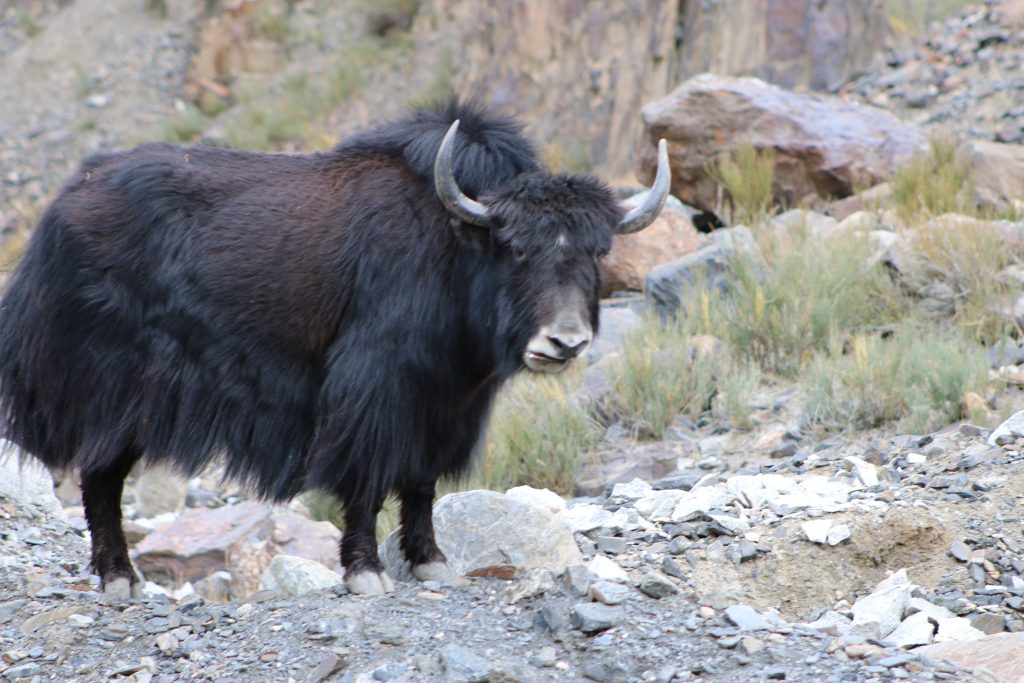
Yaks are Bovids who live in the high-altitude regions of the Himalayas, Tibet, Mongolia, and Central Asia. Wild yaks (Bos mutus) roam remote mountain ranges in the Tibetan Plateau and surrounding high-altitude areas, while domesticated yaks (Bos grunniens) have become part of human life for millennia. In Nepal, Tibet, and Mongolia, domestic cattle are crossbred with yaks, producing infertile males called dzo and fertile females called dzomo or zhom.
Yaks are built for the cold. Their long, dense fur forms an insulating subcutaneous layer of fat against subzero temperatures, and their compact bodies minimise heat loss. They have larger lungs and hearts than cattle found at lower altitudes and can transport oxygen through their blood more efficiently. They also lack functional sweat glands.
Wild yaks are big, with males weighing up to 2,200 pounds, while domesticated yaks are smaller but equally hardy. Both wild and domestic yaks have wide, curved horns that help them forage for food under snow. Yaks can vary in colour from light tan to dark brown, with black being the dominant colour in wild herds.
In males (also called bulls), the horns (typically ranging from 48 to 99 cm) sweep out from the sides of the head and then curve backwards. The horns of females (also called cows) are smaller, 27 to 64 cm in length, and have a more upright shape.
Domesticated yaks are generally smaller and more docile than their wild counterparts, and they have been selectively bred for various traits, including milk production and adaptability to different altitudes.
Yaks are herbivorous grazers, eating tough grasses, mosses, and lichens. They tend to browse on shrubs and low-hanging trees more often than American bisons, who prefer grass. They are farmed to provide milk, meat, wool, and even dung, which is used as fuel in regions without trees. Domesticated yaks are also exploited as pack animals, capable of carrying heavy loads across steep mountain passes. In contrast, wild yaks are more elusive and wary of human presence, though they face threats from habitat loss and poaching.
Like the other Bovids, yaks are herding animals. Female yaks form tight-knit groups with their calves, while males are more solitary. During breeding season, dominant males compete for mates, often through displays of strength. Unlike domesticated yaks, which are docile and cooperative, wild yaks can be aggressive when threatened. Wild yaks live up to 25 years, while domesticated yaks live up to 26 years.
Who Are the Buffaloes?

Buffaloes are a diverse group of bovids divided into two primary species: the African buffalo (Syncerus caffer) and the water buffalo (Bubalus bubalis). African buffaloes live in the savannahs and forests of sub-Saharan Africa, while water buffaloes thrive in the wetlands and rice paddies of Asia. Although African buffaloes have never been domesticated due to their unpredictable and aggressive nature, the domestication of water buffaloes dates back over 5,000 years (although some types may have been domesticated much earlier).
The African buffalo weighs up to 1,900 pounds. They have dark coarse coats and big curved horns with a central “boss”. African buffaloes are intensely social, living in large herds that defend their members from predators. These herds exhibit remarkable coordination, often surrounding calves to shield them from danger. Wild African Buffaloes live between 10 and 20 years, with some reaching up to 29 years.
The wild water buffalo (Bubalus arnee), native to the Indian subcontinent and tropical Southeast Asia, is most likely the ancestor of the domestic water buffalo. Domestic water buffaloes are smaller than their wild ancestors, which can weigh up to 2,600 pounds. There are two extant types of water buffalo, the river buffalo of the Indian subcontinent and further west to the Balkans, Egypt and Italy, and the swamp buffalo from Assam in the west through Southeast Asia to the Yangtze Valley of China in the east. The skin of the river buffalo is black, but some may have dark, slate-coloured skin. Swamp buffaloes have grey skin at birth, which becomes slate blue later. River buffaloes have longer faces, smaller girths, and bigger limbs than swamp buffaloes.
Water buffaloes are well-adapted to hot and humid climates. River buffaloes prefer deep water, while swamp buffaloes prefer mudholes, which they make with their horns (covering themselves with mud). Some water buffalo breeds are adapted to saline seaside shores and saline sandy terrain. They eat many aquatic plants, and during floods, they graze submerged. Swamp buffaloes carry their calves for one or two weeks longer than river buffaloes.
They are exploited for meat and milk, as well as forced to work in flooded fields where other animals cannot. Water buffaloes are now distributed across 46 countries. Wild water buffalo still exist but are endangered, primarily found in parts of South and Southeast Asia. The water buffalo population in India numbered over 97.9 million individuals in 2003, representing 56.5% of the world population. The second-largest population lives in China, with 22.76 million individuals. Domestic Water Buffaloes live between 20 and 25 years, with some reaching 30 years or more.
The Farming of the “Exotic” Bovids

Although the most common Bovids farmed in the world are the taurine Eurasian cows and the Indian cows, in some countries other domestic bovids dominate animal agriculture.
Yak farming is primarily practised in high-altitude regions of Central Asia, with significant populations in countries like Bhutan. The majority of the 14 million or so domestic yak live at altitudes between 3000 and 5000 m. Yak farming is a low-cost production that requires minimal expenses because yaks are exclusively grazing animals and can feed on natural pastures year-round. Milk yield is low at 200–400 litres with a fat percentage of 6–7%. Butter is the main human-consumed product from Yak’s milk. Yaks are mainly farmed by people for subsistence using them as a source of milk, leather, and wool, as well as for transport, but there is anecdotal evidence of companies processing yak milk, with yak milk and its products categorised as speciality products owing to their hypoallergenic properties. Annual milk production has been estimated at up to 40 million tons per year. Yak meat is the main food of residents of Murgab, Tajikistan. Yaks’ long hair is also used. The average yak will yield around 1-2 lbs (500-1000gm) of fibre per year.
Most farmed bovids in America are Eurasian cattle, but bison farming in North America has seen growth in recent years, with operations varying in size and purpose. About 56% of bison farming operations are in the West region of the United States, with 24% in the North Central region, 11.2% in the Southeast region, and 8.8% in the Northeast region. Very small operations (1-9 bisons) represent 38.7% of the farms, while large operations (100 or more bisons) represent 14.1%. The main reason for farming bisons is meat production, and they are normally raised in open grazing ranches.
Water buffalo farming is practised in various parts of the world, with significant populations in Asia and some parts of Europe. The global population of domestic water buffalo is over 200 million, with the majority found in Asia. The water buffalo is the main dairy animal in Pakistan, with 23.47 million animals in 2010. Water buffalo also play a significant role in rice cultivation, as they are used to plough fields in many Asian countries. In India, river buffaloes are kept mainly for milk production and transport, whereas swamp buffaloes are kept mainly for work and a small amount of milk. However, meat and leather are also important products of their farming in India and adjacent countries.
In Europe, river water buffalo are farmed mostly in Italy (locally named Mediterranean black buffalo, and bred mostly for mozzarella cheese), but also in Romania, Bulgaria, Greece, Serbia, Albania, Kosovo, and North Macedonia, with a few hundred in the United Kingdom and Ireland. Water buffaloes were introduced into the Amazon River basin in 1895, and they are now used there for meat and dairy production. Until 2002, only one commercial breeder existed in the United States, with most of their meat being imported from Australia (another country where these animals accustomed to humid climates are farmed in a very different habitat). Between 1824 and 1849, swamp buffaloes were introduced into the Australian Northern Territory to provide meat and hide. Around 26 million water buffaloes are slaughtered each year for meat worldwide. Water buffalo are used in some countries for traditional sports, including buffalo racing and fighting.
What’s Wrong with Farming the “Other” Bovids?

Farming any animal is intrinsically wrong because it is a violation of the animal’s right to autonomy. Creating domestic animals from wild animals via artificial selection also constitutes reproductive abuse and the creation of genetic aberrations with associated animal welfare problems. Stealing the milk mothers produce for their offspring is also a cause of great distress for both mothers and calves and slaughtering animals to sell their flesh is the ultimate abuse of rights. Using farmed animals as a form of transport or to work causes them pain and exhaustion. Popular farmed animals are also sometimes exported to countries with environmental conditions very different from where the animals originate from, causing them extra difficulties in coping with life. All these wrongs of “animal farming” apply to the farming of buffaloes, bisons, and yaks. In addition to these, people who farm buffaloes and yaks often do it in countries with very poor animal welfare standards and sometimes without any animal protection legislation.
Although the farming of yaks has been mainly in small numbers for subsistence reasons, there have been recent concerns about yak farming because of forage availability in rangelands, vulnerability to predation, prevalence of diseases and parasites, and poor access to veterinary services.
Bisons remain relatively wild animals (even when domesticated) who evolved to thrive in expansive landscapes. In farming environments, they are often confined to smaller areas in which their natural behaviours are restricted. Even in farms that claim to prioritise animal welfare, the fundamental issue remains: the stress associated with confinement, handling, and transportation can lead to physical and psychological distress.
In 2023, the animal rights organisation PETA launched an exposé of a farm owned by the Ontario Water Buffalo Company, following a whistleblower complaint alleging that animals languished from painful ailments in filthy pens. Investigators claim the farm forces the animals to endure subfreezing winters in filthy conditions, to exploit them for meat and dairy products, including buffalo mozzarella and other cheeses. According to the whistleblower, animals were left to suffer from various ailments and denied adequate care or an end to their suffering. The whistleblower said that a blind calf who couldn’t stand lingered for two weeks before he died, and that expecting mothers gave birth to their calves in mud, piles of faeces, or ponds. PETA investigators saw that calves were taken from their mothers soon after birth and penned within their view and heard a mother repeatedly calling out to her calf. They also found that buffaloes suffered from uterine prolapses, a painful condition in which the animals’ internal reproductive tissue protrudes from their bodies.
In India, not only do most of the cattle cows of the dairy industry end up sold to local butchers (or transported to other states where butchers buy them) for meat and leather, but buffaloes are also killed for meat, in bigger quantities (as Hinduism does not consider them sacred). There are not massive cow meat farms (“beef” farms) in India as we see them in the West, but there are 110 government-approved buffalo slaughterhouses. The flesh from the dairy cows and the buffaloes together is the “beef” the country exports to other nations such as China, making the country one of the top “beef” exporters. As exploiting buffaloes for meat and milk had no religious or political obstacles compared with the “sacred” taurine cows, so both the milk and “beef” industries began shifting toward buffalo farming (the “beef” from buffalo is labelled “carabeef”, and thus an Indian ban on beef exports is not affecting it — although it is essentially the same “product” as it is the flesh of closely related bovids).
There are elements of cruelty added to the farming of buffalo in India. Firstly, the female buffaloes in small dairy farms are often kept in filthy concrete structures tied up with chains or ropes to a nearby post or fence, so they cannot move much. They are kept this way in very hot weather often with very little water to drink. In the West, when male calves are born (who will not produce milk when growing up) they are killed straight away or taken to veal facilities where they will be killed soon after, but in India, they are normally abandoned (which is arguably crueller), perhaps tied up somewhere so they die of starvation.
Another practice used in the Indian dairy industry is Khal Bacha (which translates to “skin baby”) in which a dead male calf’s skin is stuffed with hay or sawdust and kept in front of a female buffalo to deceive her into thinking that her calf is still alive so that she does not stop producing milk. As for the fate of the buffalo cows who stop producing milk, they will be sold to butchers so they can be slaughtered for meat or leather (normally both).
Then, there is the issue of environmental damage. The commercial expansion of bison, yak, and buffalo farming often leads to the conversion of natural habitats into agricultural land. This process can lead to habitat destruction for countless other species, contributing to biodiversity loss. Moreover, while bison are sometimes touted as “sustainable grazers,” the reality is that any form of livestock farming requires significant land resources that could otherwise support wild ecosystems. Animal farming is a leading contributor to greenhouse gas emissions. While bison may produce fewer emissions than cattle per unit of meat produced due to their efficient digestion, they still contribute to methane emissions — a more potent greenhouse gas than CO2. The argument that certain animal species are more environmentally friendly does not negate the fact that all animal agriculture negatively contributes to climate change, while plant agriculture (especially veganic) does the opposite.
While farming bison, yak, and buffalo may be marketed as ethical and sustainable, it is essential to debunk these claims with the truth that these animals endure and the environmental consequences of animal agriculture. As we strive for a more compassionate world, embracing the vegan philosophy offers a viable solution that respects both animal rights and environmental integrity.
Many more cows and bulls suffer from animal agriculture than most people think.
Choose vegan in 2025 with Veganuary! https://bit.ly/Veganuary25