
The leather industry is often ignored by some animal protectionists who may wrongly believe it’s only a subsidiary of the meat industry, but here are eight things the leather industry doesn’t want the public to know.
People don’t think much about leather.
Even some people who have already rejected all animal products from their diets may still wear leather in their shoes, belts, or purses without thinking much about it. Even some vegans who adopted veganism recently may keep some of their leather items until worn out instead of replacing them straight away as they may have done with wool or silk clothes. Some ethical vegans who do not wear leather may still sit in cars with leather seats. Part of this may be because people may believe leather is a by-product of the meat and dairy industries —as if this would distance leather from the suffering of the animals whose skin was taken to manufacture it. However, the leather industry does not rely on discarded materials from other industries; instead, it directly causes animal suffering, damages the environment, and puts people at risk.
It’s not in the interest of the leather industry that their damaging practices are widely known, so they use their PR machines to hide them. There are many facts about the industry that they do not want the public to know. Here are just eight of them:
1. Leather Is Not a Byproduct of the Meat Industry
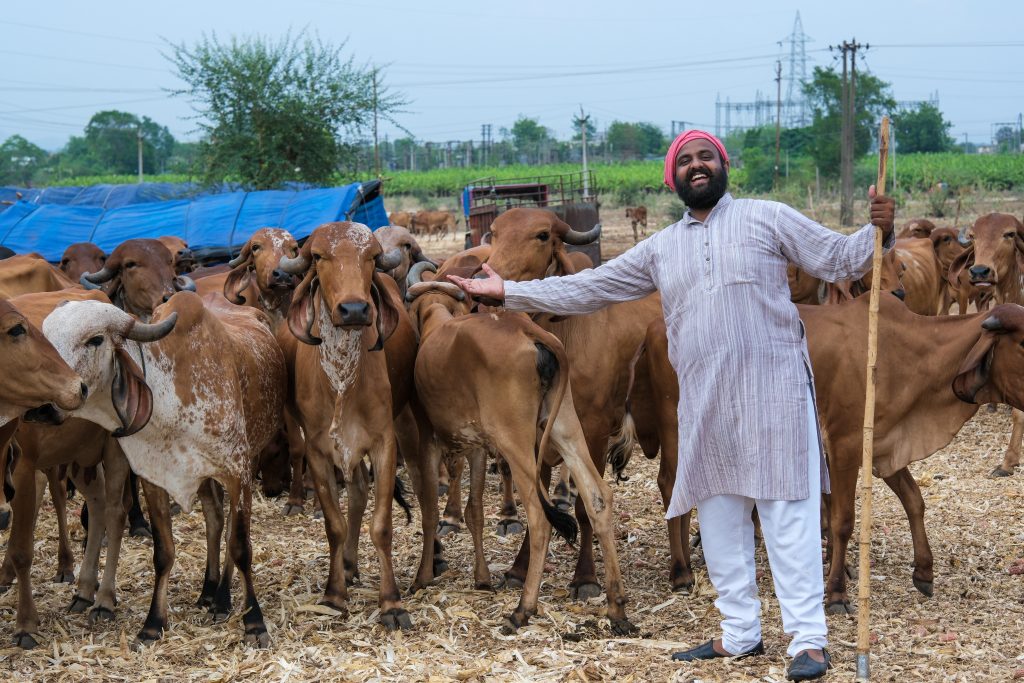
Leather is a coproduct of the meat and dairy industries (and other industries), not a byproduct, and profits from leather sales drive the slaughter of hundreds of millions of animals each year as much as the profits from milk and meat.
A byproduct becomes a coproduct when its value increases to significant levels, and as leather’s market value has been estimated to be between $250 billion and $407 billion (and is projected to grow to $743 billion by 2030), it is clear that hides are not recycled material that otherwise would be discarded, but an important part of the business model of those who raise cows, goats, sheeps, camels, ostriches (ostrich farming is also about selling the bird’s skin as luxury leather), and other animals for profit.
The companies that sell leather items often misrepresent them as a byproduct of other industries to deceive consumers into believing that their choices have no negative impact on animals or the environment.
This is a similar deception to that seen in the wool industry, as wool is also a coproduct of the meat industry, and not a byproduct as it is often claimed. Farmers try to exploit the sheeps they keep producing as much profit as possible, so they most likely will use them for lamb (baby sheep meat), mutton (adult sheep meat), milk, leather, and wool. Although lamb meat may generate most of the profit of a flock, it is not that wool is just a byproduct of the meat industry, because the sheeps used were genetically modified to produce more hair, not to become big and fat.
2. The Leather Industry Kills Millions of Animals

The global leather industry slaughters over a billion animals annually for their skins. This staggering number includes not just cows/buffaloes (80%), and goats/sheeps (19% in 2019), but also pigs, camels, alligators, snakes, sting rays, seals, rabbits, emus, deers, horses, ostriches and even dogs and cats (often intentionally mislabelled).
A PETA Asia investigation revealed that dogs are killed in China to produce leather. At a slaughterhouse in eastern China, the investigator filmed workers as they grabbed dogs around the neck with metal pinchers and bashed them over the head with a wooden pole. PETA estimates that 2 million cats and dogs are killed there each year for their skins. Australia kills over 150,000 crocodiles every year as it produces 60% of the world’s crocodile skin trade.
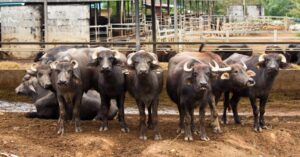
The countries that kill more animals for leather are India and China. In India, Kanpur, also known as “leather city”, produces almost a third of India’s leather from cows and bulls of the subspecies Bos taurus indicus, who have relatively more skin per mass of individuals than the subspecies Bos taurus taurus commonly found in Europe and America. India also produces leather from buffaloes (bread in areas where Indian cows have more protection).
3. Animal Cruelty is an Inherent Part of the Leather Industry
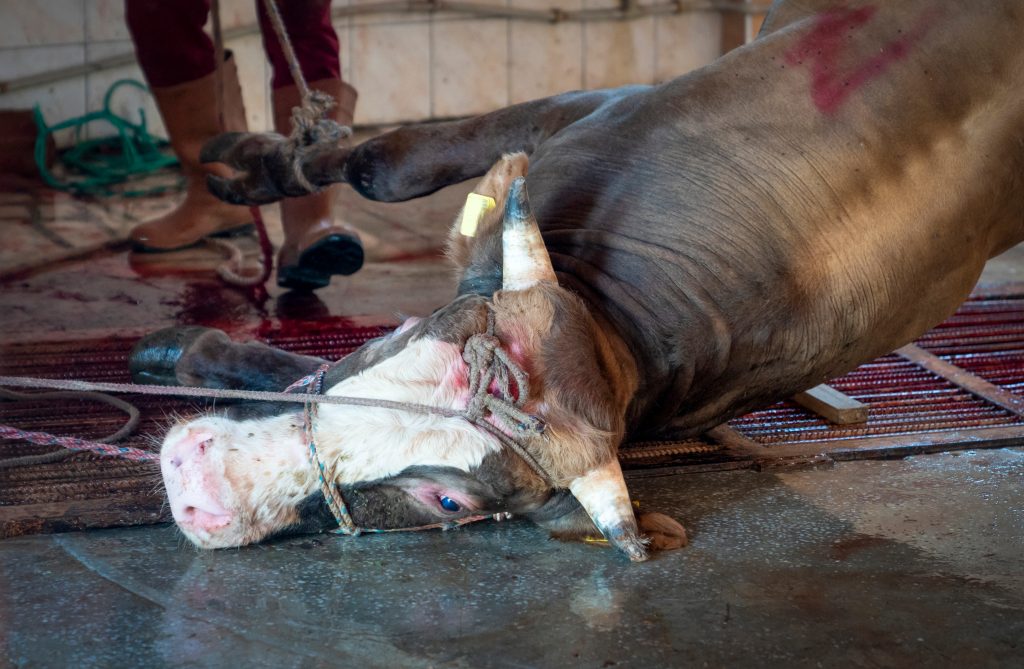
Animals raised for leather endure immense suffering, which is deliberately caused by the leather industry’s methods, making it intrinsically cruel. The animals who are killed for their skin often spend their entire lives in factory farms, kept in stressful and unsanitary crowded conditions, and exposed to higher risks of infections and psychological diseases.
They also suffer all sorts of painful procedures inflicted on them, such as disbudding, dehorning, castration, branding, mulesing, and tail-docking, often without any painkillers. In the biggest animal factories, as well as in some grass grazing operations, injured and sick animals may suffer for long periods in pain untreated. Crocodiles bred for leather are kept in barren, concrete pens until they are slaughtered at just 2-3 years old.
In India, which has a huge leather industry, cows are often forced to march for days without food or water to slaughterhouses. Those who collapse from exhaustion may have their tails broken or chilli peppers rubbed into their eyes to force them to keep moving.
At slaughterhouses, animals will have their throats cut and many will be seeing and hearing other animals before they are killed, causing a great deal of distress.
In most cases, the animals are killed when they are relatively young, but sometimes, extremely young animals are killed for leather too. In particular, calves, kids, and lambs are considered very valuable by the industry because of the softness of their skins. Even unborn calves, whose pregnant mothers are killed, may be skinned too.
4. The Leather Industry is One of the Most Detrimental to the Environment

Leather production is a major contributor to deforestation, water and soil pollution, and greenhouse gas emissions responsible for the current global climate crisis. The ‘Pulse of the Fashion Industry Report 2018’ published by Global Fashion Agenda and The Boston Consulting Group ranked leather production in the first place of the fibres with the worst environmental impact (followed by silk).
Brazil is a major leather producer, with 80% being produced there for international markets. The 213 million cows the country breeds require a lot of land to graze, so cow ranching accounts for 80% of current deforestation in the Amazon, with meat and leather being the coproducts of this habitat destruction. The leather industry also wastes a lot of water. It takes over 100,000 litres of water to produce one cow hide alone. It takes 14 times more water to produce leather from a cow than the same amount of synthetic polyurethane leather.
The industry directly pollutes the environment with toxins. More than 50 chemicals are used in leather production, many of which are highly toxic, such as biocides, surfactants, degreasers, and swell-regulating agents. This is because, without such chemicals, the skin of the animals would rot after a short period. More than 90% of all tanned leather is treated with highly toxic chromium sulphate. Chromium pollution is a significant environmental threat impacting water and soil and negatively affects plant metabolic activities, crop growth, and vegetable quality.
5. The Leather Industry is Toxic to People
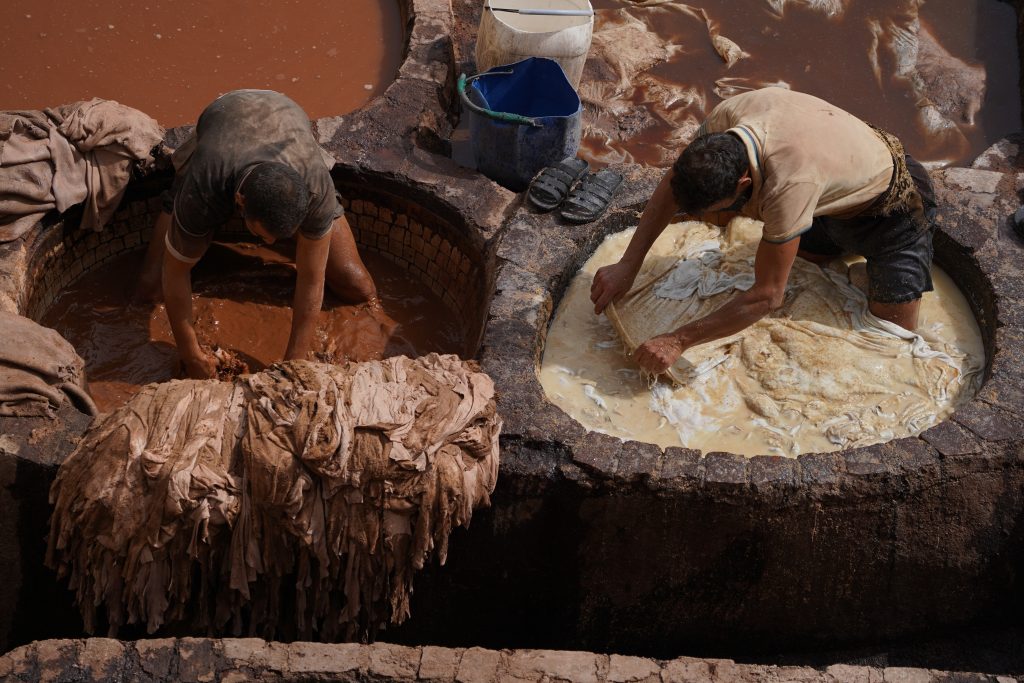
Turning animal skin into leather requires a cocktail of harmful chemicals, including mineral salts, formaldehyde, and coal-tar derivatives. Tanning exists to almost render skins “inorganic” in their behaviour, preventing them from effectively biodegrading as the organic tissues once were. This process not only pollutes the environment but also poses serious health risks to tannery workers and nearby communities.
Studies have shown that tannery workers have the potential for exposure to numerous known or suspected occupational carcinogens, including hexavalent chromium salts, arsenic, and organic solvents (benzene, formaldehyde, butyl acetate, ethanol, acetoacetate, toluene and acetone).
People working in and living near tanneries face elevated cancer risks. Studies in Italy and Sweden have found cancer rates 20% to 50% higher than expected among leather tannery workers. In one extreme case, leukaemia rates near a Kentucky tannery were five times the US average. In Bangladesh, chemical exposure and equipment accidents pose such a great hazard that workers are not expected to live beyond the age of 50.
The leather industry often relies on exploitative labour practices, including the use of child workers. In Bangladesh, children as young as eight have been found working in hazardous conditions, handling toxic chemicals and operating dangerous machinery.
In Kanpur, the “leather city” in India, about 50 million litres of untreated wastewater is generated by tanneries every single day. This will end up being used for farming, seriously compromising the health of the residents. Contact allergy to Chromium is the third most common metal allergy. Approximately 1–3% of the adult population in Europe is allergic to chromium, and yet more than 90% of the leather produced worldwide (2 billion m2) is tanned with chemicals that contain Chromium.
6. The Leather Industry is Deceiving the Public

There is often no way to tell where leather truly comes from, or what animal it’s made from without incurring very expensive and sophisticated DNA testing. Even trying to do DNA tests may not work as the skin has been modified so much with the use of chemicals that in some cases scientists may not be able to extract enough intact DNA, but even if the species could be identified, the actual origin of the animals would be almost impossible. This fact is used by the leather industry to mislead customers about where the animals they used came from.
Several factors contribute to this deception. Firstly, the global nature of the industry means that animal hides can change hands multiple times across different countries before becoming finished leather goods that are sold to customers. Cows raised in Brazil might have their hides partially processed in Asia, finished in Spain, and then manufactured into products in India before being sold in the US. Secondly, except for some exotic leathers, most processed leather items look and feel very similar. Thirdly, the labelling of leather products is often inadequate or misleading, and there is often no legislation controlling it.
Dog and cat leather is sometimes intentionally mislabelled as the truth would put many people off, meaning consumers could unknowingly be wearing the skins of companion animals. In most jurisdictions there is no requirement to label leather products in terms of specifying which animals were used, making it extremely difficult and often impossible for a consumer to ascertain which species of animal the leather has come from, and in which country the animal was raised and killed.
7. The Leather Industry Kills Animals in the Wild

Leather made from kangaroo skins is referred to as K-leather by the industry, and it is often used in sports shoes. However, contrary to other types of leather, kangaroos are not farmed for their skin but are hunted in the wild in great numbers for it.
The commercial kangaroo killing industry is the biggest land-based slaughter in the world. Shooting kangaroos is legal in Australia, and in response to the wrongly perceived growing population in some areas, the Australian states permit licence holders to “cull” or shoot kangaroos as long as a code of conduct is followed. The ”overpopulation” argument is just a false excuse because, due to their biology, kangaroo populations are unlikely to “explode” at any time of year.
On 24th July 2023, animal rights activists of the group Their Turn protested at an Adidas store in New York City to complain about the famous shoe company’s use of kangaroo skin in the manufacture of its products. The activists held signs which read “Kangaroos are not shoes” and “Just stop the slaughter.” On 2nd and 3rd December 2023, animal rights activists in 20 cities in the world staged protests in front of Adidas stores as part of a global campaign asking the company to stop using kangaroo skin in its shoes’ cleats.
8. Vegan Alternatives to Leather Are Better for Everyone

Non-animal leathers are obviously better for the animals as using them as alternatives to animal leathers will spare many animals’ lives, but contrary to industry claims, animal leather is not an environmentally friendly choice, and non-animal leather is much better for the environment too. Cow-derived leather has almost three times the negative environmental impact of synthetic alternatives like polyurethane leather, but innovative vegan leathers made from recycled plastic or natural materials like pineapples, cork, cactus, mushrooms, avocado, or grapes, offer even more sustainable options — and are equally good in quality.
For instance, Wastea, a Turkish company is upcycling tea waste and turning it into vegan leather and other eco-friendly products. Up to 10% of all commercially harvested tea leaves eventually become waste, first from discarded leaves, stems, and buds, and then from advanced processing and deep processing, such as for tea concentrates, instant tea powder, nutraceuticals, and other extracts. Now, these can be used to make non-animal leather.
CSIR-CLRI, a company in India, is producing a vegan eco-friendly alternative to synthetic leather by using mango fruits. Currently, up to 40% of the mangos are abandoned in the fields because they fail regulatory and market standards, so they can be used to produce fake leather.
The leather industry’s carefully crafted image crumbles in the face of these harsh realities. By choosing vegan leather options, we can make a significant positive impact on animals, people, and the planet. There is no justification for using animal leather in any product, and this is why vegans reject this blood fibre.
Don’t be fooled by animal exploiters and their secrets.
Take Action for Animals Exploited for Fashion: https://veganfta.com/take-action/animals-used-for-fashion/