
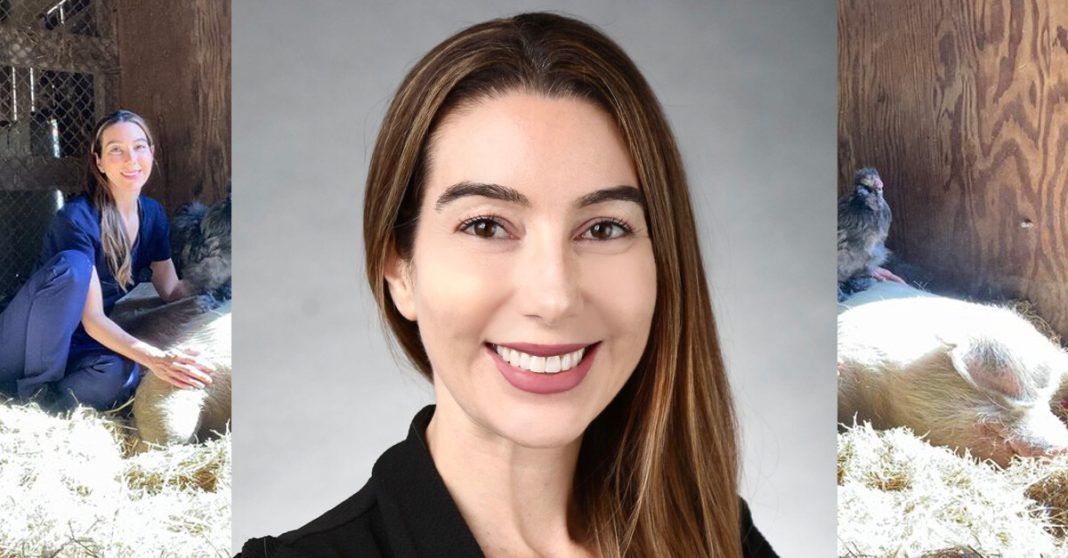
The zoologist Jordi Casamitjana interviews Dr Crystal Heath, an American veterinarian who has been challenging the system by speaking out for the animals when others looked away.
I guess I am a whistleblower.
When in 2018 I took my former employer to court after I was dismissed for being vegan — a case I eventually won two years later and on the way secured the recognition of ethical veganism as a protected philosophical belief under the Equality Act 2010 — I initially used both equality legislation and whistleblower protection legislation to state my claim at a UK Employment Tribunal. This is because my case started when I discovered that the pension fund my former employer (an animal welfare charity) was enrolling all staff into (including other vegans like myself) was investing in vivisection companies, so I “blew the whistle” about this to everyone that needed to know.
I also believe I am a whistleblower because of the negative consequences of being one. Most of us have been victimised for blowing the whistle — as this is something that is often praised to lead to better transparency and accountability, but in reality, decision-makers want to discourage whistleblowing as this exposes their wrongdoing more than anybody else’s — so even when we “win” our cases we still have to pay a heavy price.
What differentiates a whistleblower from anyone else who has exposed wrongdoing (such as a journalist or an investigator) is that the former does it from “the inside”. In my case, I was an employee of the organisation I was blowing the whistle against, but others could be civil servants exposing their own governments, members of communities challenging the decision-makers of the groups they belong to, or even professionals addressing problems of the bodies that oversee them. One of the latter is Dr Crystal Heath.
Dr Heath is a vegan veterinarian from California and the executive director of Our Honor, which is a nonprofit organisation that supports veterinarians and animal professionals who face bullying and retaliation for voicing ethical concerns. Without planning (like most of us) she has become a sort of whistleblower of some policies and attitudes of some members and bodies of the American veterinary profession, whilst at the same time supporting other whistleblowers who are doing the same. Following due diligence and hoping for better transparency and dialogue, they aim to protect the integrity of the profession itself and help as many animals as possible according to the medical oath they took. I wanted to know more about her struggle, so I interviewed her.
Dr Heath’s Vegan Journey

The veterinarian profession baffles me. On one hand, as veterinarians are those who look after the well-being of non-human animals from a professional point of view, I assume most would be vegan. However, that is not the case. Over the years I have grown accustomed to the existence of non-vegan vets because I am aware that many work very closely with animal exploitation industries, so even if they may want to be vegan they may have decided not to follow that path as many of their “clients” would most likely not be. It does please me when I meet a vegan vet, though. I have interviewed a few now (Dr Andrew Knight and Dr Alice Brough). Dr Heath is my third, so, as I did with the other two, I began asking her about her journey to veganism. This is what she told me:
“I grew up loving animals my whole life and I lived in rural Northern California. I was vice president of my 4-H club, which is a government-run organisation that teaches children about animal agriculture. Children usually raise animals to send to slaughter and it was developed in the early 1900s as a way to introduce modern agriculture technology to rural America through their more impressionable children.
Kids usually show animals at the county fair, and it’s community-based, so I was a part of the Morgan Territory 4-H, which is where I was, and I raised goats, chickens, and horses and showed dogs, but once I learned that if I bred my goats and they had boys, that I would have to send the boys to slaughter, I decided not to breed my goats. So, that’s when my attitude began to change, but I would still show my horses and all of that.
All my neighbours raised pigs for the fair, and sheep, cows, and everything, but my sister and I got our hands on some PETA material when we were young and tried to go vegan. My parents made it very difficult. We were already very skinny children and I think my parents were very worried that we couldn’t be healthy vegans. Ultimately, I kind of abandoned that until I graduated in high school and then I started house-sitting for somebody who was part of PETA. I saw what they ate and it made sense, so I started adopting that diet.
I was still vegetarian for a long time. I just couldn’t get my act together to go vegan. All through vet school I was vegetarian. In our vet school class probably about a quarter of us were vegetarian and there were a couple of vegans. I went to vet school at UC Davis. On one hand, UC Davis is very progressive — there are some professors there now who are vegan, such as the person who teaches veterinary ethics — but then there are animal agriculture professors, and the primate centre, and all of that. Once I graduated and paid off my student debt, I had a lot more freedom to sort of explore animal advocacy.
That’s when I started being more outspoken online and then suddenly faced all of this backlash for my views and was quite shocked by this. I kind of thought, ‘Oh, the more we in the veterinary profession start talking about the issues with animal agriculture, the more things will advance and the veterinary profession will adopt a stance on scaling down animal agriculture.’ I was just so naive to the power of the industry and their desire to silence any concerns about their practices.
Then, finally, I went vegan around 2017, or something like that. I don’t know what the exact year was because, for a long time, I was vegetarian just because I felt I didn’t have the self-discipline to be vegan.”
Dr Heath’s Veterinary Journey

There are many types of veterinarians. Some specialise in particular types of animals (like pigs, fishes, horses, companion animals, wild animals, etc), others in particular types of activities where animals are used (animal agriculture, zoos, racing, etc.). Dr Heath is a shelter veterinarian now, looking after companion animals that end up in shelters. She explains:
“I originally went to vet school to be a horse vet because I rode horses my whole life and loved that. Then I realised that most horse people don’t view horses the way I do. I viewed them as members of my family and I was riding them to enhance their happiness, but I realised a lot of people did it for ego purposes, to get money and ribbons, and as a status symbol, and they didn’t really care about their horses. If their horses were injured and couldn’t be ridden anymore, they would euthanise them.
When you have horses they are members of your family, and you take care of them for the rest of your life. When I expressed that view, people were saying,’ Good for you. That’s such a noble perspective.’ But I thought that this should be the normal perspective.
I grew frustrated with the equestrian field so I got into shelter medicine. I thought shelter medicine would be very sad and a lot of euthanising unwanted animals, but then I realised it’s able to help so many more animals than you could in private practice. I also realised that, in private practice, most people do not treat their dogs and cats well at all and many people keep their dogs locked up in cages for 12 hours a day while they’re at work. They don’t understand how to provide the social enrichment that their animals need. And there’s also the heartbreaking fact that they can’t afford to care for their animals and then take it out on veterinarians.
I stuck with shelter medicine and did a lot of high-quality, high-volume spay and neuter; as many animals as I could. My parents bred dogs when I was growing up. We bred Australian Shepherds and Golden Retrievers and now I feel I’m paying retribution for that, and trying to spay and neuter as many animals as I can. I think people just view having a dog and a cat as a right and don’t really understand how much of a responsibility it is.
I grew a little frustrated with working in general practice but love shelter medicine. When an animal comes in we get to provide them with everything they need and we don’t have to talk to an owner about how much an X-ray is going to cost, or lab work is going to cost. We just do it, and I hope that’s the future. We need to fund all veterinary care for all animals and make the buying and selling of animals illegal so we’re not just subsidising an industry that wants to profit from the buying and selling of animals.
If buying and selling animals is illegal we can publicly subsidise all veterinary care for all animals. In the United States, $38 billion a year goes to subsidise animal agriculture but Americans also spend $38 billion a year on vet care for their animals, so if we just move that money over we can provide health care for all companion animals in the United States.”
The Consequences of Speaking Out

A vegan vet in a mostly non-vegan veterinary profession is likely to cause some internal steering. Many may keep their heads down, but some speak up, as Dr Heath has. This has unfortunate and unfair consequences, as you will see:
“I thought we could have open professional discussions and then realised I was character assassinated, retaliated against, kicked out of all these veterinary Facebook groups for having these opinions and viewed as somebody who’s out to harm the profession — when I was just trying to have the normal conversations I have with my friends who are animal advocates and vegans.
I was shocked by this, but also realised how vegans fail too. We just say, ‘Oh, if you say go vegan enough, people will become vegan, and if you show them images of horrifying treatment of animals on farms, people will just go vegan.’ I think vegans view those who don’t go vegan after that as just psychopaths. That’s not the case. They have been led to believe that they’re doing a difficult but necessary job, especially veterinarians, and veterinarians working in animal agriculture. People criticising them are causing them harm and leading to psychological issues and distress.
This is just so parallel to the ‘Me Too’ problem in the animal rights movement, where you have men in positions of power who pursued multiple subordinate women, and then retaliated against and character assassinated the activists who rejected them and voiced concerns. This retaliation cost these activists funding, speaking opportunities and collaboration opportunities because they viewed the activists talking to each other and reporting their concerns about this behaviour internally as out to cause them harm. And then other women, of course, also view those women as people who are out to cause harm to the movement. It’s the same thing. The Me Too issue with the animal rights movement is the same problem of vegans in the veterinary profession voicing concerns.
I started voicing concerns online on veterinary Facebook groups about terminal surgeries in veterinary school (this is where students have to kill animals for their training) and also ventilation shutdown which happened during COVID-19 (this is where pig producers were sealing up barns, pumping in heat and waiting for the animals inside to die). We drafted a letter and asked the AVMA (the American Veterinary Medical Association) to reclassify the ventilation shutdown as not recommended. I faced a lot of backlash for that as somebody who was out to cause the veterinary profession harm, even though we are very professional with everything that we said and did. We were framed as people who were ‘violent extremists’ who were protesting when I never lodged any protests. There were all sorts of crazy accusations made against me and that’s when the journalist Glenn Greenwald covered this story.
I was barred from all these veterinary Facebook groups and kicked out and this meme went around about me saying, ‘Beware, Dr Heath means nothing good for the profession.’
A bunch of veterinarians reached out to me and said they suffered the same thing, and they felt they could not say what they wanted to say for fear of retaliation. So, in 2020 we started Our Honor to get all the veterinarians together and hopefully empower more veterinarians to speak out and talk about these things.
It’s still hard. If you bring up animal rights in any veterinary Facebook group, they view you as somebody who’s out to stir the pot and like you’re out to cause drama. We can’t have these open conversations about animal rights and we’re viewed as somebody who views producers and veterinarians who work in livestock as bad people, when we don’t. We just know that you’ve been led to believe that you’re doing a difficult but necessary job but we envision a future where we don’t have to use animals for food. We’re focussing on the production and how to scale that down and how we redirect public subsidies towards supporting animal-free methods of food production. We empathise with the psychological distress that these production veterinarians face but we’re being character assassinated and retaliated against for even broaching these topics, which is so harmful to the profession, and it doesn’t allow our profession to advance and develop more ethical policies.
For instance, the AVMA still allows for the castration of pigs with no anaesthesia and still supports gestation crates and ventilation shutdown, and we’ve been barred from attending the AVMA’s two Humane Ending symposiums and I recently was banned from speaking at another conference. I just got this letter a couple of days ago and they make these big accusations. I was scheduled to speak at the Student American Veterinary Medical Association Conference, and I just had my talk revoked, and my non-profit booth was barred from tabling after previously being accepted months ago. They failed to respond when I asked them what they were referring to when they said, ‘We also wanted to inform you that part of what SAVMA considers when selecting participants for its Symposium is each participant’s policy positions and prior conduct at similar events. Unfortunately, your prior actions at AVMA events and the policy positions of Our Honor raise concerns regarding participation at SAVMA Symposium.’ I do not know what they refer to when referencing ‘prior conduct’ at similar events. There’s no due process for discussing any concerns about my supposed behaviour when I view everything that I’ve done as more than professional and trying to go through normal channels to address concerns.”
As part of Our Honor’s work, there is now a new group called Veterinarians Against Ventilation Shutdown. Only 1.1% of veterinarians in a recent survey of 3,059 veterinarians believe ventilation shutdown (VSD+) is an ethical and humane method of depopulation, and more than 2,000 vets have signed onto Veterinarians Against Ventilation Shutdown asking the AVMA to reclassify it as a “not recommended” form of depopulation. Despite this, the AVMA quietly released a draft of the new guidelines, which still allow VSD+ to be used on pigs and farmed birds. Veterinarians have until January 30th to comment on the draft.
Exposing the Current Situation with Avian Flu

Avian flu is a serious problem all over the world, but especially in the US as the deadly H5N1 strain has crossed into mammals and is already affecting humans. Noticing that, initially, the media was not covering the extent to which this virus is already affecting the dairy industry, Dr Heath took it upon herself to document the tragedy. She explains:
“We’ve killed 130 million commercial poultry birds in the United States. Now, in California, more than 700 dairy herds have been infected. We’ve exterminated two-thirds of California’s egg-laying hens because of it and it’s just rapidly spreading. It’s an unprecedented multispecies outbreak that has now infected humans. We’ve also photographed human workers doing depopulation cleanup at poultry facilities. One human worker not wearing a mask and one wearing a mask incorrectly below his nose. We’re concerned workers aren’t being well informed of the risks of this. We’ve just had a person in Louisiana die. The teenager in British Columbia finally left the hospital but was placed on ECMO, which is a life support system. This is an extremely dangerous situation, but there’s a lot of distrust of our public health officials. In 2004, we had the same avian influenza outbreak and I think people were saying, ‘Oh, this could be like the next pandemic.’ and it didn’t materialise into anything significant, so I think everybody’s pointing to that situation and saying again we’re just exaggerating things, when really all along our public officials have been downplaying the risk because they want to maintain consumer confidence in milk, eggs, and meat.
I went to the Central Valley to photograph this, because I hadn’t seen any photos anywhere of sick and dead cows, and I wanted to see for myself what was going on and document this. I took photos and videos and sent them to the media. I then faced a whole bunch of backlash again.
After publishing photos of dead, H5N1-infected cows, a Facebook page with more than one million followers, TDF Honest Farming, screenshot my tweet and wrote, ‘Just a heads up for those of you in California, this vegan veterinarian is taking photos of your farms. Nothing like using a tragedy like the H5N1 outbreak to take photos.’ People are commenting that my veterinary license should be revoked. Another producer is claiming that I am violating the Principles of Veterinary Medical Ethics for sharing this information. It’s just outrageous the accusations made against me when the media appreciates my documentation and the Washington Post even did a video filming me going out and taking photographs. Newsweek, Vanity Fair, and all these mainstream outlets, appreciate this footage, but my own profession, again, thinks that I’m out to cause them harm.
I don’t think I’ve done anything wrong. I haven’t violated any confidentiality between my patients — none of these animals were my patients — but I also know from my experience with the AVMA that being accused of things that I didn’t do can lead to retaliation. I don’t have a lot of faith in the veterinary leadership to do the right thing so it is a scary situation.”
I asked Dr Heath which other campaigns Our Honor is running right now. She replied:
“We’re starting a campaign to try to ban fireworks, which we think all veterinarians should be on board with. We’re having meetings once a week to discuss that. Also, we are trying to address the AVMA guidelines for depopulation by January 30th. There is a letter the Veterinary Association for Farm Animal Welfare has created that we encourage veterinarians to sign on.”
I asked Dr Heath if she considers herself a whistleblower.
“It’s kind of strange that I would be because this should just be normal discourse; a normal dialogue and discussion. But yeah, I guess I’m a whistleblower just because I face so much backlash for saying things that should be talked about normally. It’s kind of outrageous. It shouldn’t be a whistleblower-type situation. These are just normal conversations that should be had.”
I know how Dr Heath feels because blowing the whistle about any wrongdoing and then being criticised for doing it when you only wanted to help, generates a deep sense of injustice that takes some time to digest. However, like in my legal case, in the end, those who need more help are the ones who will benefit from it.
Whistleblowers like Dr Heath are not only essential for a healthy society but also help to clean up the institutions they blew the whistle against, making them more accountable, transparent, effective, and professional. After all, wrongdoing is doing something wrong that needs correcting.
Whistleblowing is an honourable public service.
Join millions choosing vegan in 2025 with Veganuary! https://bit.ly/Veganuary25