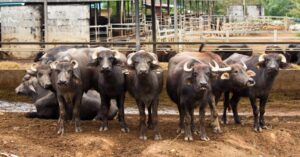

The dairy industry can only commercialise milk by forcing cows to give birth and then separating the calves from their mothers so the milk intended for the calf can be stolen and given to people.
Mammals only produce milk after giving birth, so for cows in the dairy industry to produce milk, they have to be giving birth constantly. Despite all technological advances, no cow has been genetically modified or manipulated in such a way that it does not need to be pregnant every year and give birth to produce milk. A dairy farm is an abusive cow pregnancy and birth factory.
However, what happens to the calves once they have been born? If they are left with their mothers, they will be drinking the milk the dairy farmers want to steal from them, and that would not be seen as good business. So, what farmers do is separate the calves from their mothers, and either kill them straight away or take them to veal farms where they will be fed for a short while and then killed to sell their young flesh to be eaten (which is the destiny of most male calves as they will not produce milk when they grow up), or rear them separately if they are females needed to replace the exhausted cows.
Cows are often forced to be pregnant again via artificial insemination when they would be still producing milk that was intended for their previous calf. By the use of hormones (Bovine somatotropin is used to increase milk production in dairy cows), removing the calves sooner, and inseminating the cows when they are still producing milk — which is a very unnatural situation — the body of the cow is under pressure to use many resources at the same time, so they become “spent” sooner, and are disposed of when they are still young.
During their short and miserable lives, dairy cows experience again and again the loss of their babies soon after birth, when their instinctive mother bond is stronger, so every time a farmer steals their babies the distress is even more intense because they remember what happened last time —they never saw their babies again. Equally, the calves are taken away from their mothers when they need them the most, and their bond with them is stronger, causing them a great deal of distress. Forced separation affects both the cow and the calf physically and psychologically, which is another reason not to support the dairy industry.
Before consuming a latte, a yoghurt, or a cheese sandwich made from the calves’ milk — we call it cow’s milk, but we should call it calves’ milk because it was made for them — every human mother should imagine how losing all their babies this way would feel.
Baby abductions
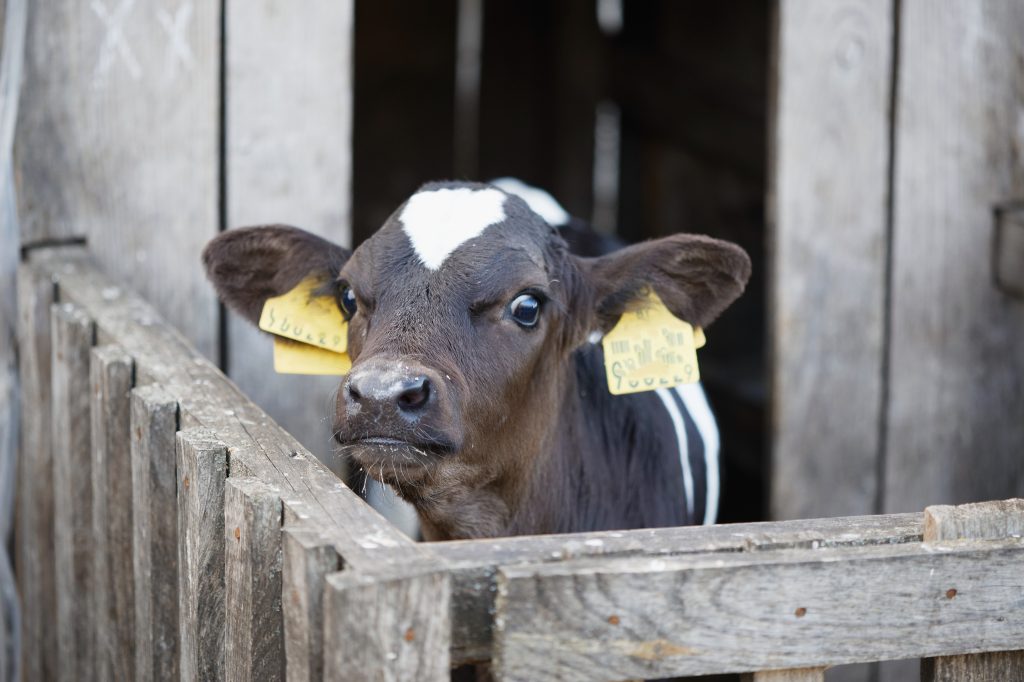
The first thing that humans did to cows about 10,500 years ago when they started domesticating them was abduct their calves. They realised that if they separated the calves from their mothers, they could then steal the milk the mother was producing for their calves. That was the first act of cow farming, and that was when the suffering began — and has continued since.
As the mothers have very strong maternal instincts, and the calves are imprinted with their mothers as their survival depends on sticking close to them all the time while they are moving through fields so they can suckle, separating the calves from their mothers is a very cruel act that has taken place in each dairy farm that has ever existed.
The separation anxiety caused by separating mothers from calves happens in dairy factory farms at a much larger scale than in the past, not just in terms of the number of cows involved and the number of times it happens per cow but also because of the reduction of time the calves are allowed to be with their mother after birth (normally less than 24 hours).
Regarding the timing of the abduction, farms broadly fall into three categories: Immediate separation (common in large-scale industrial farms) where calves are removed within hours of birth; Early separation (practised in many countries, and most common in Europe and the US), where calves are separated within 24-48 hours; Delayed separation, when some organic or so-called welfare-focused farms may allow calves to stay with their mothers for several days or even weeks (before killing them if they are males the farmers cannot use).
The main reason that not all farms remove the calves straight away is not compassion (both cows and calves will suffer when separated no matter if it is done immediately or after a few days), but economical, as keeping them together longer ensures the calves will take colostrum, needed for their health (calves separated from their mothers too early often experienced higher rates of diarrhoea, respiratory disease, and other health problems).
Colostrum is the first milk produced by the breasts of mammals after giving birth and has many important benefits for newborns, including its richness of antibodies and antioxidants (which help build a baby’s immune system), its ability to help establish a normal gut microbiome, and its easy digestibility. So, if a farmer intends to use the calf to replace a milking cow sent to slaughter, for breeding, or to be sent to a veal farm where it will be kept alive and fed a bit longer, ensuring a good colostrum intake would be seen as preferable.
Depressed Mothers
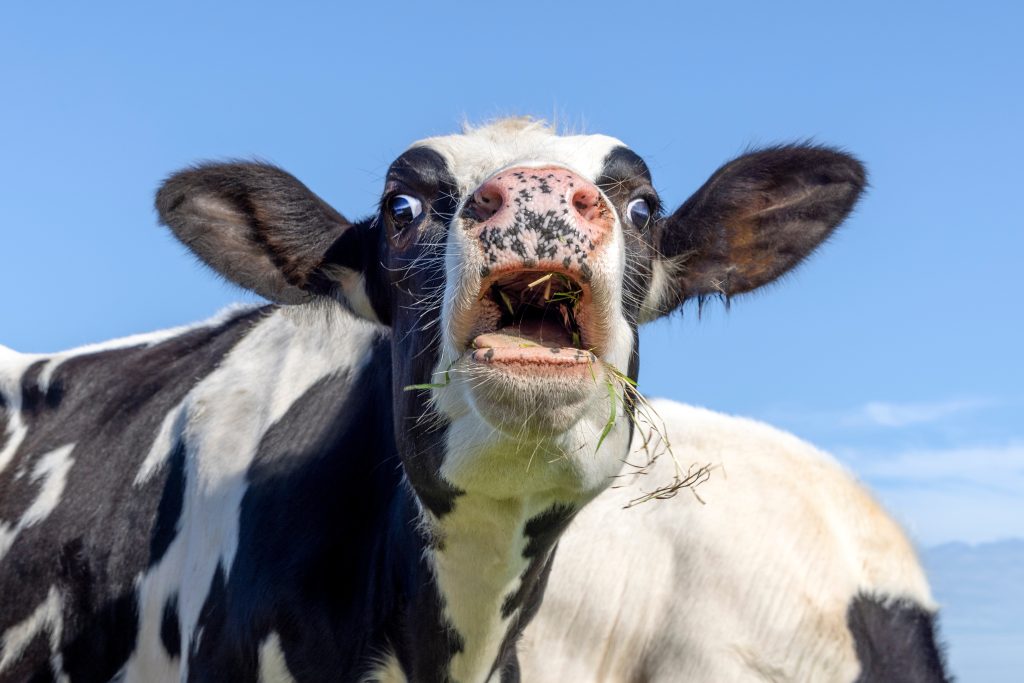
Cows, like many mammals, form strong bonds with their offspring. Cows exhibit many signs of maternal care, such as vocalisations and grooming, to their calves immediately after birth. Therefore, when calves are taken from their mothers, both animals experience acute distress.
The distress experienced by the abduction of their calves is often manifested through loud, persistent vocalisations in both cows and calves that can last for days, the restlessness and searching behaviours the mother engages (sometimes chasing the vehicle she has seen her baby was taken into), and a reduced appetite (and sometimes decrease in milk production) afterwards (which can be seen as a sign of sadness and depression).
Cows will bellow for days following the removal of their calves, which is a clear sign of anxiety and grief. The vocalisations are not random but are purposeful calls for their missing baby, indicating emotional suffering. Research has demonstrated that cows and calves who were allowed to remain together for even just a few days after birth exhibited fewer signs of stress and anxiety.
Cows and calves continue to exhibit behavioural signs of stress long after the separation. Over time, cows may develop a state of helplessness, a psychological condition where an animal becomes passive and unresponsive after repeated exposure to uncontrollable stressful events. This can result in reduced social interactions with other cows, and apathy.
Distressed babies
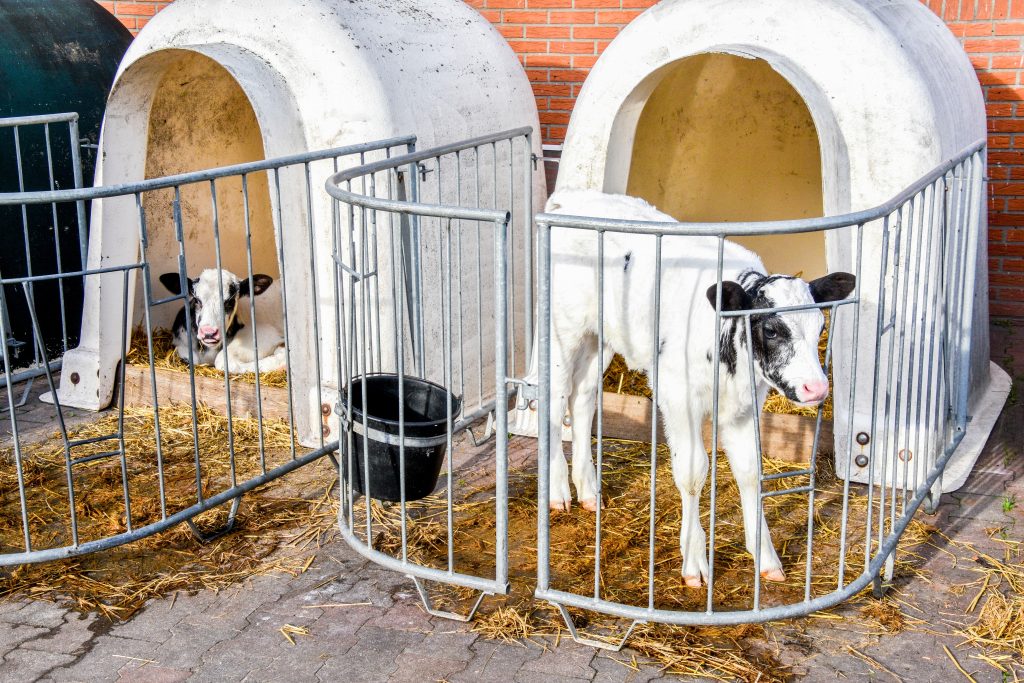
Calves naturally seek comfort from their mothers, relying on them for both physical nourishment and emotional security. When deprived of this bond, calves can exhibit increased signs of stress, such as excessive vocalisation, pacing, and abnormal behaviour patterns.
After the separation, the calves can experience attachment disorders, manifested by difficulty forming social bonds with other calves and cows, increased fearfulness and stress in new situations, and abnormal suckling behaviours (such as excessive suckling on objects or other calves). Calves raised in isolation or without proper maternal care often develop abnormal social behaviours when they grow up.
Removing the calves from their mothers also causes the calves to experience hunger afterwards as they need their milk. Even in places like India, where cows are sacred among Hindus, farmed cows suffer in this way, even if kept in the fields at their own devices most of the time. Dr Sailesh Rao, a systems engineer from India who, after emigrating to the US and working on the internet communications infrastructure for twenty years, became a vegan campaigner for the planet, recalled what happened to cows and calves when he was growing up in a vegetarian Hindu household. In an interview for Vegan FTA, he said:
“One time, when I was seven, we had just come to my grandparent’s home and I overheard my grandmother telling my grandfather that ‘this particular calf is drinking too much. He is not leaving enough milk for the children.’ And my grandfather told my grandmother ‘Don’t let him drink to his fill; pull him away after 10 minutes.’ And, as a child, I realised that there was something wrong going on, but I put it away in the back of my mind because I was being bombarded with the idea that milk is essential, and you have to drink it.”
Any mother knows that, no matter how many improvements farmers adopt for their mother-calf separation methods, they will never prevent the suffering this will cause to both mother and child. Adopting veganism and completely rejecting the dairy industry is the minimum anyone can do to avoid indirectly participating in such cruel practices.