
The zoologist Jordi Casamitjana interviews the American anti-captivity campaigner Justin Barker, author of the book “Bear Boy”
I am an anti-captivity activist.
Throughout my work in animal protection, I have been jumping from subject to subject to ensure I could cover as much ground as I could and help as many animals as possible, but I also have spent a considerable time in each subject to ensure I could know enough of it so that my contribution would be significant. Following this method, for a while my main subject was anti-captivity. From 1999 to 2004, campaigning against zoos and public aquaria became my main issue, and through this work, I am pleased to say I managed to help close down five zoos.
Being an anti-captivity person is something most vegans would say they are, but being an anti-captivity campaigner is a whole other story. In fact, among animal protectionists, dedicated campaigners to the anti-captivity cause are relatively rare, among other things because this is quite a specialised field, but also because the zoo industry is one of the animal exploitation industries with the best PR machines, so they have managed to persuade even animal protectionists that there is some worth in zoos, and that people should not be campaigning against them.
This is why I was particularly pleased to have the opportunity to interview Justin Barker, another anti-captivity person like me who has dedicated a long time to helping captive animals in zoos in the US. However, he started much younger than I did. Impressively younger, to be honest. When he was 13 years old, he became known as the young activist who was campaigning to save two captive bears in California. His story was so dramatic, that it ended up in a book titled “Bear Boy: The True Story of a Boy, Two Bears, and the Fighting to Be Free”, which he authored. Now he is a dad with several kids, a media producer, and an author, but he is still an activist fighting to help zoo animals. This interview will reveal how.
Justin’s Vegan Journey

In my interviews for Vegan FTA, I always start by asking about the vegan journey, as I find it quite interesting how each vegan has ended up adopting this philosophy. In the case of Justin, I discovered that his journey to veganism was full of circumstantial obstacles he had to overcome. He explains:
“My journey started as a vegetarian when I was 12, and that was the second I learned about animals, that the meat that my parents were feeding me were animals. I said, ‘I don’t ever want to eat that again. I don’t want to be involved in that. That’s terrible.’ So, I went vegetarian. It was the 90s, so ‘vegan’ was a bad word for 90s parents, so my parents said, ‘We’ll support you being a vegetarian, but we won’t support you being a vegan.’
I did ask them at the time that I wanted to go vegan. I remember feeling I wasn’t identifying as vegan, but I have this recollection of asking the lunch lady at school to get veggie burgers, but because of the silly rules around nutrition and what the state required, she was forced to put a slab of American cheese on the veggie burger. And I just was like, ‘OK.’
I went vegan when I left my parent’s house in 2000. I moved to London, and then I went fully vegan. I was free to do what I wanted to do. There was no one telling me; I was in control of the food that I was buying. I ended up working at an organic grocery store in Piccadilly Circus full of radical people and it was very easy to be vegan. Being vegan has been a very important part of my life. My body and my mind feel the best. It’s a really important component of my life.”
However, I have to be fully transparent. There’s been a little flow to it with my veganism over the years. When I first had kids, I found it hard to be vegan because part of the negotiation with my wife, who’s not vegetarian, was that we were going to only have kids if they were at least vegetarian. That was the middle ground. I found it a little hard to make them food, and not know what it tasted like, but now that they are older, I am 100% vegan.”
Balancing Activism and the Media

Anyone who has worked in any campaign knows how close campaigning is to the media. Campaigners need the media to launch their campaigns, and the media need campaigners to give them compelling stories in a format easy for them to use without too much effort. So, it is not surprising to me that one may end up working in both.
Justin has been working in media in several countries, and the beginning of his activism career is well documented in his book Bear Boy, as it is precisely about his first years as an animal rights activist in the mid-1990s. Justin’s bear campaign is the centre of the book, and since he started protecting animals he ended up creating several small anti-captivity groups, as well as earning a living from working in the media world. He explains:
“My animal rights activism started when I was 12. You’ve read the book. That was deeply inspiring to me, particularly the power of the media. I was always curious about the media, and I used that, obviously, in my campaigning at the time.
I read a book from PETA, and the second I learned about zoo animals, I thought instantly, ‘This is the thing that I care about.’ I started showing up at the zoo in Sacramento. I needed to create an organisation, and it was so funny to be sitting in a library and have the librarian help me come up with the name of the organisation: Citizens Lobbying for Animals in Zoos (CLAZ). It really was why things picked up, because at the time — this is pre-email, pre-internet — I was able to get CLAZ in these printed directories where all the animal rights organisations were listed, and in news, in the newsletters, the phone trees, and all that.
Citizens Lobbying for Animals in Zoos took a little bit of a pause but is coming back now, as an adult, because I really envision that it would be like a California-focused organisation dealing with different zoos. There was only so much I could do in Sacramento for the Zoo, but I had this vision of really advocating for all of the animals in zoos in California.
Then, at one point, I couldn’t work on the Sacramento Zoo anymore. My parents told me I had to stop because the zoo director threatened to sue me. So, like in the same realm of ‘You can’t be vegan, you can be vegetarian,’ I was still under 18 and living under my parents, and they literally told me to stop working on the Sacramento Zoo. I just didn’t have the option to continue.
Once my parents made me stop working on the Sacramento Zoo campaign I got a letter from a woman addressed to Citizens Lobbying for Animals in Zoos telling me about two bears that were living in terrible conditions in a small zoo in Roseville. So, I called her, and when she heard my high voice, she was very surprised that I was not a multi-person animal rights organisation, just a 13-year-old kid. I think she kind of wrote me off, but I carry on with the project. I was really laser-focused on it.
The conditions of the bears were very bad. They were right next to a creek that would flood, and their home would flood on a regular basis, and you could see that worn path in the concrete. At a city zoo like Sacramento, obviously, animals are pacing and things are bad — there are no good zoos — but those bears’ caregivers had fully given up and had no interest in their well-being. They were just waiting for them to die.
Some years after the campaign finished, I ended up at CBS News in London. I was an intern. I started the same week that 9-11 happened in 2021. I thought I was going to be a TV journalist. That was kind of the direction I wanted to head, but I spent enough time in the CBS bureau in London and I was pretty horrified. The thing that’s interesting about working in a newsroom, especially the International Bureau of CBS, was that the walls were just covered in TVs, and I saw the way that the Japanese covered the war, I saw how many European countries covered the war, and it was pretty shocking to see what the US population was served up. It just made me feel I couldn’t do mainstream TV. So, I ended up doing production for a long time. I wanted to be in the documentary realm, and I spent much of my 20s just focused on trying to survive in San Francisco. It’s been a challenge to balance activism and the media. Trying to do both of those things is challenging.”
Bear Boy

Justin’s memoir Bear Boy was published in 2021, many years after the events with the bears happened. I really liked it. It reads very easily, and it’s like a thriller that you can’t put down. What I found most interesting about it is that it shows how animal protection campaigning used to be in the 1990s, before the internet — something many activists today can’t possibly imagine. For instance, I feel that one of the characters of the book is Justin’s parents’ landline phone. In those days, you see, if you could not use the phone, you could not campaign, but making calls was expensive, so Justin’s use of his parents’ phone became a source of great family tension.
Although my zoological work started in the 1980s, my activism and campaigning work also started in the 90s. I distinctly remember how much faxes became a great help (I bet some of you don’t know what a fax machine is). For an animal protection person like me, the logistics of his 20th-century campaigning were fascinating. This is what the blurb of the book reads:
“Justin is a typical teenager, dodging school bullies, struggling with his identity and waging an endless war with his parents. But when he discovers Ursula and Brutus—two sibling black bears being kept in horrific conditions at a nearby zoo—his life begins to change. He finds a cause that ignites his passion and an animal sanctuary willing to take the bears. But there’s a catch: he’ll have to cover the quarter-million-dollar cost. Undaunted, Justin takes his seemingly insurmountable quest to an international audience, gaining media attention and support from celebrities. With television cameras rolling, Justin fights to free the bears, and it turns out himself. Justin Barker’s surprising and moving debut offers the optimism of the ’90s while exploring timely issues of activism, animal rights, and being queer with tenderness, unblinking honesty, and heart.”
I asked Justin why it took him so long to write:
“I started writing the book in 2011. It’s tough to write. I spent a lot of time trying to write this story and there were a lot of false starts. My medium has always been video because I’ve never conceptualised myself as a writer, as writing doesn’t come easy to me.
It was amazing that it took that long. I got a lot of the pieces together, but then once I hired a book coach, she really helped me create some accountability, because that’s also a component. She set the stage for really understanding why I was telling this story, what I was trying to say, what was my goal here. It got much easier with time because once I wrote chapter three of this book, then my writing of the other chapters dramatically improved.
It was also very emotional. I didn’t realise until I actually had to sit down and write. I’d wake up at 4 am — because I had a full-time job — and I would go and write in my chair and edit in a separate place. That felt like an important thing. Sometimes, I would be sitting in the chair writing, and I would just be sobbing. It’s such a personal story. This book forced me back to really painful things that happened.
Even though it was my story, I really wanted to create some sort of blueprint for how a reader could make a change, and in the tough moments of writing, I was able to focus on the larger blueprint for young activists and keep returning back to that mission.”
San Francisco Zoo Watch
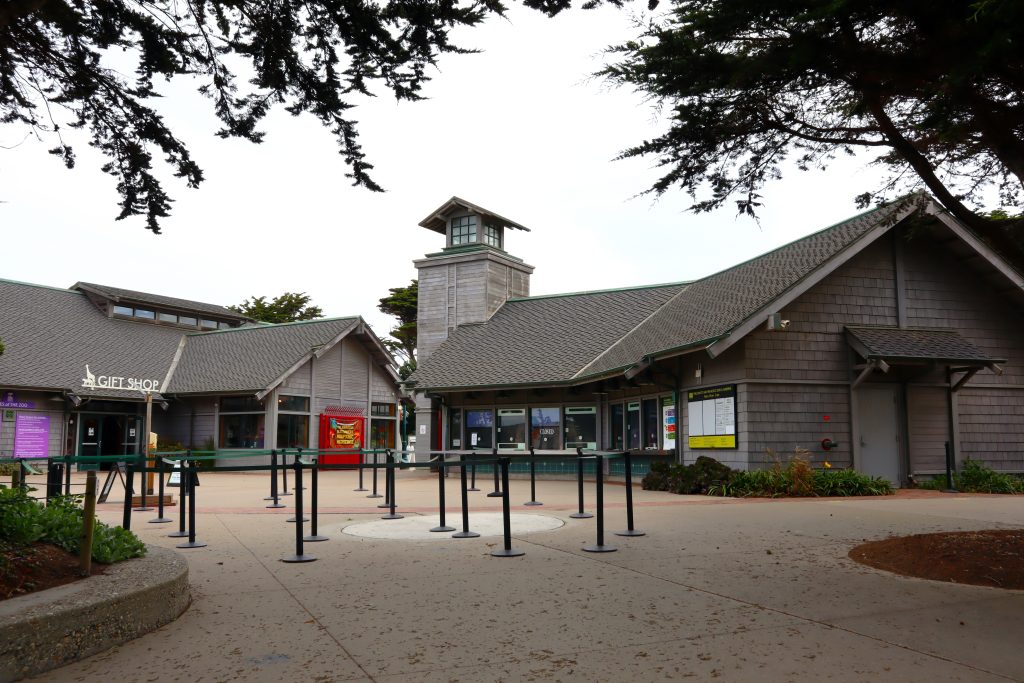
CLAZ campaigning paused once Ursula and Brutus were successfully relocated to a better place (and eventually passed away), but years later, Justin had a go at creating another group, San Francisco Zoo Watch, when he moved to this California city which, for being known to be quite progressive, is shocking to have a zoo where animals suffer so much. Justin agrees:
“San Francisco Zoo is like many zoos, but many of the cages are up to 75 years old. And if the zoo has been poorly run for a long time, once the tiger escaped and killed one of the visitors of the zoo, and then died in a hail of gunfire, the lawyer of the zoo was supposed to be the interim zoo director but never left. She’s really driven the zoo into the ground, and has done very little to update conditions.
It’s shocking to be in a city like San Francisco, where there’s so much wealth, so much technology, and so much forward-thinking, that has a zoo that is so unacceptable and has put animals last almost every step of the way.
In 2008, when the tiger escaped at the zoo, I started working on a campaign with some activists to really push for change at the San Francisco Zoo. We were very successful in getting a city body to make a recommendation that the zoo should pivot to a rescue sanctuary and move away from the traditional model.
There were all these recommendations that didn’t actually get implemented, but since then, I’ve been documenting over the years what has been happening at the San Francisco Zoo, and trying to get the media interested in what I would rate as one of the worst city zoos in the USA — it is terrible. The media would cover random stories, but there was never any interest to really highlight what was happening at the zoo.
However, in April of this year, the San Francisco Chronicle reporter did a massive investigation. After years of trying to get reporters at the Chronicle interested in what was happening, finally, we had a journalist who did a thorough investigation of the zoo, talked to employees, 20 former and current employees, and had a big exposé about what had happened even in the last 12 months at the zoo. Finally, after literally almost a decade of trying to get local media to be interested in the state of the zoo, that happened.
Then, the day after that big exposé came out, the mayor, who’s up for re-election, announced that they had signed a deal to get two pandas to the San Francisco Zoo. So, it felt like it was pretty good because even though I obviously didn’t want to take advantage of the pandas, all of a sudden, the zoo was thrust into the light, into the media. So, it was this nice spotlight. The pandas gave us this way in to actually start talking about the real problems at the zoo, and something to push against.
The mayor is talking about it and the media is interested. It’s an international news story because of “panda diplomacy”. We are really pushing for the pandas not to come, because of the way in which the potential $75 million that it’s going to cost over 10 years to create a temporary facility could be funnelled in all sorts of directions to improve the conditions at the zoo.
We have now a growing coalition of folks who want to approach this from all different ways. It has In Defense of Animals, Panda Voices — which is an international volunteer organisation — Zoo Watch, and then a bunch of activists locally, who are all doing what they can.
San Francisco Zoo Watch started recently. Like the CLAZ, it’s just me at this moment, but I’m hoping to build. My big dream is that SF or just Zoo Watch can turn into its own sustainable organisation, but it’s just a project for now. I fully launched it when the investigation happened, and the panda situation happened, literally that same day. I had a website waiting. I had been working on it and I just launched it. So, it’s relatively new.”
Most big animal protection organisations started this way. One or two campaigners working from their own homes and fighting big animal exploitation organisations or industries with big budgets and huge PR machines. However, perseverance has much more power than PR. Relentlessly nibbling at their armour is what brings them down — as well as being on the right side of an ethical debate, of course.
When you learn about Justin’s campaigning style from reading his book, you know that perseverance is one of his assets, and if he could achieve what he did when he was a child, imagine what he could achieve now — with the internet and all. Sure, he is a dad now and that requires a lot of time and dedication too…but perhaps he is building new campaigners who will join him when the time comes and help him to continue with his journey.
We need more anti-captivity activists like Justin.
Sign the Pledge to Stop Supporting Wild Animals in Captivity: drove.com/.2yE8