
Both the egg and meat industries systematically cut the tip of the beaks of chickens, turkeys, and other birds to mitigate the animal welfare problems such industries cause.
Any type of mutilation is inherently wrong, as natural animals do not need any part of their bodies to be removed by people. Anything that needs to go (like the antlers of deer or excess hair) will be removed by the animal in a natural painless way. Domesticated animals, on the other hand, may have been bred to be deformed and aberrant, and this may cause the need for intervention to reshape their bodies, as in the case of many breeds of sheep that need shearing, as they have been born to grow dangerous amounts of hair.
However, one thing is to remove parts of the body that constantly grow and have no muscles or nerves in them (like hair, nails, or feathers), but to remove sensitive parts such as tails (like in farmed pigs), ears (like in dogs), eyes (like in crustaceans), horns (like in bulls), and beaks is another, as these are true mutilations that will harm the animals during and after the procedure.
Debeaking, a common practice in the animal agriculture industry, is a cruel and unnecessary procedure that causes suffering to farmed birds. Euphemistically called “beak trimming” or “beak conditioning,” it involves the partial amputation of a bird’s beak using a hot blade or infrared technology. Although this is very common for laying hens, it is also practised on broiler chickens and farmed turkeys in the US (and also sometimes on quails and some ducks).
Farmers justify debeaking as a means to prevent the birds from pecking each other, feather pecking themselves, and cannibalising other birds. Mortalities due to cannibalism can be up to 15% in egg-laying flocks. However, these behaviours are primarily the result of the stressful, overcrowded conditions in which chickens are kept, so this is a classic case of an animal welfare problem caused to mitigate another animal welfare problem, all caused by the industry itself. This is not an issue exclusive to factory farms, though. In the so-called free-range facilities, chickens are still subjected to this cruel practice. Debeaking is very common in the US, Canada, China, the UK, and the EU. In the EU, 80% of laying hens were estimated to be debeaked in 2019.
How is debeaking performed?
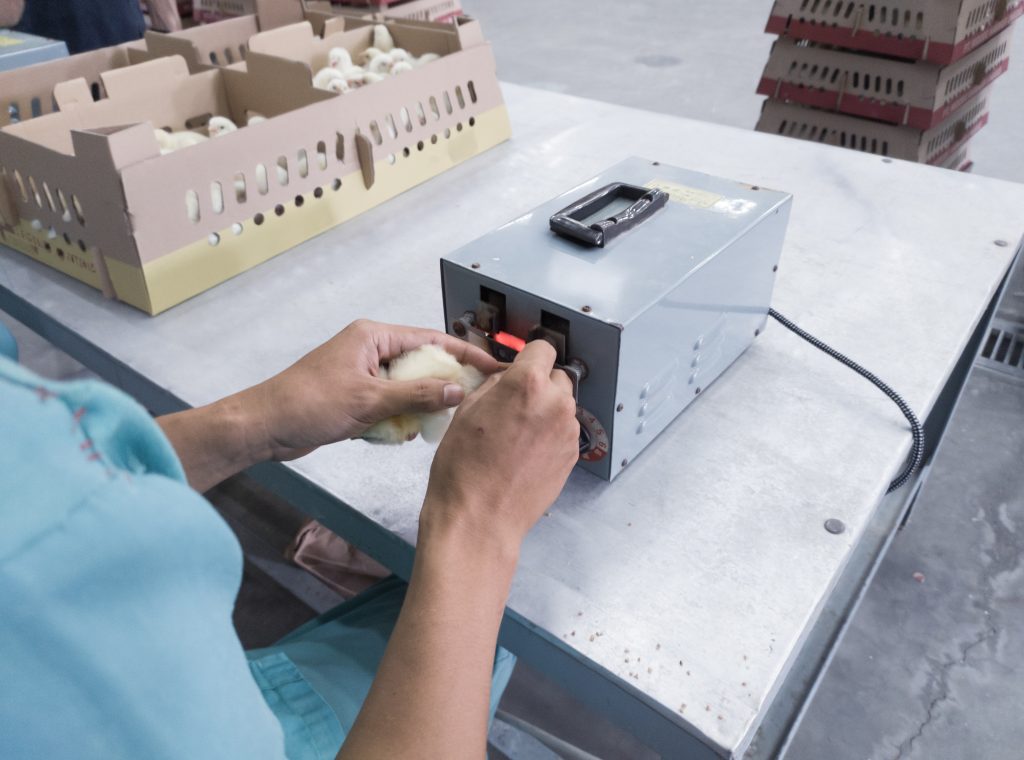
Beak trimming was developed at the Ohio Agricultural Experiment Station in the 1930s, and it started by cutting by hand with a sharp knife 6 mm (1/4 inch) off the beak of young chickens (which means that it was a temporary measure to address the moments of higher cannibalism risk as the beak was still growing and could recover its shape). However, today it is no longer used as a temporary measure but a permanent measure, as birds have their beaks cut using electrically heated blades in a beak trimming machine that provides a self-cauterising cut. Sometimes this procedure is performed several times per bird if the beaks still re-grow.
There are four main methods of debeaking: hot blade, cold blade (including scissors or secateurs), electrical (the Bio-beaker) and infrared. The latter two methods usually remove only the tip of the beak and do not leave an open wound. Using lasers, freeze drying, and chemical retardation, have been tried too. The Bio-beaker (using an electric current to burn a small hole in the upper beak), is the preferred method for debeaking turkeys.
USA’s guidelines suggest that the length of the upper beak distal from the nostrils that remain following trimming egg-laying chickens should be 2 to 3 mm. In the UK, beak trimming of layer hens normally occurs at 1-day of age, and the Farm Animal Welfare Council stated, “The accepted procedure is to remove not more than one-third of the upper and lower beaks or not more than one-third of the upper beak only…Where beak trimming is carried out, it should, wherever possible, be restricted to beak tipping; that is the blunting of the beak to remove the sharp point which can be the cause of the most severe damage to other birds.”
What’s wrong with debeaking
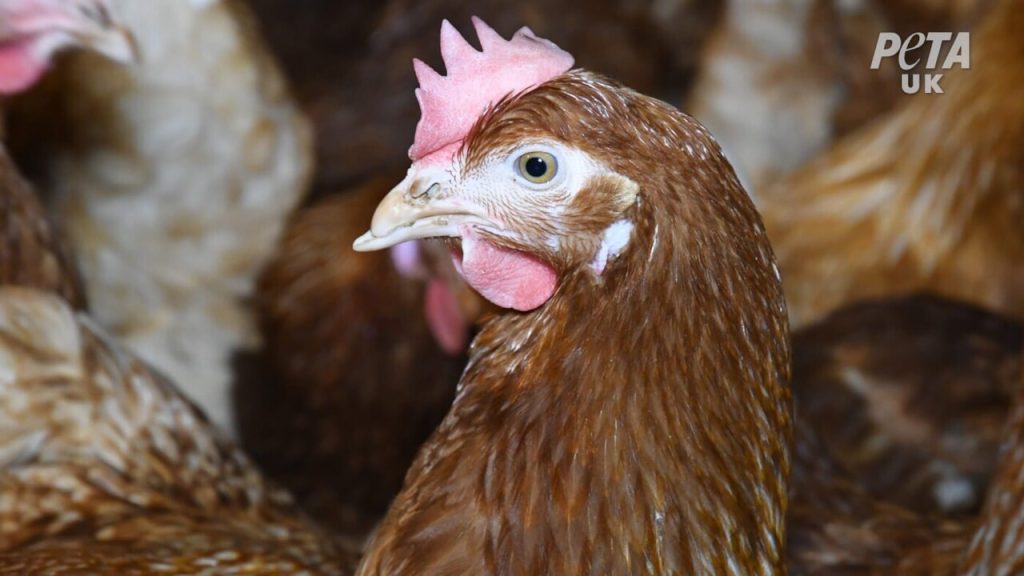
Debeaking is typically performed on young chicks without any anaesthesia, which causes distress and can also cause acute pain. The beak has an extensive nervous supply including nociceptors that sense pain and noxious stimuli, so these would almost certainly be causing pain during beak trimming. Behavioural evidence of pain after beak trimming in layer hen chicks has been based on the observed reduction in pecking behaviour, reduced activity and social behaviour, and increased sleep duration. In Japanese quail, researchers found that debeaking by cauterization caused lower body weights and feed intake in the period after beak trimming. Studies have shown that following beak trimming of older or adult hens, the nociceptors in the beak stump show abnormal patterns of neural discharge, which indicate acute pain. If severe, trimming can also cause painful neuromas, which are masses of nerves that lead to persistent pain for the rest of the birds’ lives.
Chickens can experience ongoing pain and sensitivity in their beaks long after the procedure, impacting their daily lives and natural behaviours. The effects of debeaking extend far beyond the initial trauma. Debeaking prevents chickens from eating properly, as they struggle to grip small food particles, which can lead to malnutrition. Chickens and turkeys use their beaks to clean and maintain their feathers, so debeaking severely hampers this essential behaviour, affecting their overall hygiene and well-being.
The fact that debeaking causes suffering can be proven by the bans of this practice on animal welfare grounds in several European countries. These include Norway (1974), Finland (1986), Denmark (2013), Sweden (1988), Germany (2017), and the Netherlands (2019). However, EU law allows member states to debeak farmed birds according to Directive 1999/74/EC for laying hens and Directive 2007/43/EC for broiler chickens. Debeaking is also banned in the Australian Capital Territory. The UK has been moving towards a ban on beak trimming since 2010, but it has not finalised a decision as of yet (debeaking is not permitted in the UK on broiler chickens that are 10 days old or older).
The practice of debeaking is a clear example of the exploitation and commodification of sentient beings. Chickens, turkeys, quails, and ducks are intelligent, social animals with complex emotional lives, and the act of debeaking denies them the ability to exhibit their natural behaviours and subjects them to suffering for human profit. The most ethical solution to the problems caused by overcrowding in farms is to stop keeping birds captive in farms altogether and adopt the vegan philosophy which eliminates the demand for eggs and meat.
Sign the Pledge to Be Vegan for Life: https://drove.com/.2A4o