
The truffle industry has exploited pigs and dogs for centuries, forcing them to locate these luxury fungi.
Truffles are highly prized fungi used in gourmet cuisine, often referred to as “black gold” for their rarity and high market value. The most common truffles are fruiting bodies of subterranean ascomycete fungi (also known as sac fungi) of the genus Tuber. However, more than one hundred other genera of fungi are also classified as truffles, including Geopora, Peziza, Choiromyces, and Leucangium. Truffles are ectomycorrhizal fungi, which means they form a symbiotic relationship with the roots of trees. Because they are subterranean, they rely on animals to dig them and eat them, spreading their spores in the process (like any fruit that attracts animals to it as a method to spread seeds). Wild boars are one of the animals that do that in the wild.
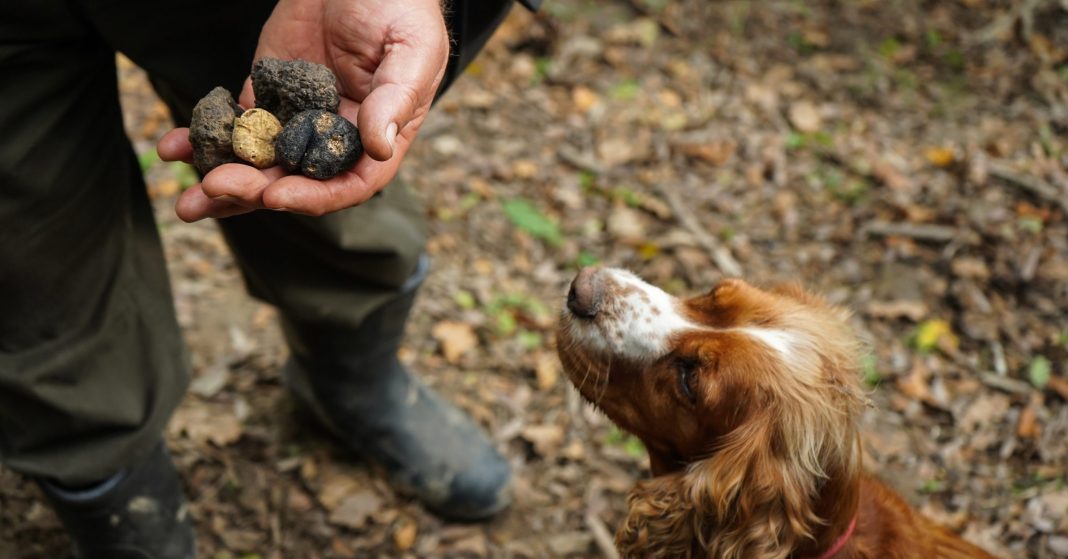
However, when humans want to eat them, they have to find them first, and they have to dig them out only when they are completely mature, which is not an easy task. The best way to know a truffle is ripe and ready to harvest is from the aroma that it gives off. Any harvested before or after this aromatic time will have very little value. As boars have a very good sense of smell, and pigs are their domesticated versions, humans have been exploiting captive pigs for hundreds of years to find truffles for them. Dogs also have a very good sense of smell, so they are exploited for the same purpose (more now than pigs).
The traditional process of harvesting truffles is unethical because it relies on the exploitation of pigs and dogs. This practice primarily occurs in Europe, particularly in countries like France and Italy, where truffles are highly valued culinary delicacies.
Hunting for truffles
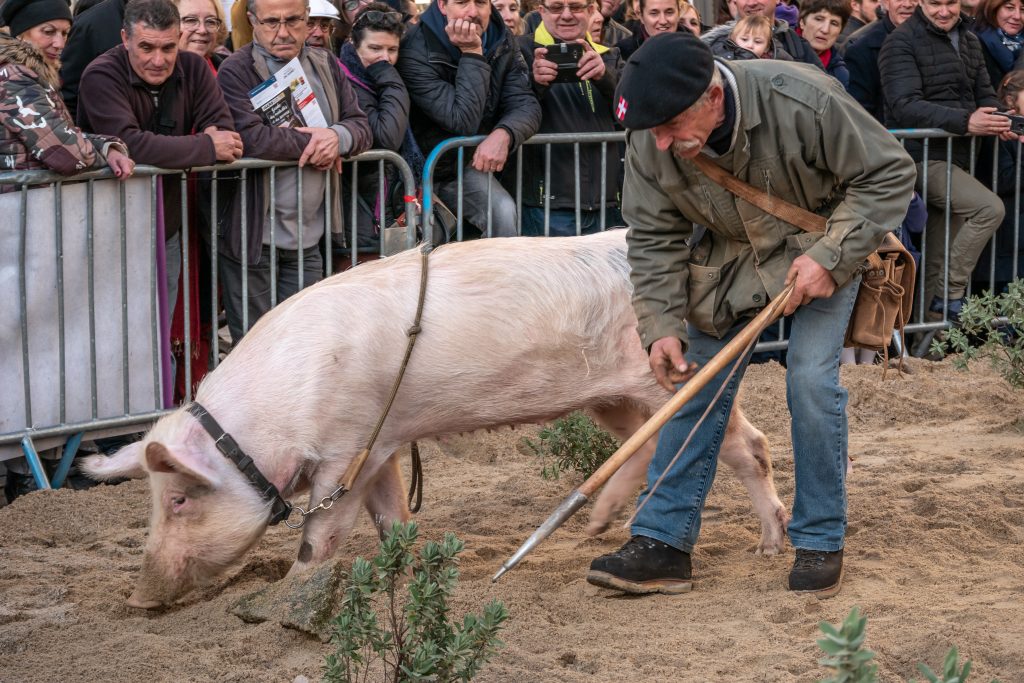
Pigs have been used for truffle hunting (the term that is often used to describe the searching and locating of truffles) since at least the Roman Empire, but it was only in the 15th century that it became a well-documented activity part of an industry. Bartolomeo Sacchi (also known as Bartolomeo Platina), an Italian Renaissance humanist writer and gastronomist, wrote a lot about the use of pigs for truffle hunting (those bred for this purpose are often called truffle hogs).
It was thought that the natural sex hormone, androstenol, of the male pig, an analogue of which is also found in truffles, was what made pigs search for truffles, but this has now been debunked because research has shown that it is the molecule, dimethyl sulphide, which produces the scents that attract them. In the past, female pigs were traditionally preferred due to the belief that they were attracted to the molecules in truffles that mimic male pig pheromones. There are even truffle festivals where truffle hunters compete with each other using pigs. However, the use of pigs has declined in recent decades, with dogs becoming the more common choice for truffle hunting.
The problem with using pigs is that they like to eat truffles, so not only is it more difficult to train them to find them and not eat them but sometimes they cannot be stopped and some of the truffles are bound to be lost to them. Also, pigs can cause a lot of damage to the terrain, so they have been outlawed in Italy for hunting truffles since 1985 because of environmental damage. Finally, truffle hunters are very secretive as they do not want other hunters to find good spots for truffles, and it’s more difficult to hunt discretely with a pig. Pigs are used to hunt truffles in France, Spain and the US.
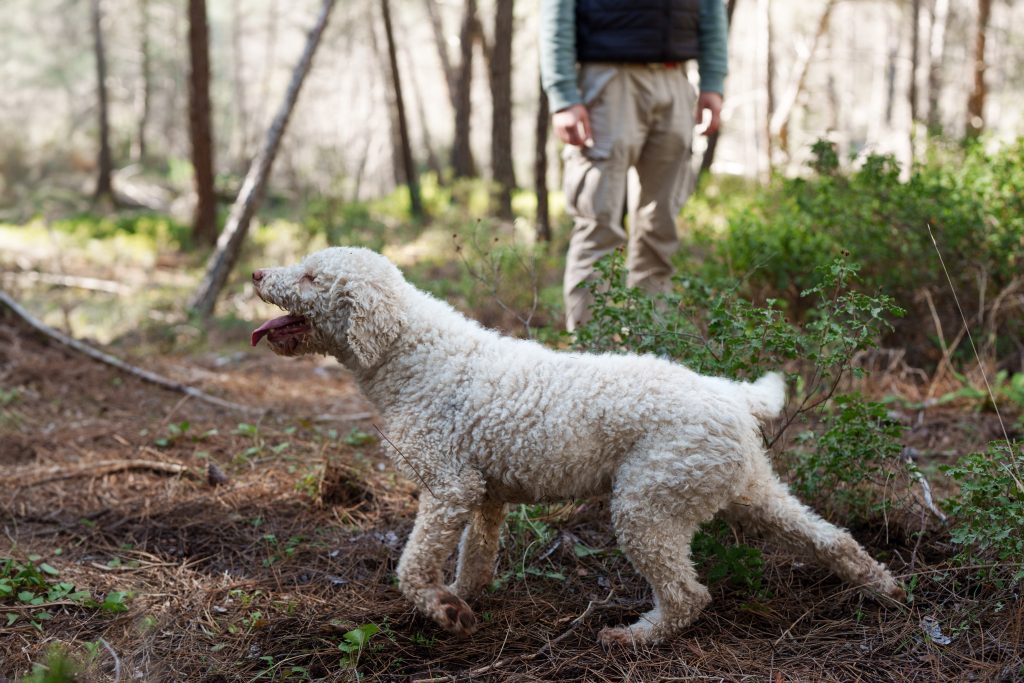
Dogs, on the other hand, are the more popular choice for truffle hunting in modern times. Not only are they more discrete, but they don’t particularly like to eat truffles, so they would not dig for them, only point out where they are if they have been trained to find them (as dogs can be trained to find any scent). Although any breed of dog can be trained for truffle hunting, the breed most commonly used by Italians is Lagotto Romagnolo, a type of water dog. Dogs are used to hunt truffles in France, Italy, Spain, Australia and the US (particularly in Oregon and Washington).
Truffles can also be “cultivated” in special orchards where the trees and conditions they need are ideal. It takes a truffle orchard five to seven years to produce truffles, but animals may still be used to find those that have grown to maturity. The Truffles Market size was valued at USD 0.91 billion in 2022 and is anticipated to register a CAGR of over 8.5% between 2023 and 2032.
What is wrong with using dogs and pigs in truffle hunting?
Both pigs and dogs undergo rigorous training to become proficient truffle hunters. This training often involves coercion and the use of rewards, creating a dynamic where the animals are manipulated for human gain. The use of pigs is particularly concerning, as they are often subjected to stress and physical restraint to prevent them from consuming the truffles they locate.
Pigs used for truffle hunting are often subjected to harsh conditions, such as being forcibly transported in uncomfortable vehicles, and sometimes deprived of food to increase their motivation to find truffles.
While dogs have largely replaced pigs in truffle hunting, their exploitation also harms them. Dogs are trained from a young age to search for truffles, often using food rewards as motivation, but some trainers use hunger as a primary training method, feeding dogs only when they successfully locate truffles. Dogs may be overworked and exposed to harsh environments during long hunting sessions. Also, the “truffle mafia” guards their lucrative truffle spots, and may poison truffle hunting dogs that may expose their secret locations.
Truffle hunting, especially with pigs, can damage fragile ecosystems and disrupt truffle growth. The truffle industry is environmentally unsustainable in many cases. The increasing demand for truffles has led to overharvesting and habitat degradation.
From a vegan perspective, the exploitation of animals for human pleasure or profit is unethical. Exploiting animals against their will is wrong because it is a violation of animal rights, and this is why ethical vegans do not consume truffles if they are unsure of how they were harvested. Both pigs and dogs are denied their natural behaviours and forced to work for human benefit, they may experience stress from training, transportation, and the hunting process itself, and the high value of truffles may lead some hunters to prioritise profit over animal welfare.
There are potential vegan-friendly alternatives to the harvesting of truffles, though. Electronic “noses” or other technological solutions that detect truffles without animal involvement have already been developed and commercialised. Some cultivated truffles can still be harvested without animals if the environmental conditions are controlled enough.
Join millions choosing vegan for the animals in 2025 with Veganuary! https://bit.ly/Veganuary25