

The zoologist Jordi Casamitjana looks at the farming of snails, as these molluscs are bred and eaten in several countries.
I’ve never eaten one.
In the UK, where I have been living for over 30 years now, eating snails is not something most natives do, but I am not “native” from here. I am originally from Catalonia, and there, like in other Mediterranean countries, snails have been traditionally eaten — and still are. My mother used to cook them in the summer, but I never ate them despite how much the rest of my family seemed to love them. I found the idea repulsive. Instead — to the dismay of my mother — what I would do is to free them from the captive bags they were left to starve for a couple of days (as forced fasting is part of the cooking process). I felt sorry for them, so despite the fact that I was not yet vegan, I already felt that they should not be taken from the wild and eaten.
The norm in Catalonia was for people to collect big snails on a rainy day, and then cook them at home a few days later, so it never occurred to me that there would be people farming them and selling them, as they could be easily found everywhere. However, farming snails is a real thing, and in countries where they are consumed in great quantities, is a profitable business.
Farming any sentient being always leads to many animal welfare and environmental problems, and I have described them when I have written about the truth of farming cows, chickens, goats, rabbits, turkeys, geese, pheasants, camels, donkeys, rodents, ratites, fishes, crustaceans, insects, and octopuses. It’s time now to talk about the reality of farming snails.
Who Are the Snails?
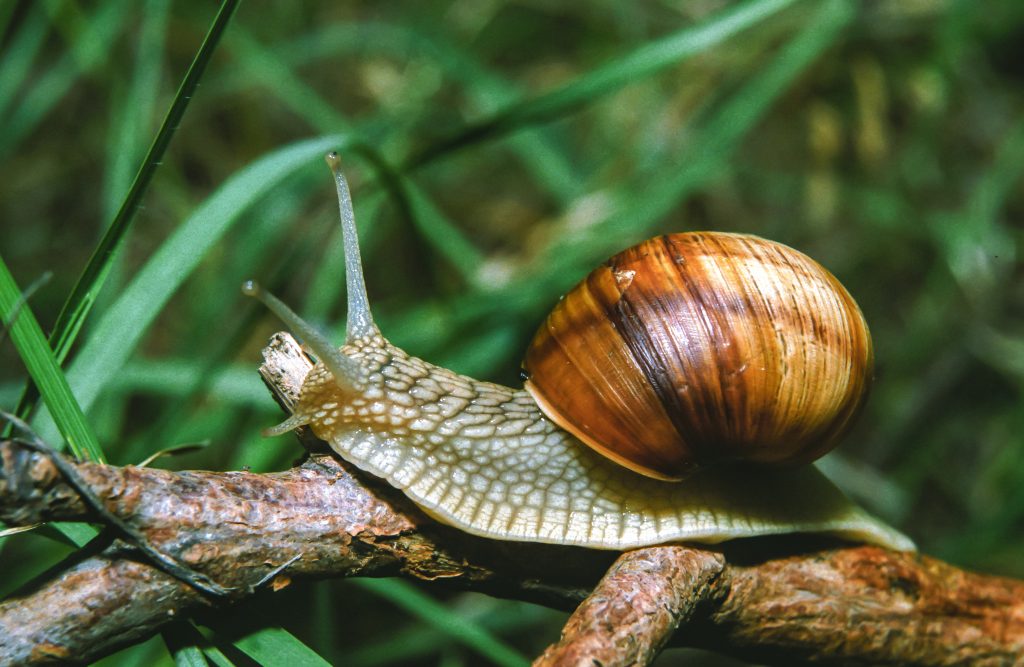
Snails are a type of mollusc, which is the second-largest Phylum of invertebrate animals. It has around 85,000 species, most of them aquatic. Modern molluscs have a soft body, usually wholly or partly enclosed in a calcium carbonate shell secreted by a soft mantle covering the body, and a big muscle called “foot”. The most well-known molluscs are snails, slugs, mussels, clams, oysters, scallops, cockles, octopuses, squid, and cuttlefish.
They are sub-classified into seven Classes: Gastropoda (single-shelled, or without shell), Bivalvia (two-shelled, like clams or mussels), Aplacophora (solenogastres), Monoplacophora (segmented limpets), Polyplacophora (chitons), Scaphopoda (tusk shells), and Cephalopoda (nautilus, squids, cuttlefish, and octopuses). Snails belong to the Class Gastropoda, and contrary to their cousins the slugs who belong to the same group, they have a shell.
Gastropoda is one of the most well-known Classes of molluscs, and the name means “stomach-footed” molluscs. These have a developed muscular foot that is used for crawling. They have a head with eyes and tentacles, and except for the slugs, all gastropods produce an outer shell which is spirally wound. They live in marine environments, freshwater, and on land. Snails that breathe air using a lung belong to the group Pulmonata.
Most snails have microscopic tooth-like structures located on a banded ribbon-like tongue called a radula. It works like a file, ripping food into small pieces. Many snails are herbivorous, eating plants or rasping algae from surfaces with their radulae, though a few land species and many marine species are predators. Most land snails have two sets of tentacles, the upper one carries the eyes, while the lower one has the olfactory organs. They do not have ears or ear canal, but they can feel vibrations.
Snails hatch in the form of small adults, and they can be male, female, hermaphroditic, or parthenogenetic so there are many different systems of reproduction. The snails people traditionally eat are hermaphrodites, though, having both male and female reproductive organs, but they must mate with another snail of the same species before they lay eggs. Some snails may act as males one season and as females the next. The first snails to hatch eat the shells of their eggs. This gives them the calcium needed for their shells. Snails are mature when a lip forms at the opening of their shell.
Mating occurs in the late spring or early summer after several hours of courtship. After mating, the snail can store sperm received for up to a year. When they feel threatened, they usually retreat into their shell to protect themselves, but they can also try to move out of the way at a speed of around 0.5-0.8 inches per second. Some species of snails hibernate during the colder months of the year. Snails are mostly nocturnal animals, but can also be found out and about on a rainy day.
Helix pomatia (Roman snail or Burgundy escargot) is a species of large, air-breathing stylommatophora hermaphroditic land snail native to Europe. The shell is creamy white to light brownish, often with indistinct brown colour bands although sometimes the banding is well developed and conspicuous. The shell has five to six whorls (patterns of spirals) and a large aperture with a margin that is slightly reflected in adult snails. The width of the shell is 30–50 millimetres (1.2–2.0 inches), while the height is 30–45 mm (1.2–1.8 in). This species can be found in forests and shrubland, as well as in various habitats where people live. Burgundy escargot’s eggs are laid in June and July, in clutches of 40–65 eggs. During estivation or hibernation, H. pomatia is one of the few species that is capable of creating a thin calcareous “lid” called epiphragm to seal the opening of its shell and prevent dehydration or predation. Their life span can be up to 20 years, but they often die sooner due to drying in summer and freezing in winter.
Which Snail Species Are eaten?
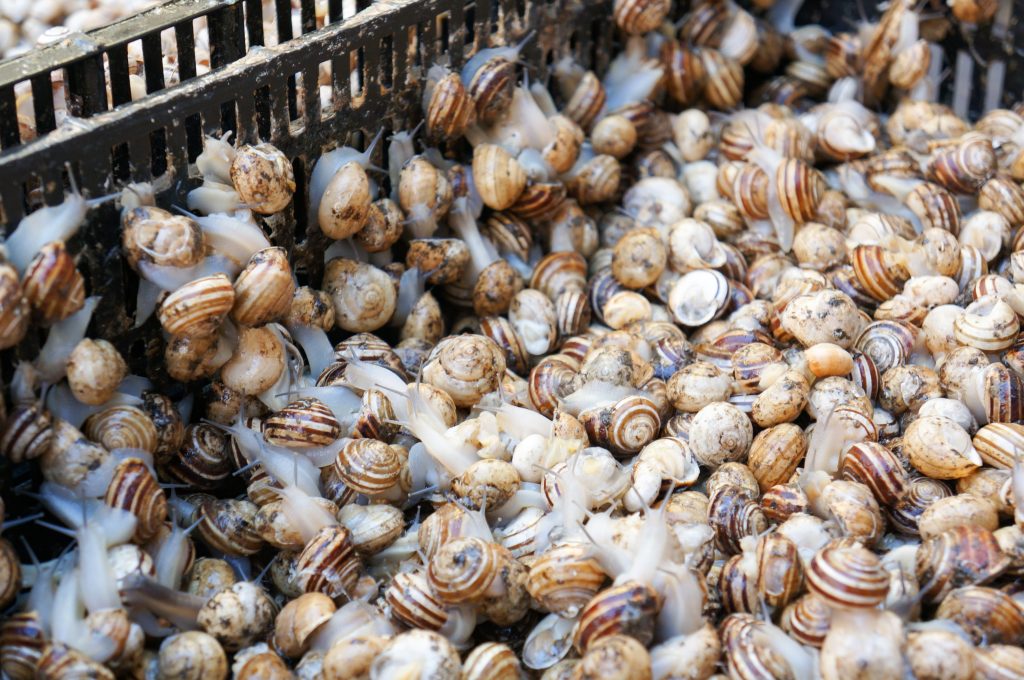
Snails are eaten in several countries. France is the country most known to eat snails (called escargot in French), consuming about 40,000 tonnes per year, and importing accounts for 25% of world imports. Only 3% of snails in France come from farming though, while the rest are taken directly from the wild or imported. Italy is in second place in the world consumption of snails, and Spain and Germany are in the third and fourth place. In Portugal, snails are also eaten, often cooked in tomato sauce, as well as in Greece, Cyprus and Malta. In Serbia, at the beginning of 2005, there were over 400 registered farms for snail production. Outside Europe, in Morocco, Algeria, Nigeria, Vietnam, Laos, Cambodia, Philippines, Indonesia, Colombia, Venezuela, Mexico, and some regions in China, snails are also consumed as food. No one knows where the custom of eating snails began, but land snails were being eaten by people in the late Pleistocene/early Holocene, and the ancient Romans considered them a luxury food.
Edible land snails range in size from about 2 millimetres long to the giant African snails, which occasionally grow up to 312 mm. Several species are eaten. From the genus Helix, the European snail (Helix lucorum), the Roman snail (Helix pomatia), or Burgundy escargot, which is the most consumed species in France, and Helix salomonica; from the family Achatinidae, Lissachatina fulica (giant African snail); from the genus Cepaea, Cepaea nemoralis (grove snail, known as rayado in Spain), Cepaea hortensis, (white-lipped snail); from the genus Otala, Otala punctata (known as cabrilla in Spain), Otala lacteal (Spanish snail0; from the genus Pomacea, Pomacea canaliculata (apple snail), Pomacea urceus (in Colombia and Venezuela); Buccinum undatum (common whelk); Cantareus apertus (garden snail); Cornu aspersum (common or garden snail), Elona quimperiana, (Escargot de Quimper in France and caracol moteado in the north of Spain); Littorina littorea (common periwinkle); Pachychilus sp. (consumed as food amongst the Maya); and Persististrombus latus (bilolá, kolobwidjo, or búzio cabra).
In some places, people eat snail eggs, which they call “white caviar.” In France, white caviar is known as caviar d’escargot. This luxury food is most commonly produced in France and Poland. White escargot caviar generally comes from the European garden snail Helix aspersa maxima.
Snail Farming
Snail farming is also known as Heliciculture and is the process of raising edible land snails for human consumption. The ancient Roman breeder Quintus Fulvius Lippinus is considered the “father” of heliciculture. Only 15% (67,500 tons) of snail flesh consumed by people comes from snail farming, while 85% (382,500 tons) comes from the wild.
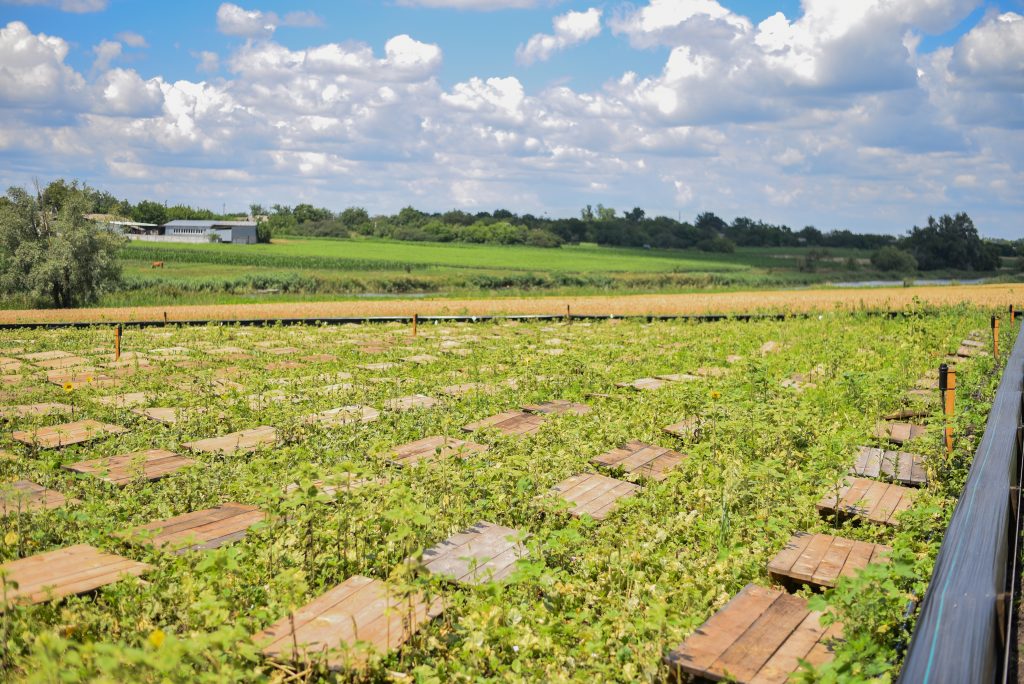
There are four systems of snail farming: Outdoor pens, In buildings with a controlled climate, in closed systems such as plastic tunnel houses or “greenhouses”, and in a hybrid system where snails may breed and hatch inside a controlled environment and then (after 6 to 8 weeks) may be placed in outside pens to mature. Some horticultural systems such as artificial lighting systems and water sprinklers may be part of snail farms. For artificial ecosystems, snail farmers keep about 20 snails per square inch.
An outdoor snail farm is typically divided into rectangular pens (also called hutch boxes or snaileries), surrounded by escape-proof mesh and separated from each other by paths or service ways. The snails live in the pens, feeding on vegetation that is specially sown and grown for them to graze on, while an irrigation system maintains the optimum humidity during summer.
The “production cycle” begins with breeding snails introduced into the pens in spring or early summer. After a few weeks, the reproduction phase begins, followed by egg laying and hatching. Once the breeding snails’ reproductive capacity is exhausted, the snails are collected and sold for food (often sold alive). Baby snails hatch out of the eggs and undergo a fattening period, which continues until winter hibernation and resumes when spring arrives. In the case of partial-cycle (also called incomplete- or short-cycle) heliciculture, there is only a fattening area but no reproduction area, and baby snails are placed in the pens rather than breeding snails.
Although most snail farms are in mainland Europe, there are also snail farms in the UK. Unfortunately, farming snails is increasing. The Snail Market size was valued at USD 593.4 million in 2022 and is estimated to grow at over 10.33% CAGR from 2023 to 2032, due to the rising demand for snail-based products and the shift from traditional meat consumption. The market is projected to reach USD 1.58 billion by 2032
What Is Wrong with Farming Snails
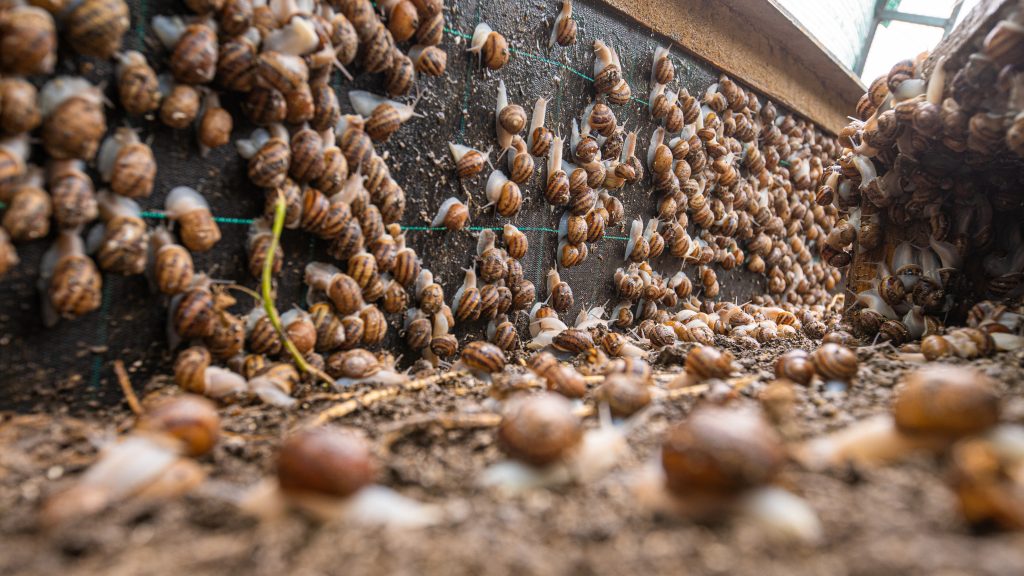
Farmed snails are often kept in high-density environments that differ significantly from their natural habitats. In the wild, snails have access to diverse vegetation, natural soil, and the ability to roam freely. However, in farm settings, they are typically confined to small enclosures or pens with sub-optimal environments. For instance, lack of access to good soil may cause fragile shells.
Snails are very sensitive to their environment, and factors like temperature, humidity, and light can affect their welfare. For example, drought, cold, and weather changes can cause disease and kill a large number of snails on farms. As they cannot escape and find an adequate shelter when these environmental events occur, they suffer the consequences.
The concentrated populations in snail farms make the animals more susceptible to predators and disease outbreaks. Like in any other type of factory farming, the cramped conditions of snail farms can facilitate the rapid spread of parasites and diseases.
As snails are sentient beings with a well-developed central nervous system that has a distinctive brain (the pond snail has about 11,000 neurons), the handling and collection of snails for consumption will cause them significant distress and suffering. As farmed snails are commonly traded alive, they will experience the stress of travelling and handling which would force them to remain hidden inside their shells, even during the hours of the day they should be exploring for food.
Additionally, before being killed, snails are often subjected to fasting periods to clear their digestive systems before processing, which will cause them hunger. The methods used to kill snails for food production (not normally applied by the farmer but by the consumer or some intermediate food processor), such as salt baths or boiling water, will cause them a great deal of pain.
Like in most farming, some snail farming operations engage in selective breeding to produce snails with desired traits like faster growth or larger size, and this genetic manipulation can lead to health issues and reduced genetic diversity.
Consuming snails can also make people ill. Snails can be associated with parasitic zoonotic diseases such as schistosomiasis, angiostrongyliasis, fasciolopsiasis, opisthorchiasis, fascioliasis, paragonimiasis and clonorchiasis.
Although snail farming is often described as environmentally friendly, the intensive farming of snails can lead to soil degradation and the potential spread of non-native species if exotic farmed snails escape into local ecosystems.
Above all, though, the worst aspect of snail farming is that is a form of animal exploitation that treats sentient beings as commodities (the number of snails farmed is not even measured by individuals but by weight, as happens with other invertebrates and fishes), as well as uses animals as food for humans. Therefore, no vegan should ever eat snails, or any type of mollusc such as oysters or mussels, as this would be a violation of major principles of the vegan philosophy.
I’ve never eaten a snail, and I will never eat any, but nobody else should eat them either because they are sentient beings who want to be free and live their lives in peace — not culinary ingredients or commercial commodities.
Farming snails is cruel.
Sign the Pledge to Be Vegan for Life: https://drove.com/.2A4o