
Jordi Casamitjana, the author of the book “Ethical Vegan”, ponders about why there are no more vegans in the world 80 years after the Vegan Society was founded
“I don’t know” should be my primary answer.
When wondering why there are no more vegans in the world eight decades after Sally Shrigley, Dorothy Morgan, Fay Henderson, and other vegan pioneers created the first Vegan Society, the primary answer should be “I don’t know”. However, I am the kind of person who tries to always have more to say than this perfectly valid answer.
I like to ponder, speculate, research, and investigate the answers that have eluded me when first presented with interesting questions, knowing perfectly well that the outcome of this process may be more unanswered questions, not necessarily the answer I was looking for.
Equally, I often dare to publicly spell out how this process is going, even before it is finished or if what I have found is highly speculative because, over the years, I have found that this is more productive and intellectually satisfying than hiding away behind my ignorance.
I know that there are many vegans around the world, possibly already over 80 million, but I also know that stats on this issue are quite unreliable and often are overestimations as they may include sources that counted plant-based people instead of only ethical vegans, or even counted vegetarians. I recently found a map of countries by percentage of vegans from the World Population Review which did not seem very accurate to me as the rankings shown did not fit the most reliable stats I know. So, even believing the unlikely figure of 100 million vegans which some say may be achieved soon, this only represents 1.22% of the human population (and I have not seen any convincing stats from any country that reaches 10%).
Considering how obvious is to me that adopting veganism is the best choice for the health of people, the well-being of domestic and wild non-human animals of the world, the environment and all its habitats, and even the welfare of marginalised humans — I have already written that veganism is the only ethical choice that should be seriously considered — should there not be more vegans by now?
I am going to ponder this intriguing mystery.
Demographic Reasons

Today, the human population is about 8.2 billion people, and this is a lot of people indeed. The current rate of human population growth is approximately 0.87% per year, which means that the global population is increasing by about 71 million people annually. Therefore, every year there are almost the same number of new humans being born as the total number of vegans alive. How can we, vegans, reach a higher percentage with such a demographic disadvantage?
For each new vegan who joins our movement, many non-vegans are born. I have been vegan for 22 years now, and during this time I think I have been more successful than the average vegan in helping other people to become vegan. I think that, probably, 20 or so people I know will have become lifelong vegans, partially because of me, then I may have helped become lifelong vegans about 50 or so more people during street vegan outreach, and because of my books and writing, perhaps 100 more. So, let’s say that, in 22 years, I “made” 170 lifelong vegans, at a ratio of about 8 vegans a year. In that amount of time, about 1.6 billion new non-vegans have been born (and only about 1% of those may have eventually become vegan). This means that, currently, for each new vegan I have “created”, about 9 million non-vegans have been born.
Naturally, I am not the only vegan helping other people to become vegans, so if all the potential 100 million vegans helped as many people to become vegan as I did, then we would have billions of vegans by now. However, this is not happening. The average vegan is not an activist directly helping other people to become vegan.
Becoming vegan is a process that takes some time (for some people even years) and effort, so many people don’t feel they have any extra of these commodities to use to help others go vegan. Some vegans do not feel part of a social vegan movement and just adopted the philosophy for themselves, not for others. Other vegans may not feel comfortable doing any activism, while others may want to do it but do not know how. There may not be the support mechanisms needed to vegans become effective activists as there are few vegan organisations thinly spread, all of them short of funding.
Within the vegan movement, we are asking people to become activists because we recognise that most vegans are not activists yet, for whatever reason, and for those who are, perhaps the form of activism they use, although perfectly valid, is not very effective at producing lifelong vegans (perhaps only life-short ones). If you are vegan yourself, how many lifelong vegans do you think you have secured? Collectively, we have the potential to help many people overcome the demographic disadvantage, but in practice, as it takes effort and dedication to help people become vegan, and most people are born non-vegan in non-vegan societies, most pre-vegans without such help will tend to stay non-vegan.
In carnist societies, making vegans out of carnists requires effort, while making carnists out of humans does not. Every day the veganism movement wastes doing anything other than helping people to become vegan, almost 200,000 new non-vegans needing such help have just been born. That’s why our percentages remain small because it takes a lot of effort to change this status quo in a fully carnist world that produces non-vegans without any effort.
Developmental Reasons

Should we have counted all newborn humans in these calculations? Perhaps not. Veganism is a philosophy with an associated lifestyle and transformative socio-political movement. The movement (which started in the 1940s with the creation of vegan societies) comes from people following the lifestyle (which humans were already living hundreds of years ago), which comes from people holding the philosophy (which began to be formed millennia ago). Therefore, being vegan is not defined by the behaviour of actually excluding all animal exploitation, but by the philosophy of trying to genuinely do it in the circumstances one is in, regardless of how successful we may be in the end.
When we ask the question “Can anyone be vegan?”, we do not mean whether everyone can act as a vegan, eat what vegans eat, wear what vegans wear, buy what vegans buy, or say what vegans say. We mean “Can anyone believe in the philosophy of veganism?” Or, if we unpack this further, “Can anyone believe that avoiding doing any harm to any sentient being is the moral baseline?” and therefore “Can anyone believe that seeking to exclude all forms of exploitation and cruelty to animals is the right thing to do?”
Based on this, those who are capable of holding a philosophical belief could, in theory, be vegans, regardless of how they manifest this philosophy in the real world. However, can anyone hold a philosophical belief? Can anyone hold a philosophy? Well, age may play a role in this. Small children may not yet have brains well enough developed to be able to hold a philosophy, even if they can imitate the behaviour of their parents and other humans, so I would say we cannot expect them to become vegan before they reach the teenage age — so, we should not count them in the stats. Small children not only are unlikely to be able to hold a philosophy (there may be exceptions, of course) but their behaviour is mostly dictated by the adults who care for them, so it would be difficult for them to manifest whatever basic philosophy they may begin to develop.
In 2023, about 25% of the human population were children under 14 years of age, according to the World Bank collection of development indicators. This means 2.05 billion humans. So, not counting these, 100 million vegans would be 1.63 % of the “eligible” humans for veganism (still quite a small percentage). Besides, as young vegans are more likely to drop out of veganism because they have not experienced enough to know what philosophy they prefer — and they will have a higher drive to experiment with different ones before settling on any — we should not expect that children that say they are vegan either because their vegan parents raised them as vegans or because they chose the philosophy by themselves (even if they may not understand it completely yet), may stick to it when they grow up.
I know that children have undergone less indoctrination into carnism than adults, and their intact instincts may drive them to veganism quicker (as it is more natural), but I also think that they could as quickly leave veganism later on (especially during the rebellious teenager phases if they come from a vegan family) if they have not completely taken the entire philosophy on board. They could easily object to eating meat, eggs, or milk offered to them, but to fully hold the philosophy they need more in-depth knowledge about how products are made, which industries are connected to animal exploitation, why riding horses or visiting zoos are incompatible with veganism, and many more nuances of following the philosophy of veganism beyond rejecting some food. Some children, especially after reaching school age, may indeed be clever and well-informed, but I think it is fair to say that adults are in a better position to understand all the dimensions of veganism (including health, environment, social justice, spirituality, and animal rights) to be able to manifest veganism more completely.
We could also say the same about people who have become so elderly (and perhaps have developed dementia or other degenerative neurological diseases) who may have lost the ability to hold a philosophy. It’s difficult to have stats about these, but we know that the number of people reaching 80 years of age is increasing (by 2050, the world will have an estimated 459 million persons aged 80 or more), so it is likely more people could fall into this category with time.
According to the United Nations, there were 155 million people over 80 years of age in the world in 2021. If we add young children and the elderly, we have 2.16 billion people demographically less likely to hold the philosophy of veganism due to age, which leaves 6.04 billion people more “eligible” to be vegan. However, even if we have been very generous with these numbers (clearly many people over 80 can still hold a philosophy as anyone else, and some children under 14 can indeed be genuine ethical vegans) assuming the possibly inflated 100 million number of current vegans this only reaches 1.66% of the population. Therefore, having made all these corrections, we still see very small percentages, because the human population is still growing way too fast — and it takes years to fully adopt a philosophy.
Sociological Reasons
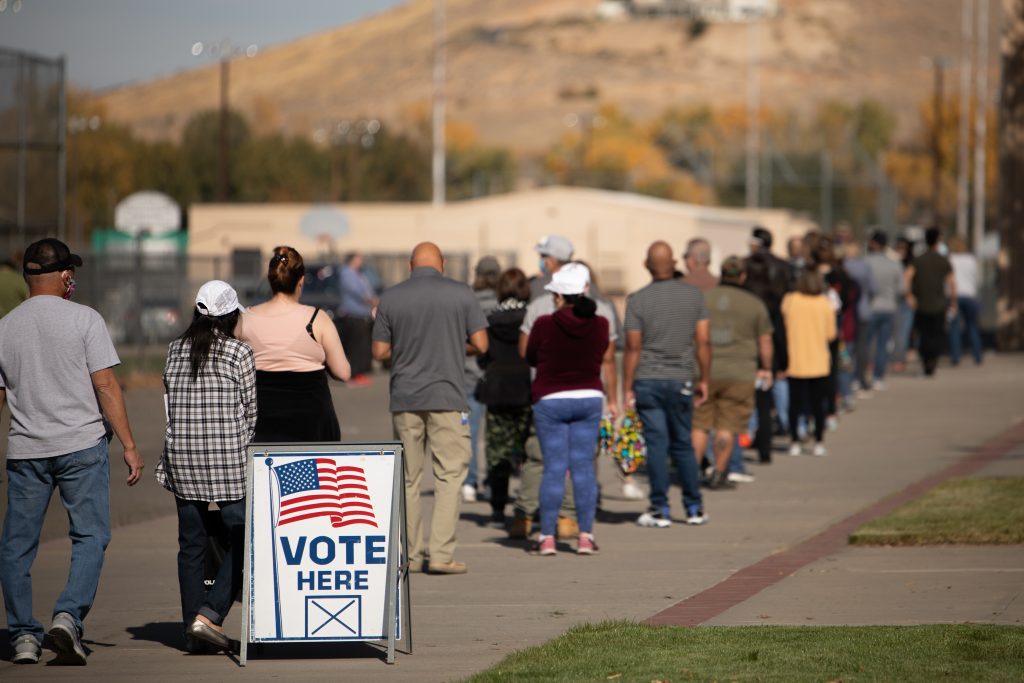
Apart from pure demographics, there are sociological reasons that could explain why there are not enough vegans today. One of them is “the majority rules” principle. In modern times, we have developed democratic systems that quantify what most of the population wants, and make policies based on that. However, well before the ancient Greeks started to develop democratic politics, this “majority rule” element was already functioning in all human societies. Sure, there were kings and minority elites in power, but their decisions were based on what most people believed, rather than what they themselves did. Indeed, very few despots created their own religions, and most used whatever the majority chose to believe. Even religious leaders tended to create new religions from existing ones, rather than from scratch.
We are a social primate, and as such, we have biological traits linked to our social nature. One of such traits is to use the information about how others in our group behave to decide what we need to do. We learn not only from our parents and close relatives but from all the other members of the society we grew up with. This saves us lots of time and energy and facilitates group responses that may be more efficient than individual ones. It also helps to give coherence to our societies and reinforce our sense of collective identity. In other words, the “majority rules” principle defines what is “normal”, and therefore “appropriate” to do.
As over 98% of humans have decided not to become vegan so far (or do not even know what veganism is so they are not suddenly going to adopt this philosophy), this is a large majority, which means that the majority rule effect would be very powerful on this issue. Those who are comfortable choosing veganism are often comfortable with fringe mainstream activities and ideologies, but these are still a minority. Most people are mainstream, doing mainstream things and thinking mainstream thoughts. True, veganism’s journey toward mainstreamism has advanced fast in the last few decades, but let’s face it, we have not arrived yet. Because of that, we are relegated to the “fringe” part of society, and this means most people are reluctant to believe in what we believe and act as we do because they don’t see us as “normal” enough. In other words, we don’t have more vegans because we live in societies where people tend to do what others around them do, and because we are still a very small percentage of the population, very few of us are around to influence enough people.
In addition to this, we live in very big societies with lots of humans in them, and this has caused a decline in the need to be intelligent to survive. Collective intelligence can now compensate for the individual’s “stupidity”, so we can rely more on the system and its rules and we can afford to be more irrational as individuals (if there are flat earthers today free to pollute social media, this shows that we are living an irrational era similar to the dark ages). In consequence, people are now more social than rational, and they would rather do what society tells them to do than to change their behaviour because “it makes sense”. Whether choosing veganism is the most rational and logical ethical choice an individual can make has become less important than blindly doing what the majority of people do.
In general, individuals’ intelligence has decreased despite both technology and collective intelligence having increased, as there are more machines and artificial systems regulating people’s behaviours. Less intelligent people can survive longer and reproduce more than in the past, so there is no longer an evolutionary drive toward individual intelligence in modern humans. Therefore, fewer people may “realise” how important it is to become vegan, and more people would rather do what others do than what is right.
Humans today are not very good at holding philosophies for a long time, changing lifestyles forever, or successfully running international social movements, because we are far less intelligent and intellectual than people give themselves credit for, we have less free will than people realise, and we are not very social, like other species, so our individuality (and selfishness) tends to ruin many of our social projects (which could be a blessing in disguise as this means dictators tend to fail too). In such a world, increasing the number of vegans by trying to appeal to rationality is difficult — to say the least.
Cultural Reasons

One of the attributes of human societies is that they are built on cultural frameworks that change from region to region. We all speak, but speak different languages. We all dress, but dress in different fabrics and attires. We all tell stories, but we made them up based on different mythologies. This cultural diversity does not help to foster universal ideologies and philosophies, like veganism or environmentalism, because each community would prefer their “point of view” to that of their neighbours or people from distant lands.
So, when we approach people during vegan outreach trying to help them to adopt the philosophy of veganism and stop contributing to the exploitation of animals, we should always ask ourselves what their culture might say about it. Many cultures would have nothing to say, or would, in fact, see veganism as positive, but others may not.
Some people will use their culture or ethnicity as an excuse for not going vegan, though. However, when analysing their culture deeply, we may find that there are no incompatibilities with veganism. Most people don’t dig deep into their cultures, they just follow them blindly without analysing them, and often only know about the surface facets of their own cultures, as they may not know the historical background behind them, only how most “normal” people manifest them today. So, they would have prejudicial views of their own cultures, and these could result in the conclusion that they cannot be vegan because this would be against their culture.
Immigrants may be in a better position to understand how compatible veganism is with their own culture as they have become transcultural beings, so they have gained some vital perspective, but most people are not immigrants (in the sense of living in a different culture than the one they were born in), so they may be less open to adding veganism to the repertoire of beliefs and philosophies they already hold. Nobody is culture-less and all cultures are sceptical of others, so that scepticism becomes the source of prejudice against veganism and the reason why many people have not become vegan yet.
For instance, let’s look at the case of Jainism, or Jain Dharma. Of all the established formal religions out there, Jainism is the closest to veganism, as they interpret the concept of ahimsa (“do no harm” or “non-violence”) very similarly to vegans (indeed, ahimsa is the most important of the five main axioms of the vegan philosophy). Jains go a long way in trying not to hurt other sentient beings, and they even regard insects as sentient beings as vegans also do. However, in India, most Jains are vegetarian rather than vegan, as they still consume cow’s milk. Most Jains I know in the UK are indeed vegan, but they have told me that in India, where the religion began, most Jains are still vegetarian. This is an example of the power of cultural pressure to prevent more people from becoming vegan, but also how transcultural people are in a better position to overcome such pressure.
We should not forget modern culture. Modern societies have all sorts of symbols, beliefs, and fashions that are not linked to ancient philosophies or religions, but still exert cultural pressure. Celebrity culture is one of these. The cult of celebrities has become a double-edged sword regarding veganism, because although celebrities becoming vegan may help more people to join the philosophy, unfortunately, most vegan celebs end up abandoning veganism and doing it so publicly that they hinder the vegan movement’s efforts. Plant-based celebs defining themselves as vegans, or vegans erroneously giving them such a label in what I call “Vegan Sticking”, are hindering the vegan movement’s efforts to maintain the integrity of the philosophy, and the less integrity the philosophy has, the more vulnerable it becomes to carnism and its attempts to stop people becoming vegan.
Psychological Reasons

Cognitive dissonance is a term many vegans know of. In psychology, it is described as the mental disturbance people feel when they realise their thoughts and actions are inconsistent or contradictory — which sometimes pushes them to change to cause greater alignment between their actions and ethical or moral beliefs and reduce this disturbance. Most vegans remember a time when they were not vegan and felt such disturbance when they thought they liked animals, but they realised that they, inconsistently, hugged some but ate others. They eventually change such contradictions by moving away from any form of animal exploitation, so the process of veganisation is often described as successfully “resolving” this particular cognitive dissonance.
So, when vegans do vegan outreach, they approach people with the hope of helping them resolve their cognitive dissonances by giving them the facts they need to break free. However, many such vegans make an incorrect assumption. They assume that being contradictory in one’s behaviour and ideas creates a “distressing” and “uncomfortable” disturbance to everyone, and people are desperate to free themselves from these, and would be grateful for you to help them. In reality, most people “block” out of their minds most of the cognitive dissonances they have with all sorts of social and cultural justifications, so they do not feel them as disturbances, and they want to keep them hidden. They do not appreciate us, vegans, unearthing them from the remote parts of their brains and being challenged with them. They want to keep their contradictions hidden so they do not necessarily see vegan outreachers as people trying to help them, but as people who would make them feel bad about their choices, and who will negatively mess with their lives. In consequence, they will turn away from vegan outreachers they encounter, and close their ears to any conversation that seems to lead to an awakening of the dormant dissonances they don’t want to deal with.
For most people, keeping the cognitive dissonance of their relationship with non-human animals dormant is very easy as people around them already do this, so they apply the “majority rule” and believe that being inconsistent is “normal”, and being coherent is what is “radical” and ultimately unwanted.
Psychologically, people prefer to be “at peace” with their choices rather than being logical and coherent, and as veganism is the ethical logical philosophy that requires us to realise how badly we are treating other sentient beings, it is only an “attractive” philosophy for those who may be unhappy with their choices and already accept that what they are doing is wrong. What vegan outreachers often do is “awaken” people’s conscience toward becoming fairer and more compassionate, but most people rather stay asleep, because this is the path of least resistance that requires less attention to navigate.
Another psychological factor here is that humans are tribal, so they tend to divide everyone into “us” and “them”. Those considered different and “weird” may end up being oppressed by the dominant group, making their prospect of progressing bleak. As vegans are a minority everywhere, society sees us as “them”, which means that not only may people take us less seriously, but we may become the victims of prejudice, discrimination, harassment, victimisation, and even hate crime. This will scare many pre-vegans off, never having the courage to make the final step for fear of being ostracised in their “tribe” and even becoming the victims of veganphobes.
Tactical Reasons

Not all of the reasons for the low percentage of vegans may be external. The tactics and strategies used by the vegan movement may have contributed to it, as nobody really knows which is the best form of activism, and we have been improvising it all along. We may have found many ways to attract people to veganism but we may have failed in keeping them all vegans for life (some research even suggests a very high percentage of carnism recidivism — although their methods have been questioned).
For instance, another psychological factor that makes it more difficult for people to stay vegan is that when they “fall from wagons,” they often do not return. This is because people don’t like to be in wagons for too long. They prefer freedom, they prefer flexibility, they prefer non-commitment, so when they consider — or try — veganism, they see it as a too-restrictive, too-rigid, and too-committal lifestyle (and when they see it as a lifestyle, as opposed to an ethical philosophy to be followed for life, they think it is a “wagon” they can pop on and off at will). As many people choose the behaviour of veganism without actually adopting the philosophy, they still see it as “a choice” as opposed to an ethical imperative, so they focus on anything they find difficult or don’t like about the new lifestyle and feel validated when they abandon it for another that offers more satisfaction for less effort. This means that many people who call themselves vegans do not become vegan for life, just for a few years, preventing the percentage of vegans from growing as despite the fact that we gained more vegans in the last few decades, we lost many as well.
The tactics used by the mainstream vegan movement could be a problem too. This is my opinion and other vegans may disagree with me on this, but I think far too many vegan activists and vegan organisations focus only on asking people to change their behaviour (in particular, their consumer behaviour). I don’t think it is their behaviour that needs to change, it is the philosophy they use to back it up, as once that new philosophy is firmly held, the change of behaviour will come naturally and permanently — without us needing to ask for it. The behaviour can easily become a fashion that is dropped as quickly as it was acquired. Persuading people to hold the philosophy as their minimum moral baseline takes more time and requires a deeper understanding of all the dimensions of veganism, but this profound “philosophical change” is something that does not seem to take the front stage in many vegan outreach events I have witnessed.
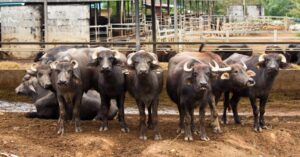
Vegan outreachers often show people images of factory farms and tell them how much the animals suffer, but this may not get the right message across if not accompanied by the right narrative. There is a role in activism in showing such images (educational, drawing attention, shocking, etc.) but if you focus too much on them, not only you may put some people off as they may be repelled by their graphic nature, but you may not be sending the right message. The suffering of the animals in these images is not the worst part of the problem. If the images showed instead “happier” animals on open farms where they roam about at their leisure, the worst element of the system would still be there: their exploitation. These non-factory farm images would not show the fences, the breeding control, the genetic manipulation, or the depriving of someone’s life at an early age, but they are all there. The factory farms or abattoir images may be insufficient on their own and too focused on obvious suffering, and may need to be used to lead to deeper discussions aimed at significantly changing people’s beliefs, not to simply be shocked and appalled by what they see.
Everyone is against cruelty, but most people are not against exploitation, as they live in patriarchal capitalist societies that tell them exploitation is acceptable, so the education needed should be also about ahimsa, sentience, exploitation, speciesism, and vicariousness (the main axioms of the philosophy of veganism) not just abuse, cruelty, and suffering. We should be aiming for a systemic paradigm change that abolishes all exploitation and oppression, not a consumer shift toward less cruel exploitation. The vegan revolution is intellectual and cultural, not commercial and economic. We need to change people’s minds, not people’s choices, because, with the right approach to sentient life, the right choices will come on their own.
As many people live in capitalist societies that sell the idea of choice as if it was an empowering thing to the consumer (when in reality the choice consumers have is an illusion and they just buy the products marketers want them to buy), people “abuse” such a concept and feel they are allowed to willingly “choose” to harm other sentient beings, destroy the environment, and exploit others if they so wish. The sense of entitlement that selfish capitalist societies have created in people does not help them to stay on the right path and choose ethics over convenience.
For instance, recycling should be done by everyone by now, and yet, many people still don’t do it, even if it is clearly the right thing to do. Smoking has been exposed as a very harmful activity for everyone, and all the lies of the tobacco industry have now been debunked and condemned, but despite the first widespread ban on smoking in public places was implemented in Australia in 2000, and many countries followed suit since, still between 15-18% of the human population are smokers today. No matter how much information you give to people, and how much social pressure you apply to them, their urge to do what they want often makes them ignore all the facts and resist restrictions imposed by others. People don’t like to be told what’s right and they don’t like to be told to stop doing anything, so for them to become vegan it may be better if they feel they have “discovered” this by themselves, and that may take more time and we should accept it may not happen in many people who are not “looking” for change.
We then have the problem that we may have not been as inclusive as we should (especially regarding race) which may have been putting people off veganism because they don’t see vegan spaces as sufficiently welcoming to them. Considering that the majority of the human population is not white, the anti-intersectionality attitude that some members of the movement have taken does not help to increase the number and diversity of vegans.
Economic Reasons

Money often plays a role in preventing social progress as most of it is in the hands of a minority who does not want to change the status quo. Carnists are still in possession of most of the wealth on the planet, and because of this, can still exert a lot of pressure on politicians and decision-makers to prevent the vegan population from growing and challenge their power.
Because most governments subsidise animal agriculture, plant-based alternatives are always at a commercial disadvantage, never reaching competitive prices that would attract enough customers. So, even if there is a reduction in demand for animal products because there is an increase in vegans, the government’s subsidies would bail out the industry so it can keep exploiting the same amount of animals even if they sell fewer products from them (as it would be the number of animals exploited which determine how much help they get from the government).
Carnist companies appropriating plant-based food, and the veganwashing that takes place around it, can economically hinder vegan companies (owned by vegans) which cannot compete with them. This may be another possible reason for seeing fewer vegans around, as fewer vegan businesses also means fewer vegans finding employment in them — or more vegans having to fight for their rights if they are discriminated against when employed by carnists companies (something that may put pre-vegans off if they feel they will be the only vegan at work). If we focus on “products” rather than values, then the entire vegan economy could be hijacked by the carnist system which would always keep the population of vegans under check.
The new concepts such as plant-based, reducetarians, and flexitarians, which have not been universally opposed by the vegan movement, are not helping either because they are giving easier alternatives to veganism for people to choose if they want to change. The easier binary choice carnist-vegan (carnism can be defined as the opposite of veganism) gets ruined by all the other options that now people could choose instead of becoming vegan, such as pescatarian, reducetarian, flexitarian, vegetarian, plant-based, and even a whole new collection of fake “vegans” such as the so-called beegans who consume honey, the veggans who consume eggs, the ostrovegans who consume bivalves, or the entovegans who consume insects.
We should be fighting against carnists’ concepts, making it more difficult for people to abandon plant-based eating and returning to their carnists roots — it would be very easy for someone to shift back from lab meat burger and chips to beef meat burger and chips, especially if they cannot tell the difference. Mocking exploitation helps to perpetuate it, and true abolition goes beyond stopping the practices themselves into erasing the very concepts behind them (such as meat, milk, cheese, pet, livestock, seafood, etc.)
Carnist companies buying vegan startups has also the effect of diverting all the investment that should go to plant-based alternatives back to the animal-based industries, which can reinvest it all in bigger coordinated PR campaigns demonising vegans (creating veganphobes, putting people off veganism), hiding the wrongs of the industry (in the post-truth era we currently live, confirmation bias against veganism can be easily achieved by spreading misinformation that just creates enough doubt about veganism’s claims), and increasing their lobbying to politicians so those subsidies never stop. The result is a carnist world that is suitable for carnists alone, where vegans are always struggling, and many give up in the end. Not fertile soil for the growth of the vegan population.
How To Increase the Percentage of Vegans

Although I could come up with many reasons which, collectively, can explain why there aren’t more vegans in the world, this does not mean that we cannot find ways to neutralise them and increase the vegan population. Here are 12 that occurred to me:
- Promoting vegan education in schools, teaching it as a philosophy of “not harming” rather than a restricting diet, which could help children to adopt the philosophy sooner and stick to it for life.
- Making compulsory the training of staff at care homes so they keep the vegan lifestyle for elderly vegans is a policy change that could be made (I suggested this when I investigated what happens to vegans in care homes).
- Campaigning for policy changes that move us closer to the vegan world rather than relying exclusively on people going vegan can compensate for the “irrational era” we seem to be living in.
- Making vegan outreach more culturally relevant and diverse can overcome some of the obstacles too.
- Focusing more on philosophy change than on behavioural change could increase the percentage of ethical vegans over dietary vegans.
- Shifting our education emphasis from abuse, cruelty, and suffering to ahimsa, sentience, exploitation, speciesism, and vicariousness could make more vegans for life.
- Helping those who try to dismantle oppressive patriarchal capitalist systems that promote selfishness may get rid of some of our biggest obstacles.
- Stopping the subsidies to animal agriculture, supporting vegan companies run by vegans and not funding carnist companies may go a long way to address the economic obstacles.
- Promoting veganism, real plant-based food, and fully vegan products instead of watered-down versions of either could make a big difference too.
- Protecting the integrity of veganism and educating people about the true vegan values can help the indecisive and confused to make the final step.
- Encouraging vegans to become activists and do the activism they are better at, not necessarily the one other vegans they know do, could make our outreach efforts more efficient.
- Improving Vegans’ Rights and making the discrimination, harassment, victimisation and hate of vegans unlawful.
The good news is that we are not that far from achieving a percentage that can accelerate progress. Erica Chenoweth is a political scientist at Harvard University, and in 2019 she published the results of her studies trying to find out what percentage of support for minority nonviolent social movements is needed for them to achieve success. She found a very interesting number: 3.5%.
Looking at hundreds of campaigns over the last century (1900 to 2006), Chenoweth found that nonviolent campaigns are twice as likely to achieve their goals as violent campaigns, and although the exact dynamics will depend on many factors, it takes around 3.5% of the population actively participating in the campaigns to ensure serious political change. By the end of the research, she and her colleague Maria Stephan had collected data from 323 violent and nonviolent campaigns, and published their results in the book “Why Civil Resistance Works: The Strategic Logic of Nonviolent Conflict”
Chenoweth argues that nonviolent campaigns are more likely to succeed because they can recruit many more participants from a much broader demographic, and have fewer physical barriers to participation. Protestors do not need to be fit and healthy to engage, and while many forms of nonviolent protests also carry serious risks, Chenoweth argues that nonviolent campaigns are generally easier to discuss openly, which means that news of their occurrence can reach a wider audience. Despite nonviolent campaigns being twice as successful as violent conflicts, peaceful resistance still failed 47% of the time, but the research shows that, once the nonviolent protests had achieved that 3.5% threshold of active engagement, success seemed to be guaranteed.
The vegan movement is definitively nonviolent (perhaps the archetypical nonviolent socio-political movement which is not only nonviolent in action but also in goals) so the 3.5% rule must apply to us. So, as we have not reached this percentage yet in both passive and active supporters (remember that our more generous estimation is 1.66%, that’s why we are still lurking in the fringes of society finding it very difficult to advance faster toward the vegan world. However, once we double our numbers, and make our voices heard in the right places, things may move much faster (which is quite doable because we only started doing vegan outreach seriously at a global level in the last couple of decades, so we should get there by 2040).
There may already be countries where the percentage of vegans has reached 3%, but many of these could be just plant-based people, so the actual percentage of ethical vegans who are activists may not be known yet (the next polling should aim at quantifying these). In any event, if we apply all the improvements and solutions I propose above, and any other our best strategists and intellectuals of the movement may suggest, we may reach that critical mass in the foreseeable future, and things will then significantly change at a much faster pace.
I don’t really know for certain why there aren’t more vegans in the world, but as long as more and more of us keep our activism up, and make it clever and strategic, the numbers will eventually reach the critical mass we need. It may take much longer than we hoped, and it may require a lot of effort, but we can do it.
I know the vegan world will eventually come.